



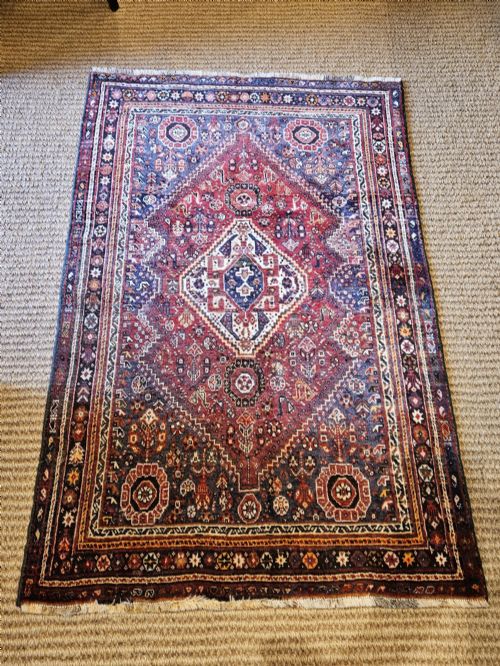
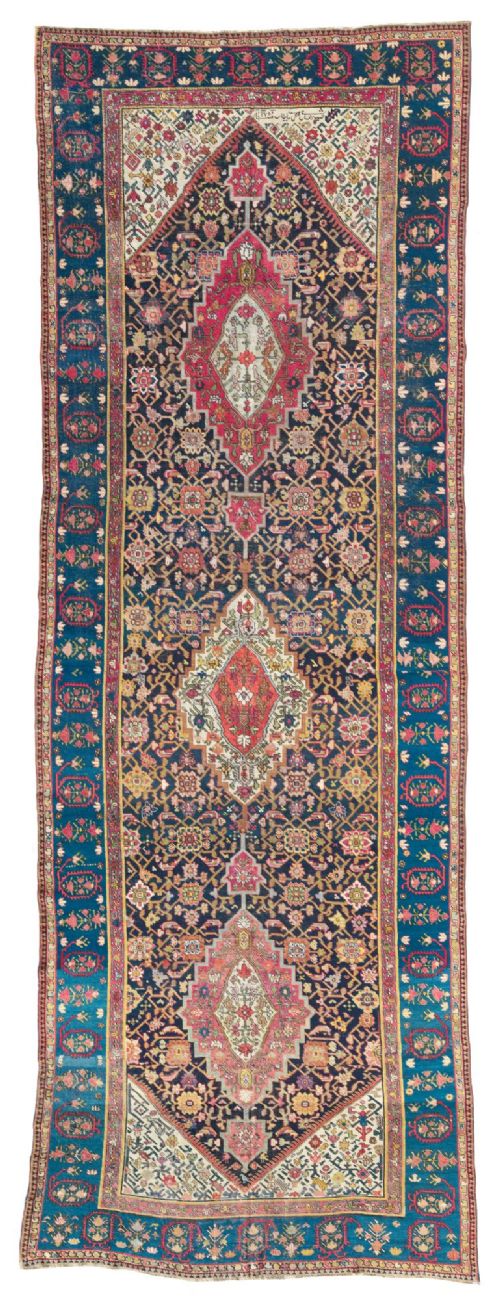
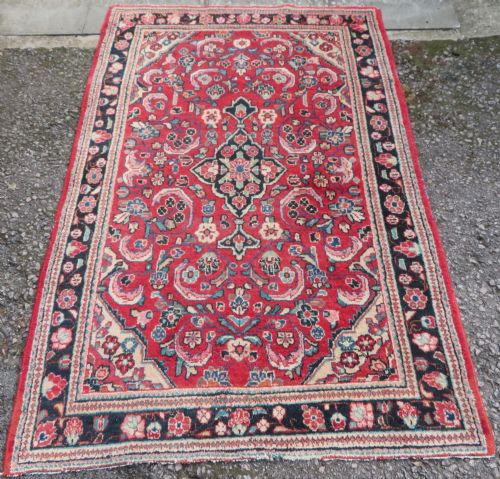

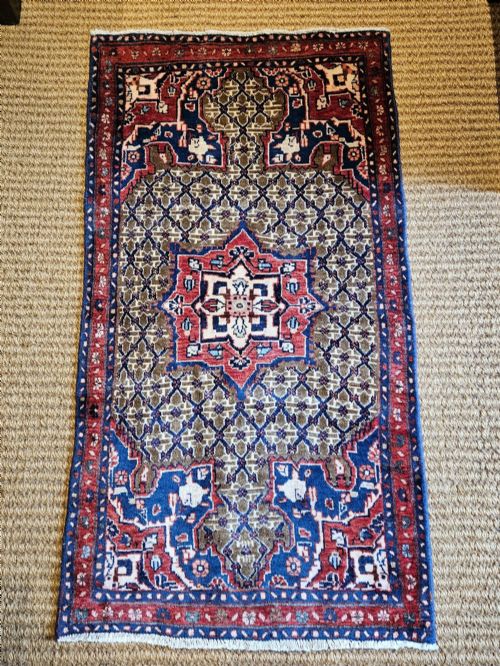
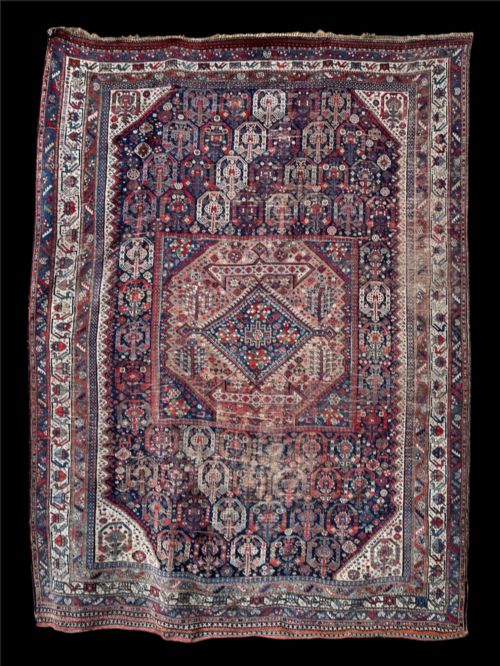
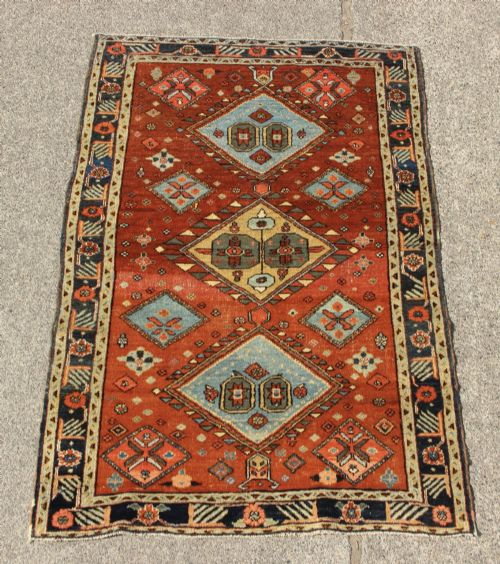
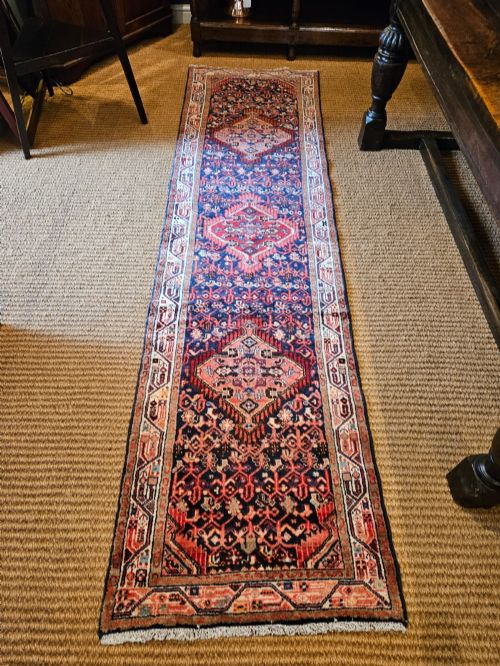

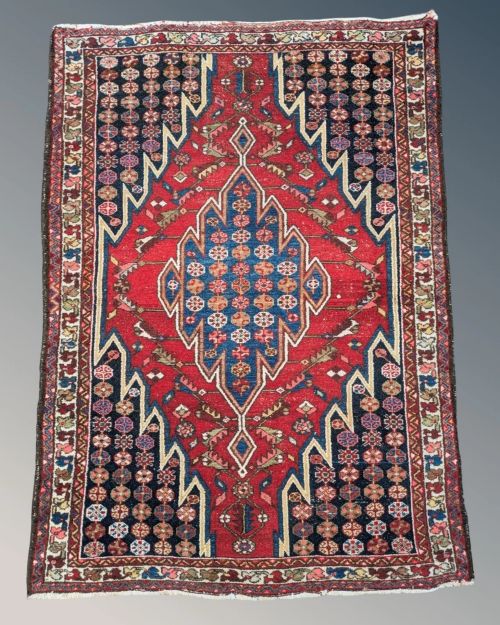
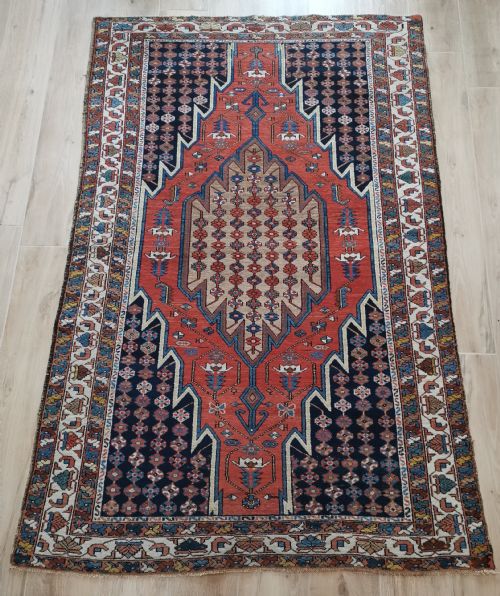
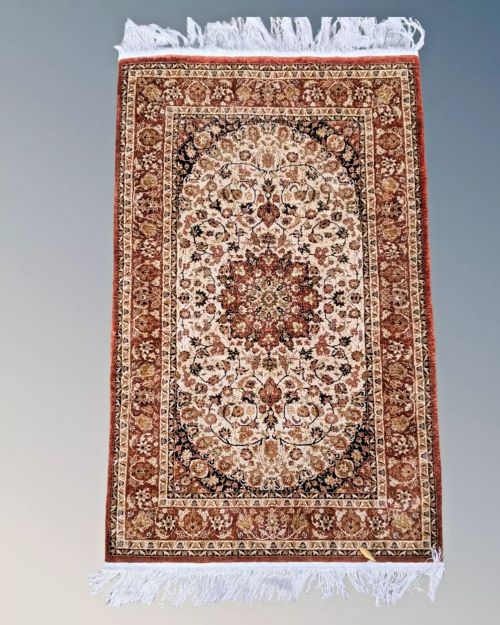
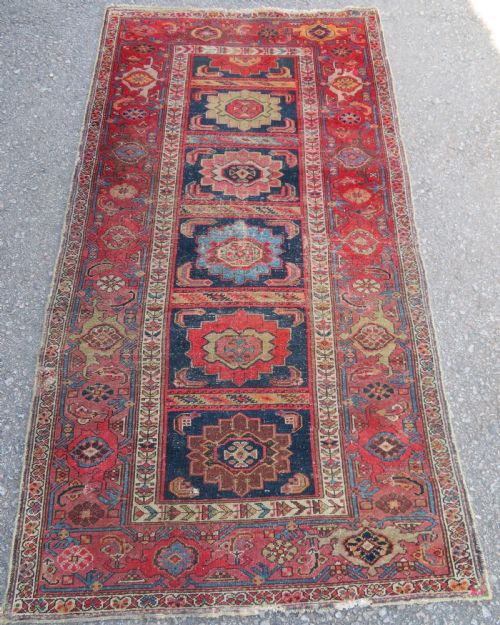
Persian Medallion Runner Rug
These persian medallion runner rug examples bring traditional tribal geometry and village craftsmanship directly into long hallways.
Persian Medallion Runner Rug
A persian medallion runner rug serves as a narrow floor covering designed for corridors, hallways, and long spaces, defined by central motifs that anchor the composition. These pieces draw on traditions from regional weaving centres across nineteenth and early twentieth century origins.
Buyers encountering this selection will find examples originating from villages and tribal confederacies, spanning Persian, Kurdish, Bakhtiar, and Hamadan styles. The inventory reflects periods reaching from the nineteenth century through the 1930s.
Forms vary from village runners to long tribal carpets and kelims, utilising traditional formats that fit narrow architectural passages. Each piece carries the distinct geometric or floral vocabulary of its maker's district.
Materials and construction methods
Weavers relied primarily on wool and hand-spun wool for the pile, providing durability and resilience for high-traffic hallway placement. Cotton foundations supplied structural stability, while select examples incorporate silk for finer detail.
Construction involved traditional hand-knotting techniques executed on upright looms, embedding coloured fibres into warp and weft foundations. Natural dyeing traditions produced the rust, navy blue, and earthy palettes recorded across the periods.
The listings span periods from the nineteenth century through the 1930s, incorporating wool, cotton, and silk materials.
Factors determining quality
Knot density and structural tightness dictate the longevity and definition of the central medallion design. Tighter foundations secure the pile more firmly against wear in busy hallways.
The choice of materials influences the handle and visual depth, with hand-spun wool and select silk elements yielding richer tactile qualities. Consistency in natural dye saturation also separates standard village weaving from finer workshop output.
The Persian Medallion Runner Rug Glossary
- Medallion
- A central ornamental motif, often circular or diamond-shaped, placed in the middle of the field to anchor the design.
- Warp
- The vertical threads stretched lengthwise on the loom that form the foundational skeleton of the rug.
- Weft
- The horizontal threads passed across the warp strands to lock the knots in place after each row.
- Pile
- The upright cut or loop yarn surface that forms the usable soft layer of the rug.
- Kilim
- A flat-woven carpet or rug produced without a pile, utilising interlocking weft techniques.
Persian Medallion Runner Rug: Frequently Asked Questions
Where should I place a runner rug?
These narrow formats suit long hallways, corridors, and entryways where linear floor space benefits from centralised geometric patterns.
They also function effectively in galley kitchens or beside beds, protecting floorboards while introducing traditional colour to transitional spaces.
How do I care for antique wool rugs?
Gentle, regular vacuuming without a rotating brush roll prevents dust accumulation in the wool pile.
Professional specialist cleaning remains essential for maintaining natural dyes and preventing structural stress.
What indicates a tribal origin?
Tribal pieces display asymmetrical geometric motifs, spontaneous colour shifts, and bolder, less rigid medallion structures.
Weavers working in nomadic or village settings relied on memory and local traditions rather than precise cartoon blueprints.
Are these runners made with natural dyes?
Many examples from the nineteenth and early twentieth centuries utilise traditional plant and mineral-derived colourants.
These dyes interact with wool to develop a rich patina over decades of light exposure and use.