


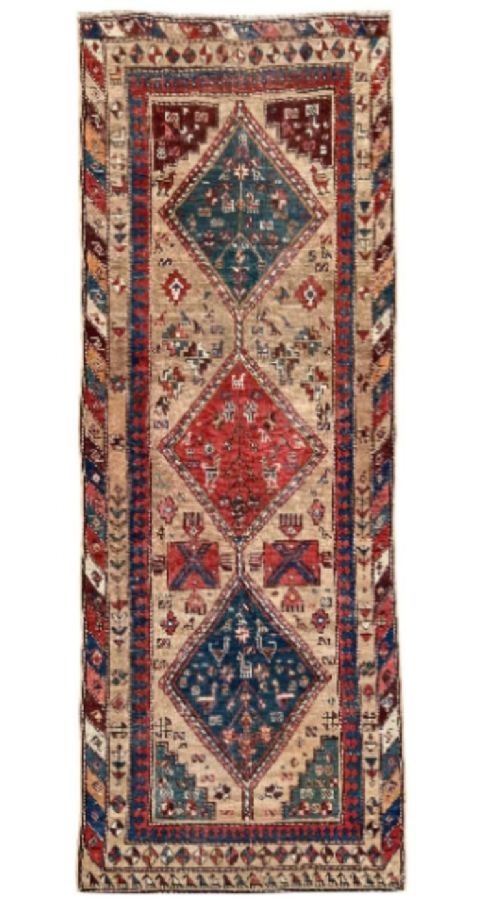
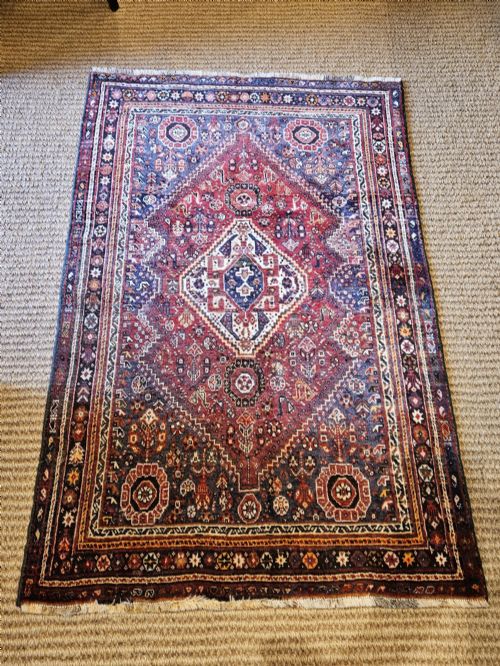
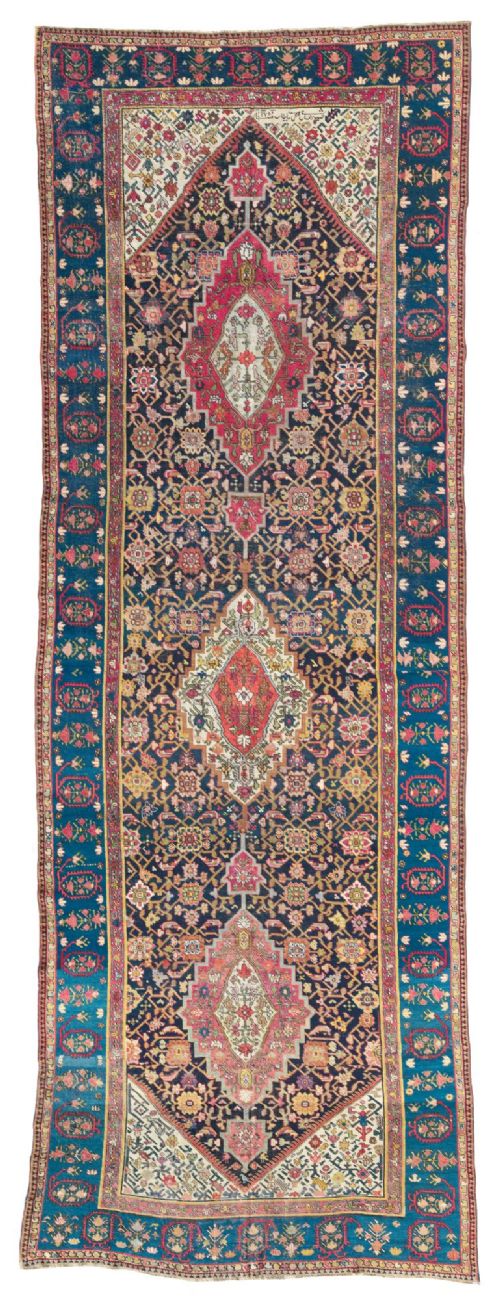
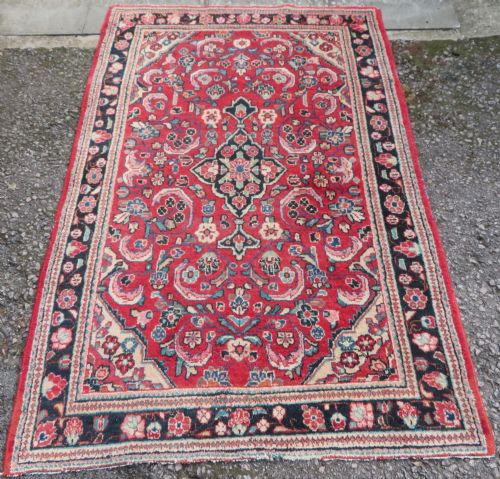
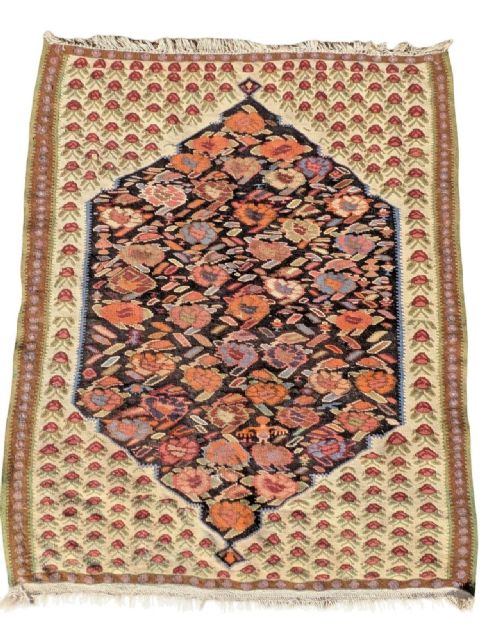
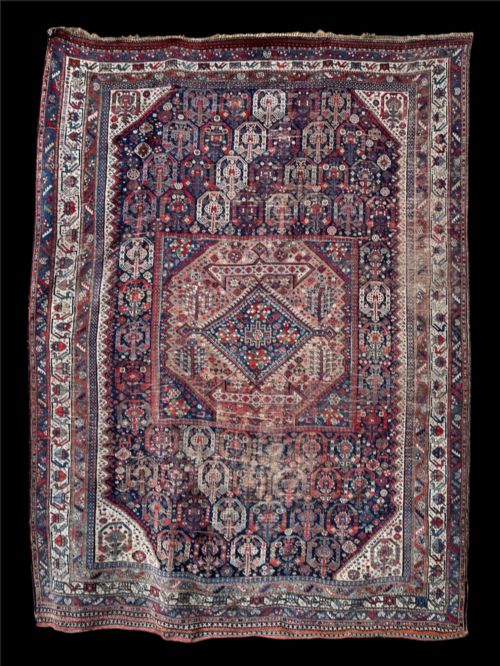
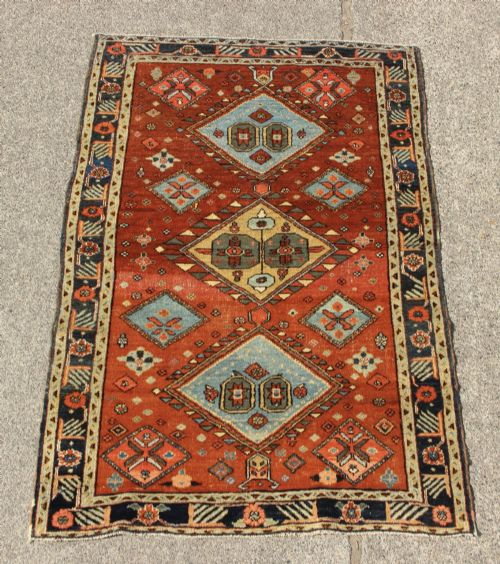
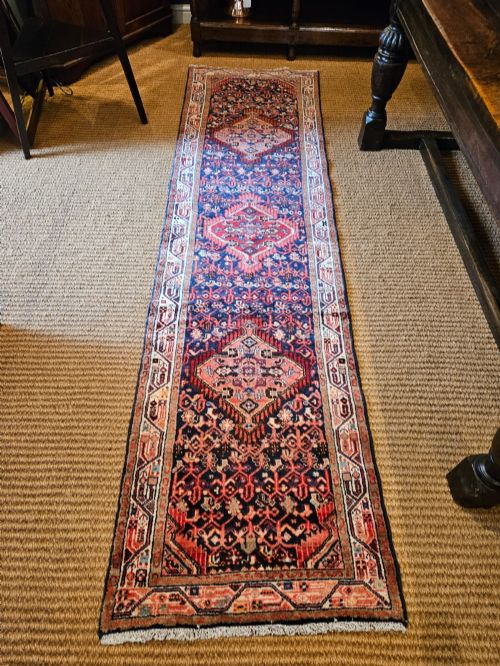
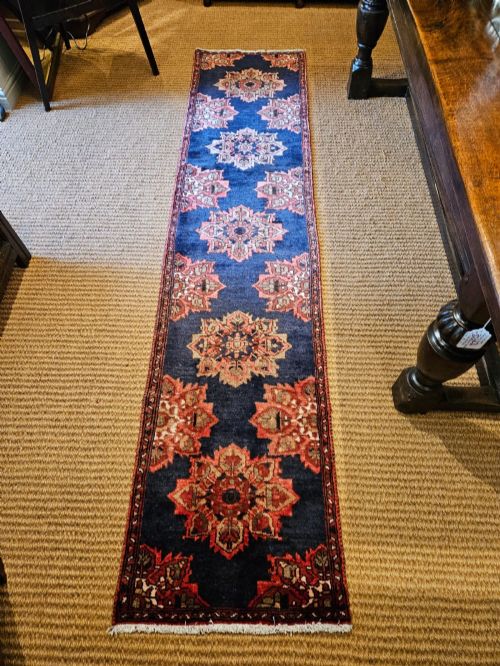
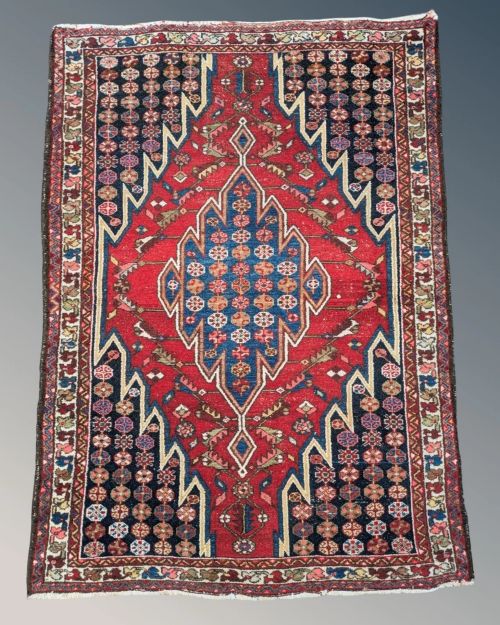
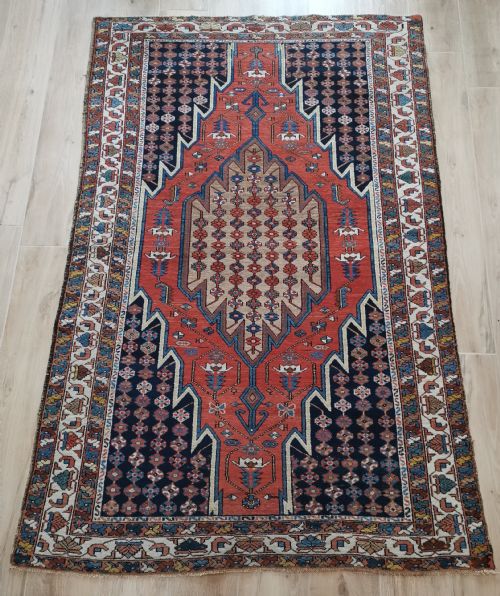
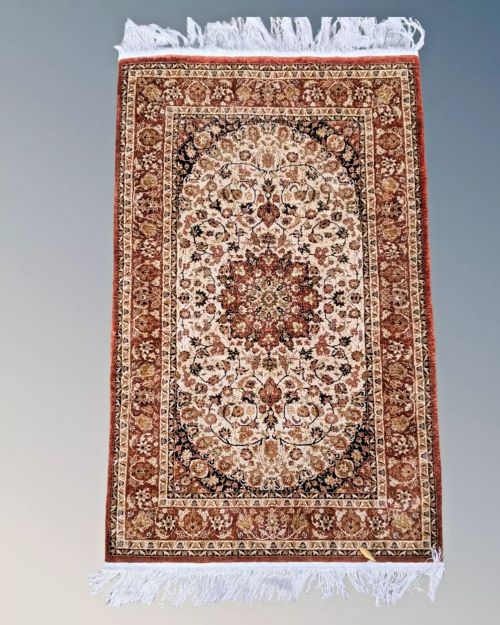
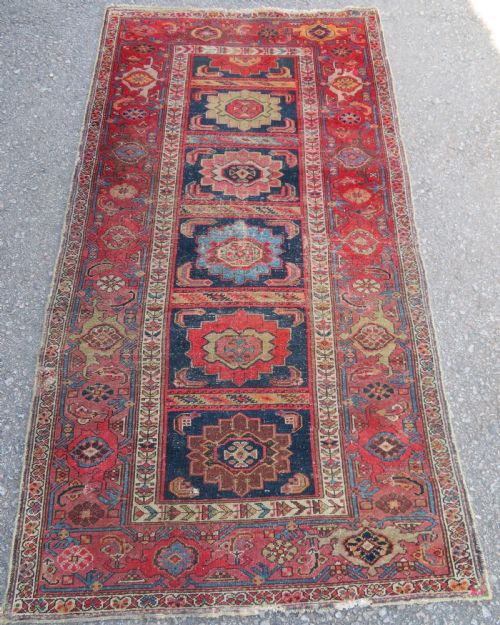
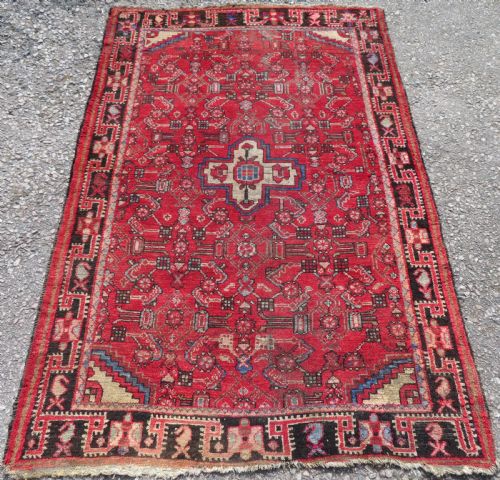
Persian Medallion Runner Carpet
A persian medallion runner carpet brings distinct tribal geometry and traditional pattern to a long hallway or narrow space.
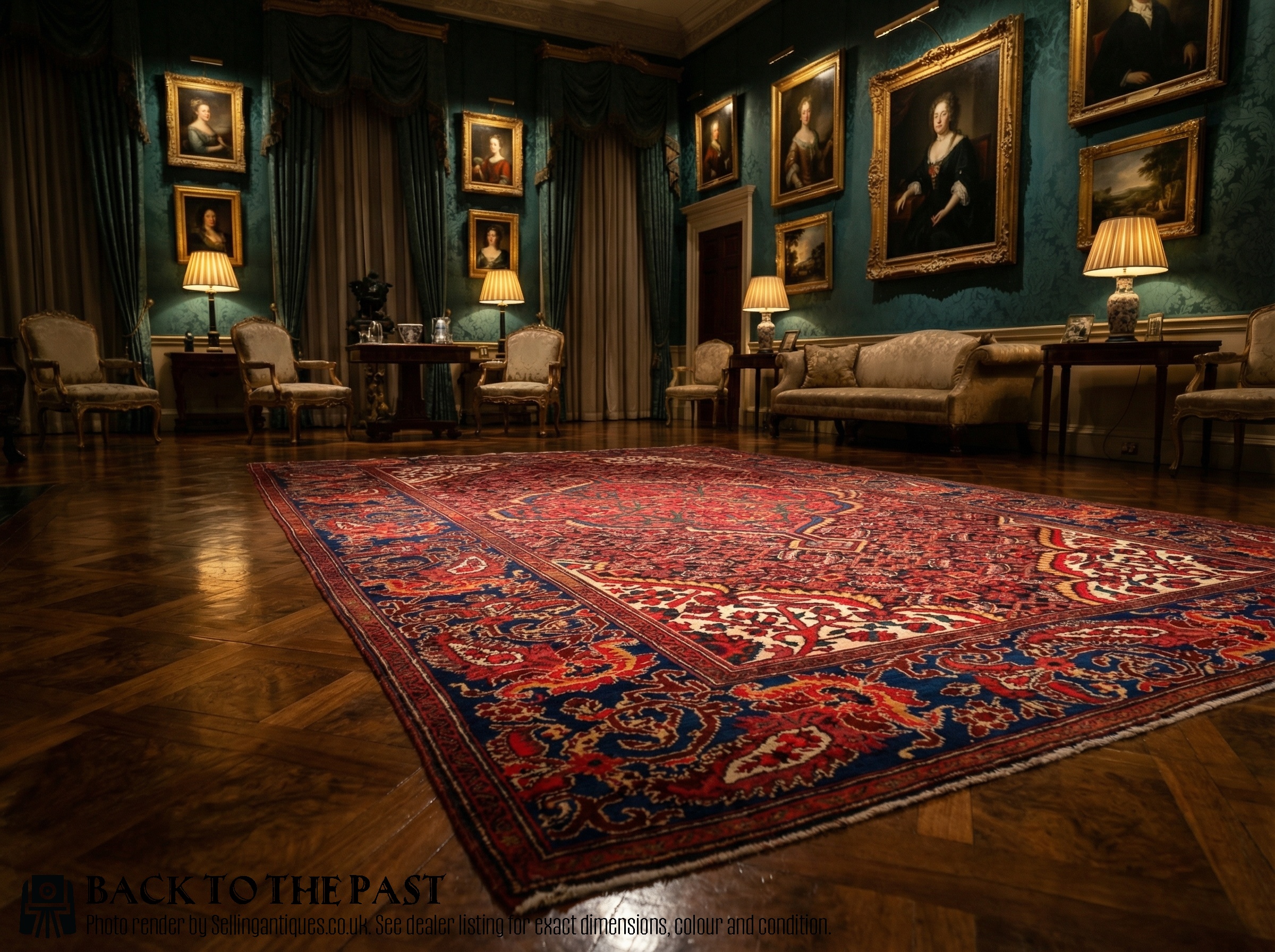
Persian Medallion Runner Carpet
A persian medallion runner carpet combines elongated formats with central motif designs originating from various regional weaving traditions. When buyers search for a persian medallion runner carpet, they encounter pieces originating from the nineteenth and early twentieth centuries, spanning periods from eighteen-fifty to nineteen-thirty.
The selection includes specific regional styles such as Kurdish tribal, Bakhtiar, Hamadan, and Heriz. These examples demonstrate the traditional formats used in nomadic and village weaving communities across the region.
How they were made
The construction relies primarily on wool and hand-spun wool, often paired with cotton foundations for stability in long formats. Silk also appears in specific regional pieces, demonstrating varied textile traditions.
Weavers utilised traditional hand-knotting techniques to create durable surfaces suited for heavy foot traffic in domestic spaces. Natural dye sources provide the foundation for the characteristic colour palettes seen across the inventory.
The inventory includes pieces dated across the nineteenth century and the early decades of the twentieth century, up to nineteen-thirty.
What varies in quality
The finesse of the knot density and the precision of the geometric or floral medallion layout distinguish finer examples from simpler village work. Superior handle and wool quality contribute significantly to the longevity and tactile appeal of the carpet.
The integrity of the foundation and the preservation of the original outer selvedges and ends indicate the level of care a piece has received. Consistency in dye saturation across the field reflects the skill of the original workshop or weaver.
The Persian Medallion Runner Carpet Glossary
- Medallion
- A central ornamental motif, often symmetrical, placed in the middle of the carpet field. This design element draws the eye and anchors the surrounding geometric patterns.
- Runner
- A long, narrow carpet format specifically designed for corridors, stairs, and hallways. These pieces provide proportioned floor coverage for restricted spaces.
- Kelim
- A flat-woven carpet or rug produced without a pile. This technique creates a lighter, reversible textile distinct from knotted pile carpets.
- Kelleh
- A large format rectangular carpet, typically longer than it is wide but broader than a standard runner. It serves substantial floor areas in traditional room layouts.
- Selvedge
- The side edges of a carpet finished to prevent unravelling. Proper edge construction protects the structural integrity of the pile knots.
Persian Medallion Runner Carpet: Frequently Asked Questions
Where should I place a runner?
These long formats suit narrow spaces such as hallways, corridors, and bedside areas. They protect flooring while adding warmth and pattern to transitional zones in a home.
Ensure the dimensions match the clearance required for doors to open smoothly over the pile. Proper placement allows the central design to remain visible along the length of the walkway.
How do I care for antique wool?
Regular gentle vacuuming without a rotating brush roll prevents dust accumulation in the pile fibres. Prompt attention to spills using appropriate methods preserves the natural wool materials.
Professional cleaning suited for antique textiles helps maintain the integrity of the dyes and fibres over decades of domestic use.
What defines regional styles?
Regional styles reflect specific weaving communities, from Heriz and Bidjar to Hamadan and Kurdish tribal groups. Each area utilises distinct colour combinations, wool qualities, and structural characteristics.
Recognising these differences helps identify the likely origin and period of an individual piece based on its visual traits.
How do I read carpet dimensions?
Measurements are typically provided in centimetres or metres, noting length and width. Runner formats highlight the elongated proportion necessary for specific architectural spaces.
Comparing these measurements with your floor space ensures the piece fits comfortably without obstructing furniture placement.