



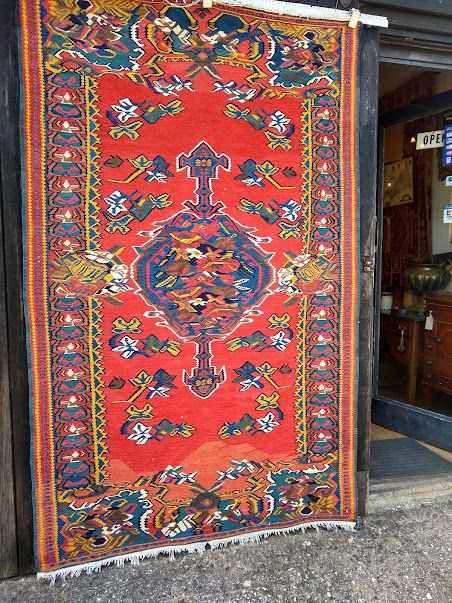
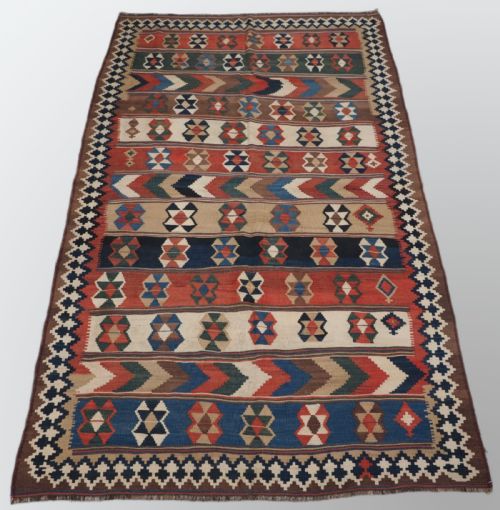
Persian Kilim Carpet
The Persian kilim carpet brings flat-woven tribal geometry and rich wool textures into modern interiors.
Persian Kilim Carpet
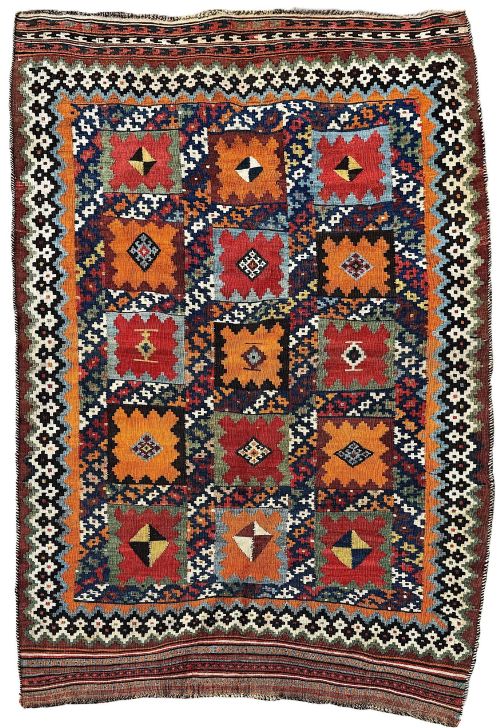
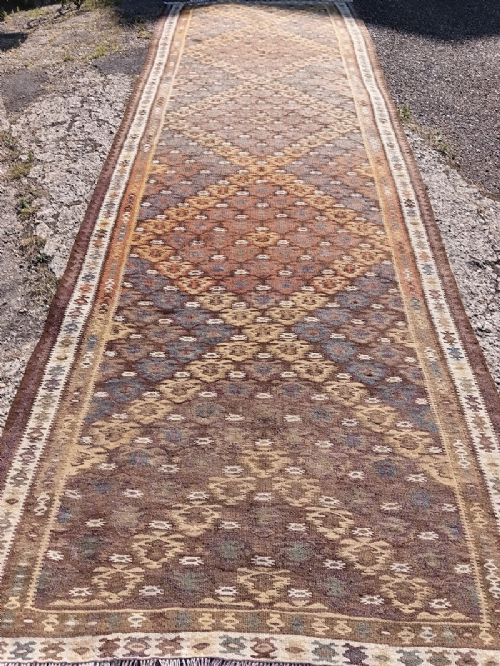
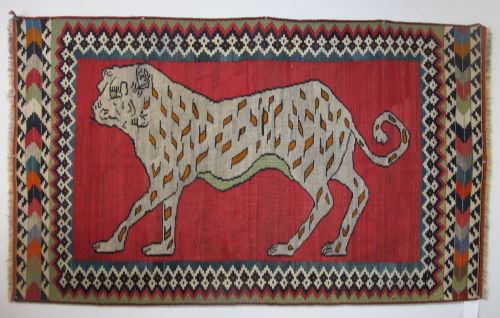
A persian kilim carpet is a flat-woven textile produced by nomadic and village tribes across Persia, including the Qashqai, Shahsavan, Kurdish, and Senneh groups. These pieces date primarily from the late nineteenth century through the early twentieth century, spanning periods such as 1900, 1890, and 1920.
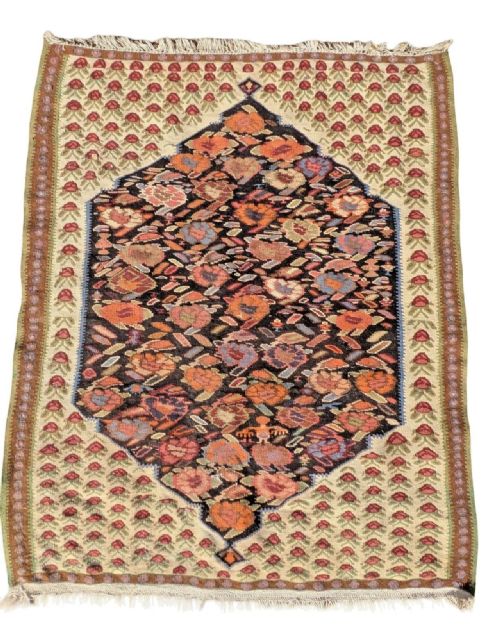
Buyers encountering this phrase find formats ranging from small runner rugs and square room-sized carpets to specific utilitarian items like Sofreh dining kilims and bag face cushions. Tribal workshops utilise distinct geometric vocabularies, featuring diamond medallions, compartment layouts, and banded designs.
Regional variations connect specific aesthetics to distinct territories, from the detailed floral motifs of Bidjar to the striking motifs of South Persia and the borderlands. These floor coverings and textiles serve as functional historical documents of regional weaving traditions.
How they were made
Weavers construct a persian kilim carpet using wool, hand-spun wool, and sometimes camel hair, often supported by cotton foundations. The lack of a pile distinguishes these flat-weaves from knotted carpets, relying instead on interlocked weft threads that create crisp geometric boundaries.
Makers colour these natural fibres using natural dyes, yielding soft, nuanced tones that mellow gracefully over decades of exposure and use. Additional techniques like Soumak wrapping provide structural relief and decorative surface texture alongside standard slit-weave construction.
Persian Kilim Carpet Retail Price Guide 2026
Typical asking prices for persian kilim carpet among the pieces listed under this phrase on Sellingantiques today, from the lower quarter to the upper quarter. They describe what is for sale here now, not the wider market.
Current listings feature pieces spanning the nineteenth century up through 1930, utilising wool, cotton, and natural dyes.
What varies in quality
The fineness of the weave dictates structural integrity, with tightly packed weft threads creating a denser, more durable fabric that withstands decades of foot traffic. Superior examples display precise symmetry in geometric layouts and a disciplined control of scale across large expanses.
The purity and depth of the palette separate standard regional pieces from exceptional examples, as complex natural dye baths produce variegated tones that light enlivens. Historical integrity, including minimal restoration and intact original borders, elevates the standing of individual textiles.
The Persian Kilim Carpet Glossary
- Kilim
- A flat-woven carpet or rug produced without a pile by tightly interlock-weaving the horizontal weft threads over the vertical warp threads. This technique creates a lightweight textile with identical patterns visible on both sides.
- Soumak
- A brocade-like flat-weaving technique where decorative weft threads are wrapped over and around the warp threads in a continuous sequence. This method produces a textured surface and a heavier, more durable structure.
- Sofreh
- A specialised dining or food-preparation kilim used historically by tribal groups for spreading meals on the ground. These textiles often feature minimalist field layouts framed by protective border bands.
- Warps
- The vertical foundational threads stretched taut on a loom before weaving begins. In these carpets, visible warps often show subtle variations in hand-spun wool or cotton thickness.
- Wefts
- The horizontal filling threads passed back and forth through the warp threads to build the pattern. Skilled weavers pack these wool threads tightly to conceal the warp foundation entirely.
Persian Kilim Carpet: Frequently Asked Questions
How do I clean a kilim?
Regular gentle vacuuming without a rotating brush lift surface dust safely from the flat-woven wool structure without snagging the threads.
Professional specialist washing remains essential for deeper cleaning, as household detergents and excessive water damage natural dyes and historical wool fibres.
Can I use them on the floor?
These flat-weaves function effectively as floor coverings in moderate traffic areas when paired with a quality non-slip underlay.
The underlay prevents slippage and cushions the wool against hard subfloors, reducing premature wear on the foundational warp threads.
How do I date a piece?
Examining the wool consistency, structural weave, and specific palette traits provides the primary clues for determining the production era. Natural dyes and hand-spun materials typical of the nineteenth and early twentieth centuries offer reliable chronological markers.
Design motifs also evolve across decades, allowing experienced collectors to place items within specific periods like 1890 or 1920.