
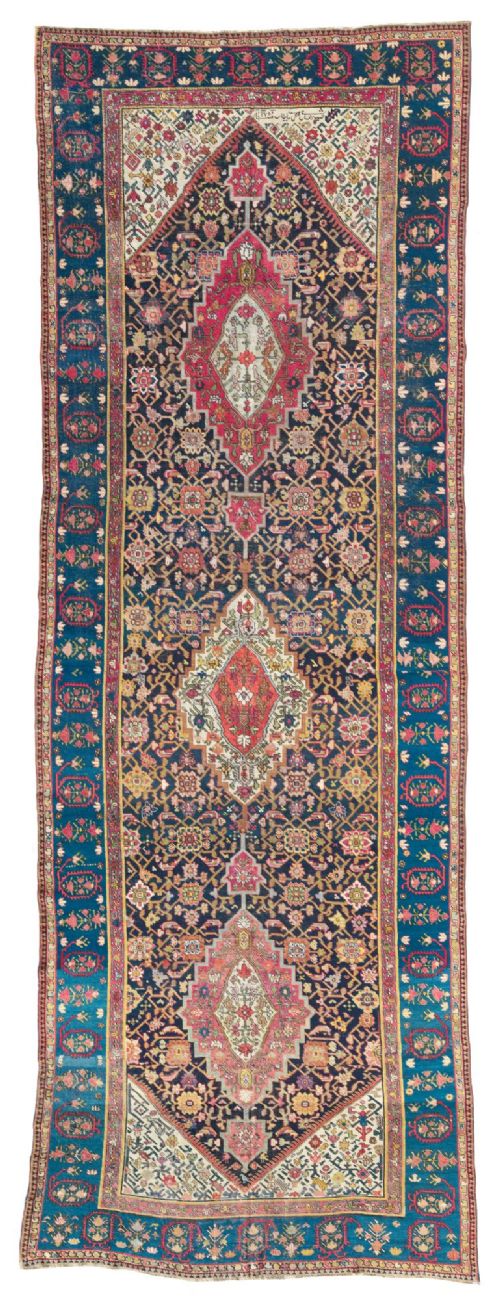


Persian Kelleh Rug
A persian kelleh rug is a large floor covering woven in workshops and nomadic tents across Persia, offering enduring tribal character and substantial format.
Persian Kelleh Rug
A persian kelleh rug represents a distinct format of floor covering, traditionally longer and narrower than a standard carpet. These pieces emerge from various weaving traditions including Kurdish, Bidjar, Malayer, and Baktiari workshops.
The selections encountered here span multiple decades from the mid-nineteenth century into the early twentieth century. Buyers will frequently find tribal and nomadic designs alongside formal workshop compositions.
Many examples showcase specific regional patterns such as the tree of life, boteh motifs, and harshang crab borders. Their substantial proportions make them suitable for hallways, long rooms, and large living spaces.
How They Were Made
Weavers utilised natural materials including wool, cotton, and hand-spun wool to construct these textiles. The foundation typically relies on sturdy cotton or wool warps and wefts to ensure structural durability.
Pile construction involves dense knotting with hand-spun wool, allowing intricate motifs and complex borders to retain definition over generations of use. Vegetable and natural dye stuffs provided the saturated palette seen across these floor coverings.
Look closely for stray animal figures hidden among the shrub lattices, woven by makers who watched local fauna from their looms.
What Varies in Quality
The fineness of the knotting and the crispness of the drawing separate standard tribal weaving from master workshop production. Tighter knot density allows complex border details like the harshang pattern to appear sharply defined.
The depth and variation of natural wool tones heavily influence visual richness. Examples featuring varied, saturated dye lots demonstrate superior material selection by the original maker.
The Persian Kelleh Rug Glossary
- Kelleh
- A format of Persian carpet characterised by an elongated rectangular proportion, traditionally longer than a standard rug but wider than a runner. This shape served specific architectural functions in Persian homes.
- Boteh
- A stylised floral motif resembling a almond or curved shrub, frequently repeated across the field of Kurdish and Malayer textiles. It is one of the most enduring symbols in traditional weaving.
- Harshang
- A traditional crab pattern found within the borders of Persian carpets, particularly noted in Zanjan and north-west weaving. This geometric floral arrangement frames the central field.
- Warp
- The vertical threads stretched lengthwise on a loom before weaving begins, forming the foundational skeleton of the rug. Cotton and wool are standard warp materials in these pieces.
Persian Kelleh Rug: Frequently Asked Questions
Where were these rugs made?
Production spans various regions of Persia, including Kurdish districts, Bidjar, Malayer, and Baktiari territories. Different villages and tribes developed distinct structural methods and design vocabularies.
Local materials and regional aesthetics dictated whether a piece emerged from a nomadic camp or a settled town workshop.
How do I use a kelleh in a modern room?
The elongated proportions make these textiles ideal for placement in narrow living rooms, long hallways, or beneath dining tables. Their generous length anchors furniture arrangements effectively.
Allowing floor space around the edges highlights the distinctive format and regional border designs.
What does tree of life mean?
The tree of life is a symbolic motif depicting a large plant rising from the ground, often populated with birds and animals. It represents eternal life and spiritual growth in traditional weaving.
This imagery appears frequently in tribal and nomadic carpets from various Persian districts.
How can I tell the age of a piece?
Dating relies on material analysis, particularly the presence of hand-spun wool, structural nuances, and regional dye characteristics. Pieces originating from the nineteenth century display specific palette shifts and wear patterns.
Comparing border styles and knot structures against documented regional examples clarifies the production era.