
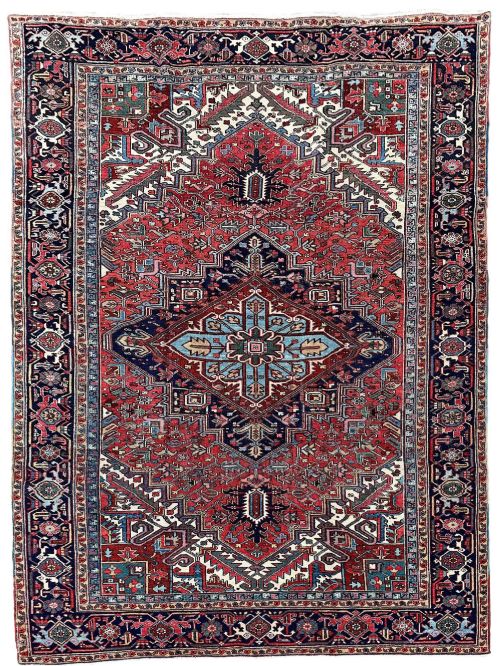
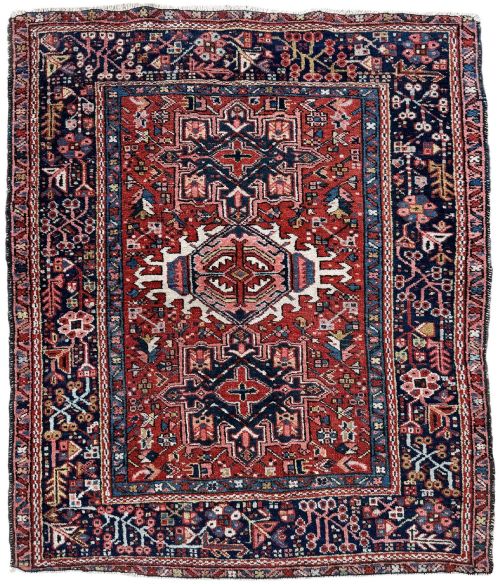
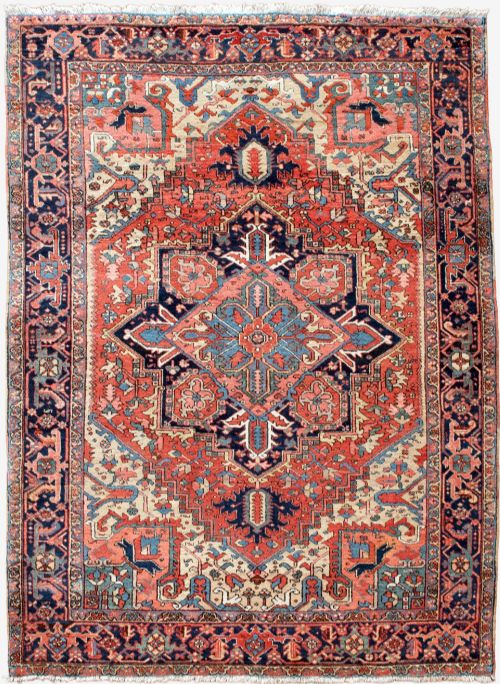


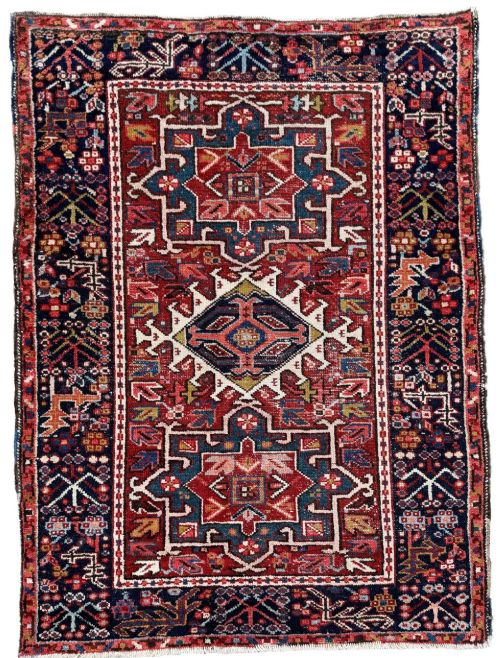
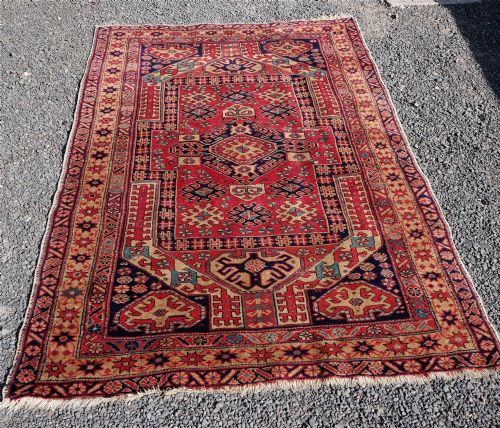
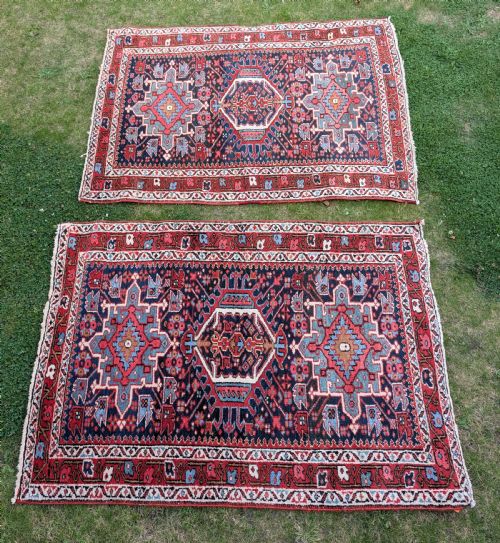
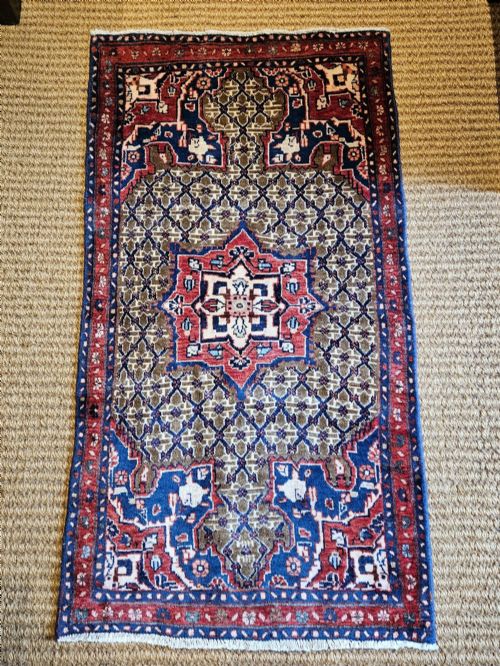
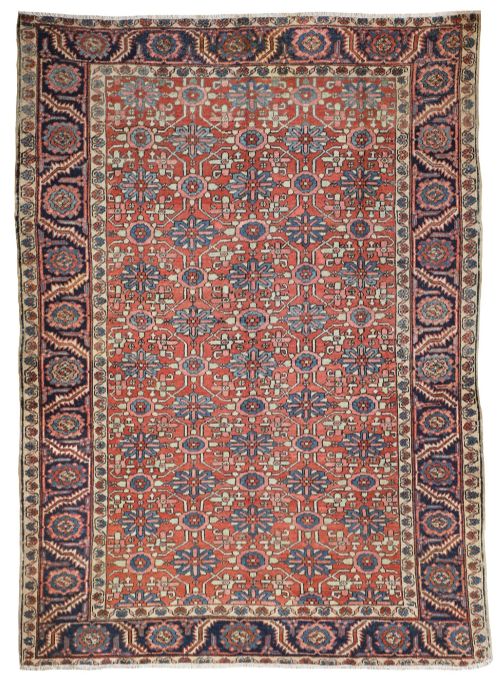


Persian Heriz Area Rug
A persian heriz area rug brings distinct geometry and enduring wool texture to a floor, offering durable craft from North-West Persia.
Persian Heriz Area Rug
A persian heriz area rug stands as a sturdy floor covering originating from the Heriz region and broader North-West Persia.
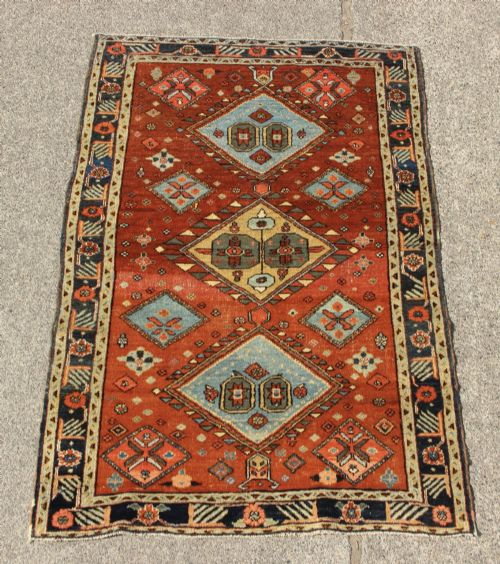
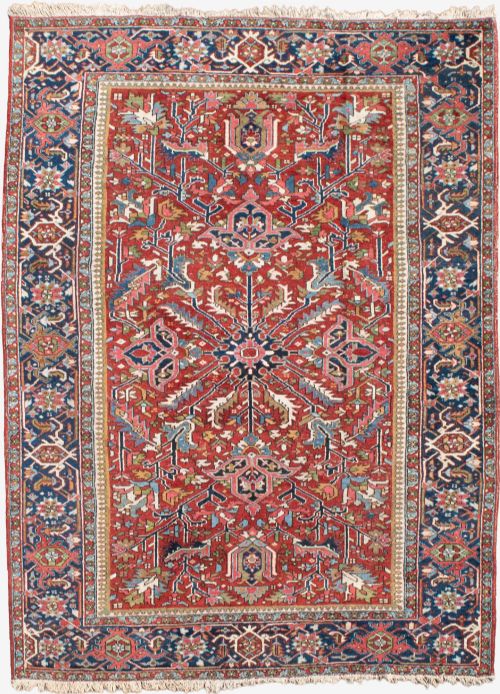
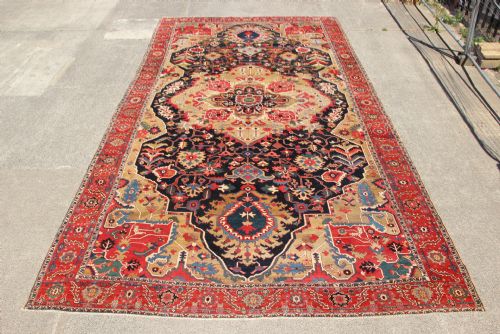
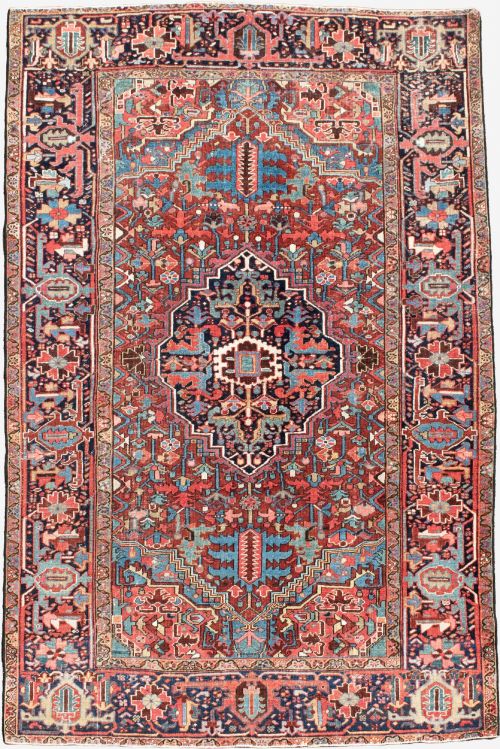
The pieces appearing on this page span from the late nineteenth century through to the early decades of the twentieth century, encompassing various scales from hearth sizes to large carpets.
Buyers encounter traditional village weaves alongside related regional types such as Karaja, Serapi, Ahar, and Bakshiash.
How They Were Made
These floor coverings utilise hand-spun wool pile knotted onto a cotton warp foundation, providing structural resilience.
Weavers in North-West Persian workshops and villages relied on traditional manual techniques to produce dense, flat-laid textiles designed for heavy use.
Several examples are specifically sized for hearth placement, warming the feet directly before the fire.
What Varies in Quality
Differences in quality hinge upon the crispness of the geometric drawing and the subtlety of the natural dye palette.
Finer knot density and better preservation of the wool pile distinguish exceptional examples from standard village production.
The Persian Heriz Area Rug Glossary
- Warp
- The vertical foundation threads stretched tightly on the loom before knotting begins. Cotton warp provides a stable structure for the wool pile.
- Serapi
- A sub-style associated with older Heriz carpets, typically displaying more open compositions and softer colouration. These pieces often date to the nineteenth century.
- Karaja
- A village rug type from the same region as Heriz, known for geometric medallion formats in smaller dimensions. They share similar wool materials and palette characteristics.
- Pile
- The surface of the rug formed by the cut ends of the knotted wool yarn. Hand-spun wool pile wears down gradually while retaining characteristic texture.
Persian Heriz Area Rug: Frequently Asked Questions
Where were these rugs made?
These textiles originate from the town of Heriz and surrounding villages within the North-West region of Persia. Production centres relied on local materials and traditional designs passed down through generations.
The regional style remains distinct from city-based workshop production due to its bold geometric formats and robust structural composition.
How do I place a large carpet in a room?
A substantial floor covering anchors the furniture arrangement within a reception space or dining room. Ensure that the principal seating pieces sit comfortably upon the wool surface.
Allow sufficient clearance around the perimeter of the rug to display the surrounding floorboards or paving.
What distinguishes Serapi from standard Heriz?
Serapi carpets typically represent an earlier period of production, featuring more expansive central medallions and muted dye palettes. The drawing tends to be somewhat less dense than later Heriz weaving.
Collectors often group them together while recognising the distinct visual lightness of the older Serapi format.
How should I care for vintage wool pile?
Vacuum the rug regularly with a standard suction attachment without rotating bristle brushes. Professional cleaning suited to antique textiles preserves the lanolin within the hand-spun wool.
Rotate the piece periodically to ensure even exposure to foot traffic and ambient daylight.