



Persian Bag Face
When you handle a persian bag face, you hold a fragment of nomadic textile history woven for practical life on the move.
Persian Bag Face
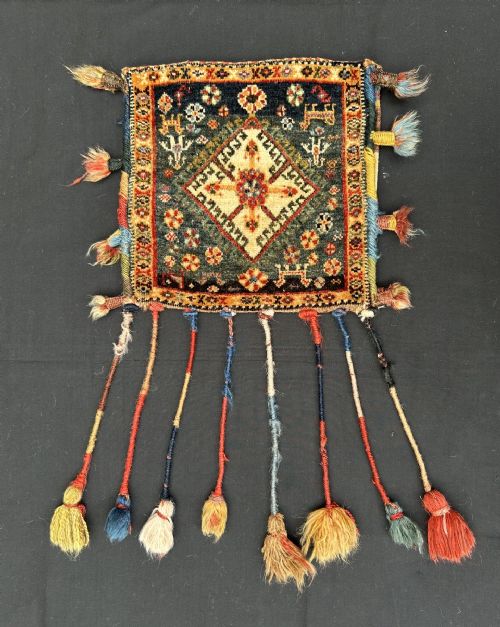
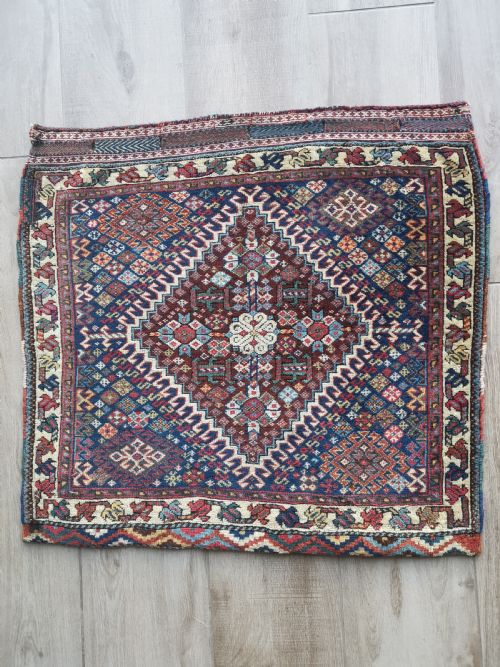
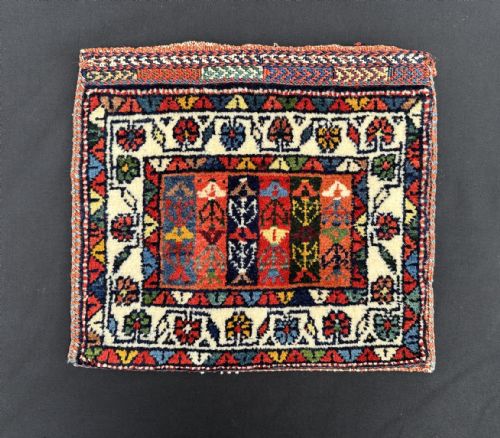
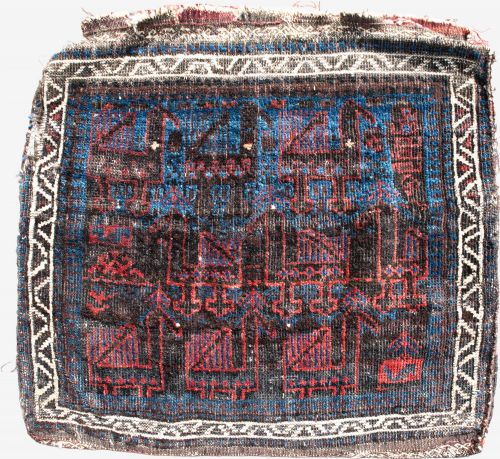
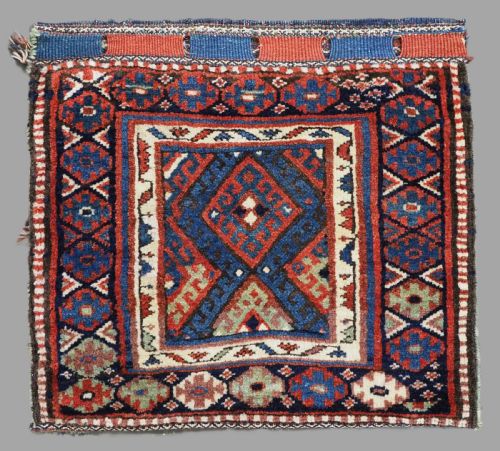
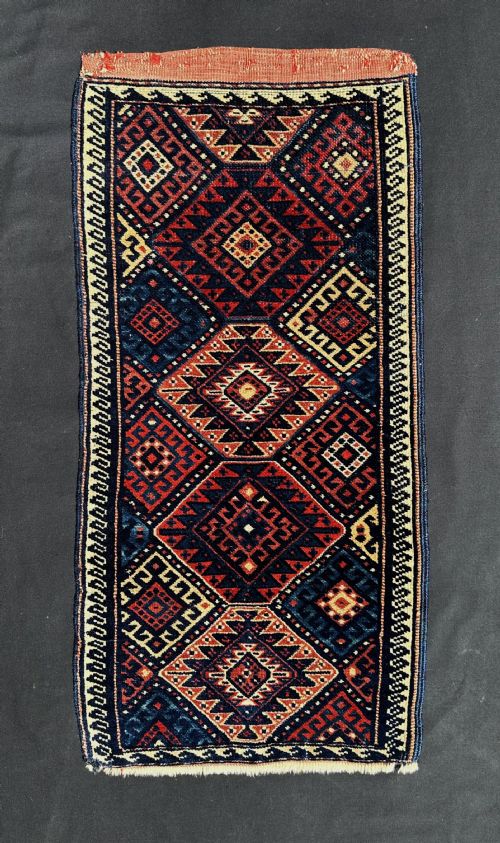
A persian bag face represents the front panel of a larger nomadic storage piece, such as a khorjin saddlebag or chanteh vanity bag, separated from its original backing over decades of use. These woven objects originate from tribal confederations across Persia, including the Qashqai, Afshar, Luri, and Baluch peoples.
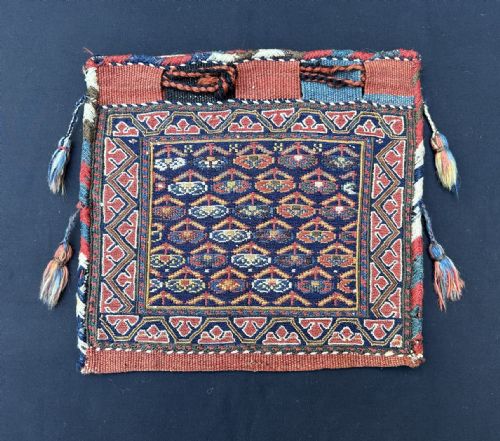
The format typically appears as a square or near-square textile panel, showing regional motifs like central medallions, boteh patterns, and geometric tile designs. Many surviving examples date from the nineteenth and early twentieth centuries, reflecting traditional domestic weaving practices.
Materials and construction methods
Weavers relied primarily on hand-spun wool for the pile and structure, combining it with cotton foundations in certain regional traditions. Natural vegetable dyes provided the rich palette of reds, blues, and yellows derived from local plants and minerals.
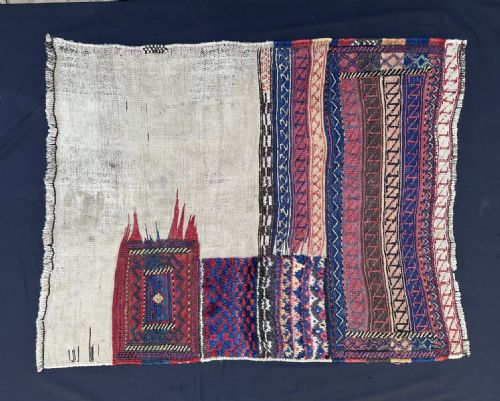
Construction typically involved knotting the pile firmly onto warp and weft threads, often complemented by flat-woven soumac or plain-weave sections at the borders or reverse. This dense knotting secured the geometric and tribal patterns against heavy daily wear.
Persian Bag Face Retail Price Guide 2026
Typical asking prices for persian bag face among the pieces listed under this phrase on Sellingantiques today, from the lower quarter to the upper quarter. They describe what is for sale here now, not the wider market.
Nomadic weavers occasionally hid tiny talismanic symbols within the geometric knotting to ward off the evil eye.
Evaluating weave and material standards
The fineness of the knotting and the crispness of the tribal design distinguish the more accomplished pieces from simpler utilitarian examples. A tight, even structure on the reverse indicates superior loom discipline.
The depth and integrity of the natural dye palette contribute significantly to an example's overall character. Pieces retaining vibrant, unbleached vegetable tones without significant colour bleeding demonstrate better initial material preparation.
The Persian Bag Face Glossary
- Khorjin
- A traditional double saddlebag used by nomadic tribes for transport and storage. These were often cut apart over time, leaving individual bag faces.
- Chanteh
- A small personal vanity bag or pouch woven for carrying small items. They display the same knotting and design characteristics as larger saddlebags.
- Soumac
- A flat-weave technique where extra weft threads are wrapped around the warp to create a textured, durable surface. This method frequently appears on Shahsavan bag pieces.
- Boteh
- A recurring paisley-like motif representing a floral shoot or cypress tree. It appears frequently in Afshar and Kurdish tribal weaving.
- Latch hook
- A geometric hook motif extending from the edges of medallions or borders. This element is common in Qashqai and tribal Persian designs.
Persian Bag Face: Frequently Asked Questions
What were persian bag faces used for?
Nomads utilised these woven containers for transporting belongings, grain, and personal possessions across the mountains and plains of Persia. They formed the operational halves of double saddlebags or served as personal carrying pouches.
Over generations, many of these functional bags suffered wear along the seams, leading to the removal and preservation of the decorative front panels as standalone textiles.
How do I display a bag face at home?
Many collectors mount these textile panels onto neutral fabric backing or display them flat within shallow frames to protect the historic wool fibres. Alternatively, smaller examples are frequently turned into decorative cushions for domestic seating.
Placing them away from direct sunlight preserves the vegetable dyes, while gentle rotation prevents uneven environmental exposure.
How can I tell different tribal designs apart?
Tribal attributions rely on specific structural traits, colour combinations, and characteristic motifs unique to each confederation. For instance, Afshar pieces often feature boteh patterns, whereas Qashqai work frequently displays complex geometric medallions.
Examining the weave density and edge finishes helps connect a specific panel to regions like Fars, Luristan, or Khorassan.
Are original backs important for these bags?
While many surviving examples exist strictly as detached bag faces, complete pieces retaining their original plain-weave backs or closure loops offer a more complete historic record. These elements demonstrate the full utilitarian context of the nomadic textile.
Cut faces remain entirely legitimate collectibles, but complete bags provide additional evidence of traditional construction methods.