
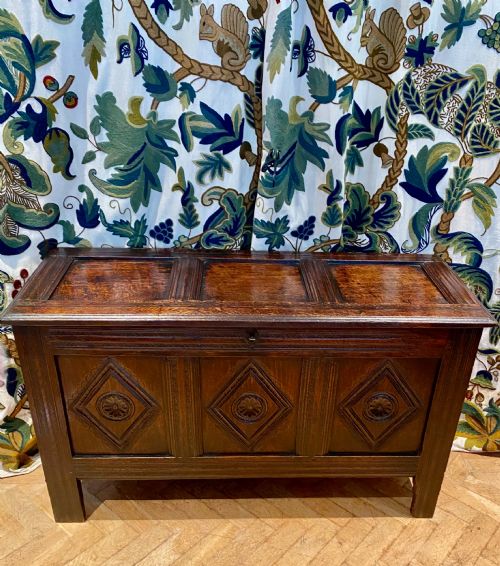
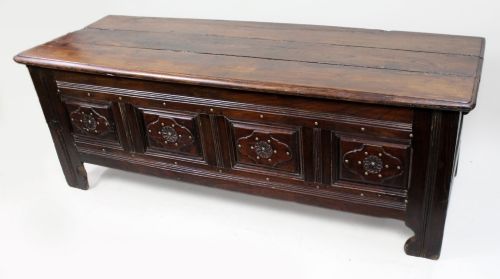
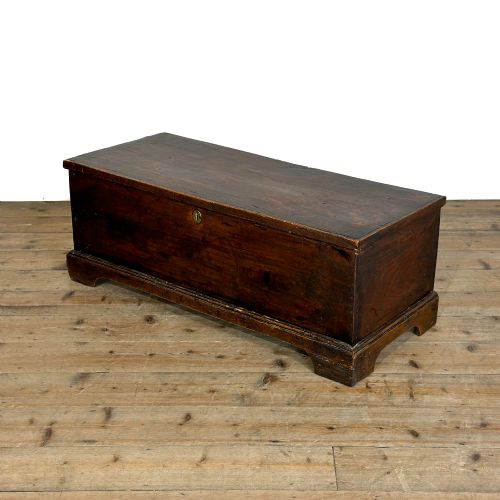
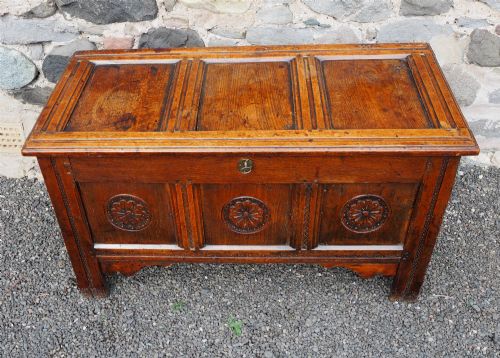


Period Wooden Blanket Chest
A period wooden blanket chest brings genuine age and utility to a room, offering robust storage built from solid oak, elm, and mahogany.
Period Wooden Blanket Chest
When someone searches for a period wooden blanket chest, they encounter heavy-duty storage furniture spanning several centuries of craftsmanship. The selection centres primarily on 17th Century and 18th Century examples, alongside pieces from the 16th Century, Regency, and Georgian periods. These items appear under various designations such as coffers, mule chests, and linen chests.
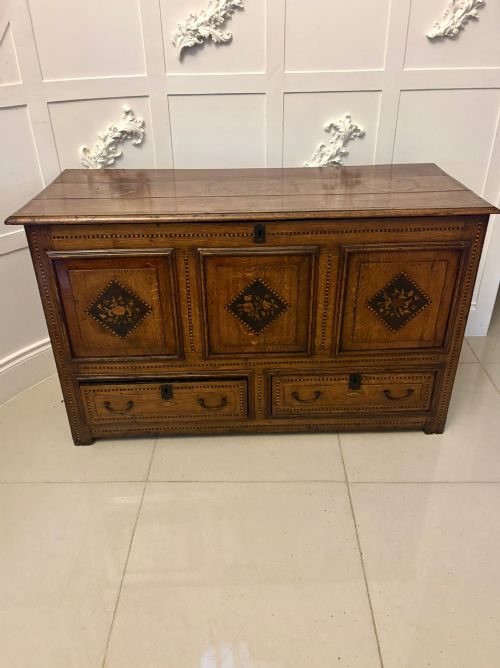
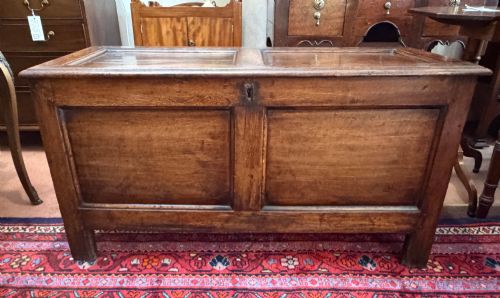
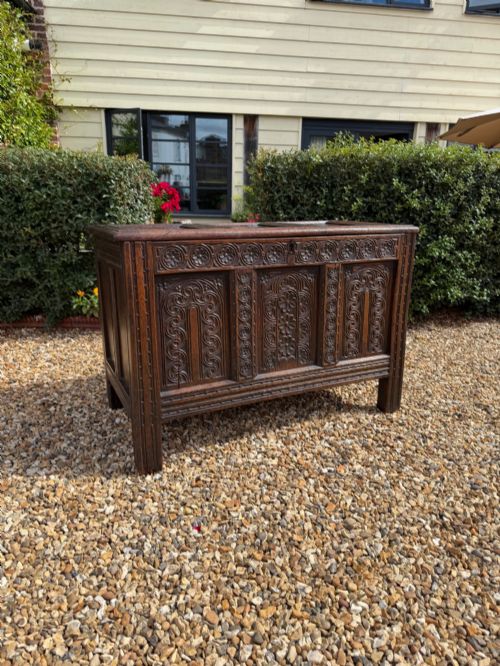
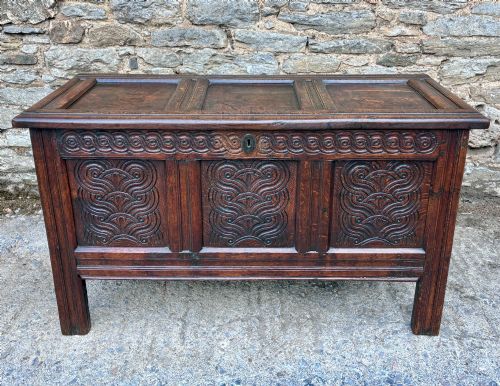
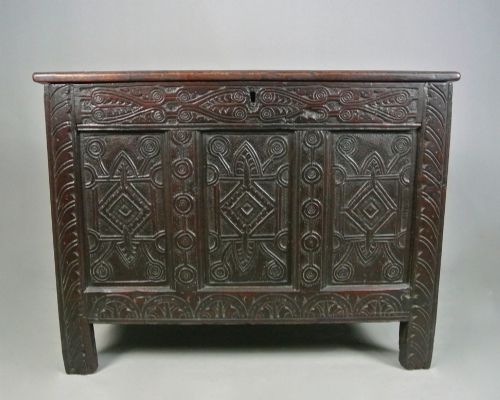
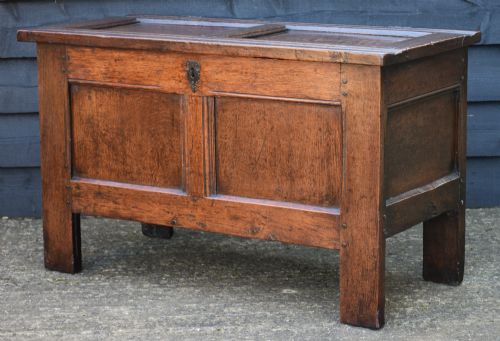
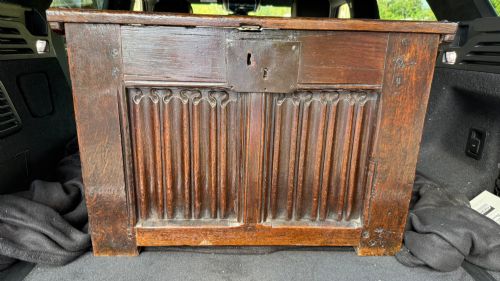
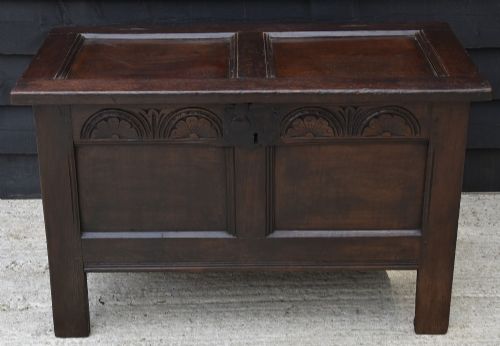
The most common form met on this page is the oak coffer, often constructed with panelled sides or as a simple six-plank structure. Examples range from small proportions originating in regions like the Gower Peninsula to larger joined oak pieces bearing carved details from the Jacobean or Elizabethan eras. Elm and mahogany variations also emerge alongside walnut and mixed inlay woods.
How they were made
Makers utilised solid timbers such as oak, elm, and mahogany, shaping them through traditional joinery methods including panelled construction and six-plank assembly. Structural reinforcement relied upon wrought iron and brass hinges, locks, and brackets to secure heavy lids and bodies.
Decorative embellishments involved detailed carving into the wood surface or applying marquetry inlay and mixed inlay woods to create geometric or floral patterns. Finished surfaces developed deep patination over centuries of handling and environmental exposure.
Several early examples include close stools, reminding us that private seating arrangements once served entirely practical indoor plumbing needs.
What varies in quality
The degree of hand-carved detail and the complexity of marquetry inlay distinguish standard utilitarian boxes from superior examples. Architectural depth within panelled construction and the crispness of surviving mouldings elevate certain coffers above plain planked variants.
Timber selection and the preservation of original metalwork, such as wrought iron hinges and locks, dictate the standard of a piece. The presence of documented provenance or regional attribution, such as specific Welsh or English origins, adds historical weight.
The Period Wooden Blanket Chest Glossary
- Cofer
- A traditional storage chest with a hinged lid, primarily used for valuables, linen, and garments before the widespread use of wardrobes. These items form the core of early vernacular furniture.
- Mule chest
- A storage chest featuring one or more drawers built into the base beneath the main compartment. This form bridges the evolution between simple coffers and chests of drawers.
- Six-plank coffer
- A primitive form of chest constructed from six distinct boards joined directly at the edges. This technique represents an early and robust method of box construction.
- Marquetry inlay
- Decorative woodwork where small pieces of contrasting wood veneer are fitted into a dug-out surface. This technique creates pictorial or geometric patterns on the exterior panels.
- Joined oak
- Furniture construction utilising mortise and tenon joints secured by wooden pegs rather than simple nails. This method provides superior structural stability for heavy pieces.
Period Wooden Blanket Chest: Frequently Asked Questions
How were blanket chests used historically?
These pieces served multiple domestic purposes, primarily storing household textiles, blankets, and precious garments away from dampness and pests. In smaller homes, they doubled as seating benches or tables during the day.
Over centuries, their heavy lids and robust construction allowed them to function securely as travel trunks or safe deposit boxes for family valuables before fitted bedroom furniture became common.
How do I date an antique oak chest?
Dating relies on observing construction techniques, tool marks, and stylistic details such as carved motifs or panel configurations. Earlier pieces from the sixteenth and seventeenth centuries typically employ joined framing and pegged mortise and tenon joints.
Secondary woods, hinge types, and the character of the surface patination also provide reliable indicators of age. Comparing the joinery methods against known period examples helps narrow down the decade of manufacture.
Where should I place a heavy chest?
These substantial items suit hallway landings, living room feature walls, or bedroom spaces where their substantial proportions anchor the room. Ensure the floor can support heavy solid timber furniture.
Keep wooden chests away from direct heat sources and strong sunlight to prevent the timber from drying out or splitting over time. Allowing space around the piece also highlights the panel work and hinges.
What is the difference between a coffer and a chest?
The terms are often used interchangeably, though a coffer traditionally implies a more secure box with heavy ironwork intended for valuables or church goods. Chests more broadly encompass general storage containers for domestic goods.
In historical listings, a coffer frequently denotes earlier joined or carved oak examples, while chest can stretch to later drawer-based furniture or simpler planked forms.