
Period Walnut Drawers
Period walnut drawers bring the warmth of figured timber and centuries of cabinetmaking skill into a room.
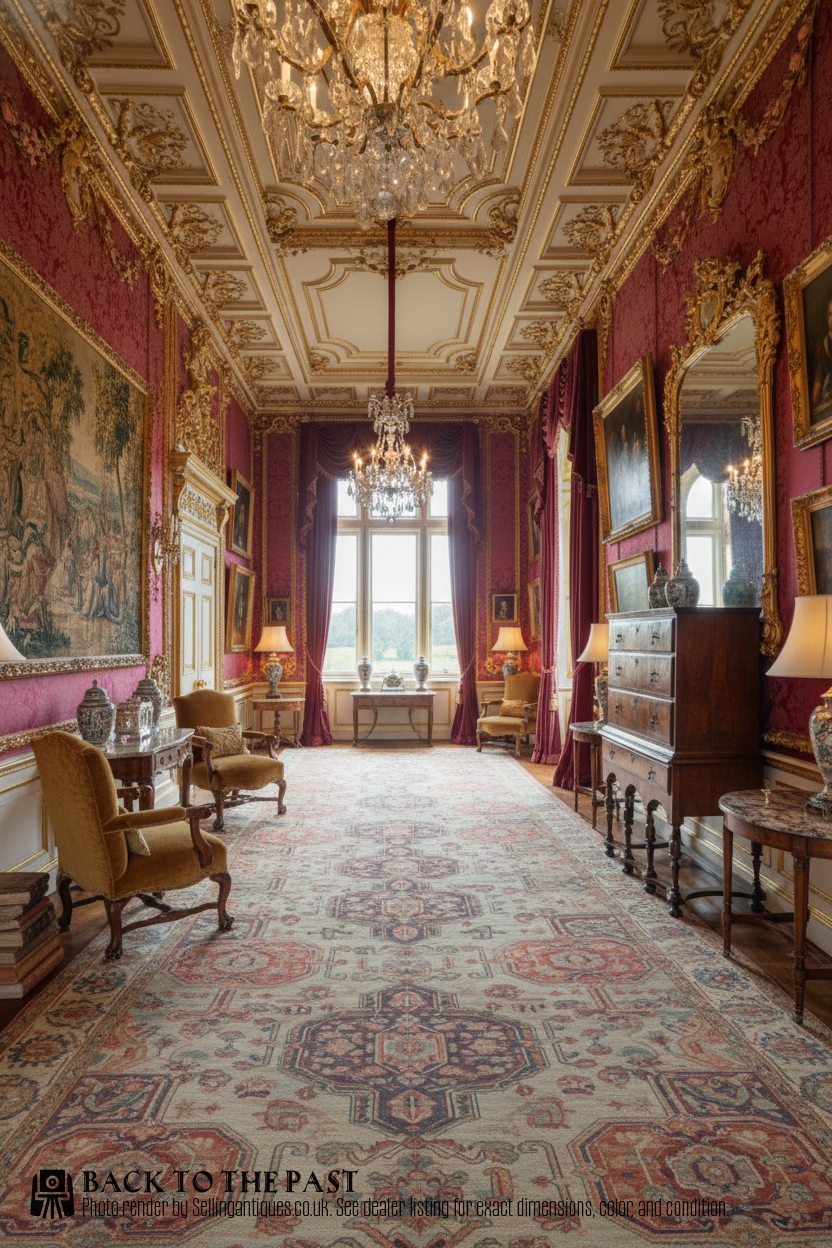
Period Walnut Drawers
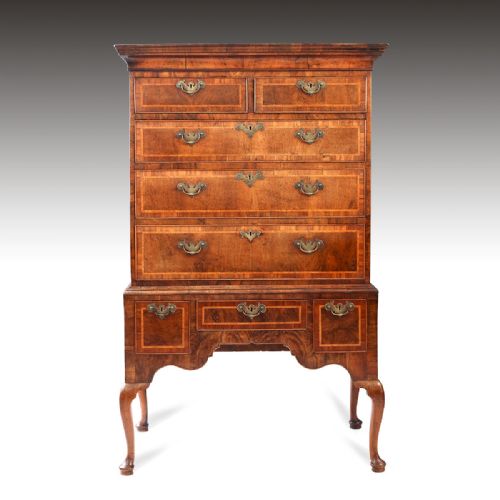
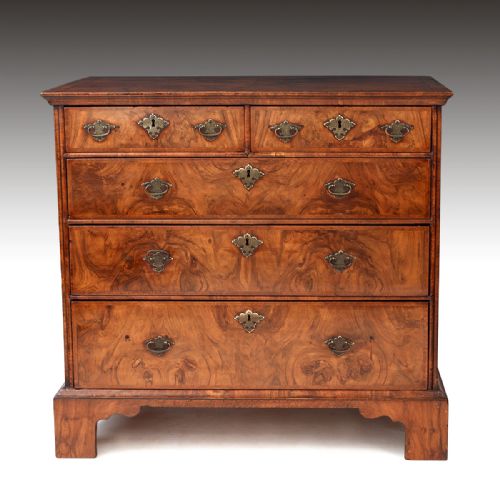
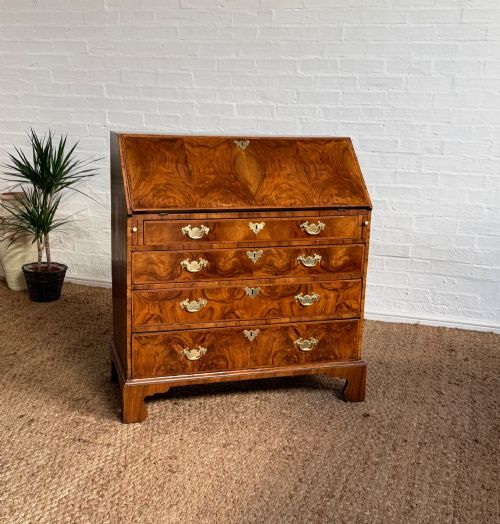
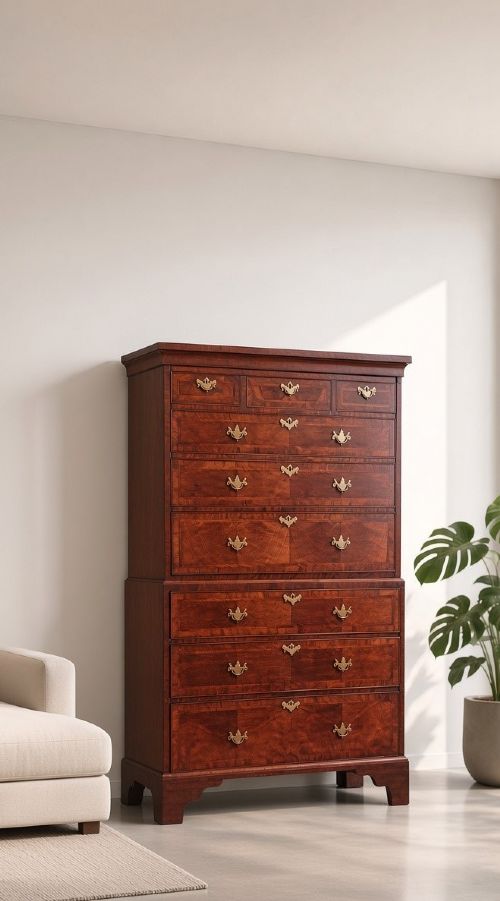
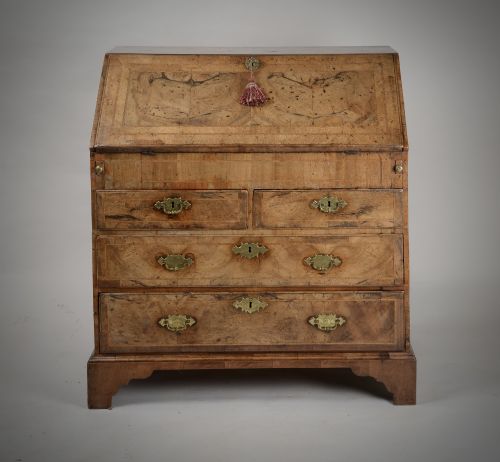
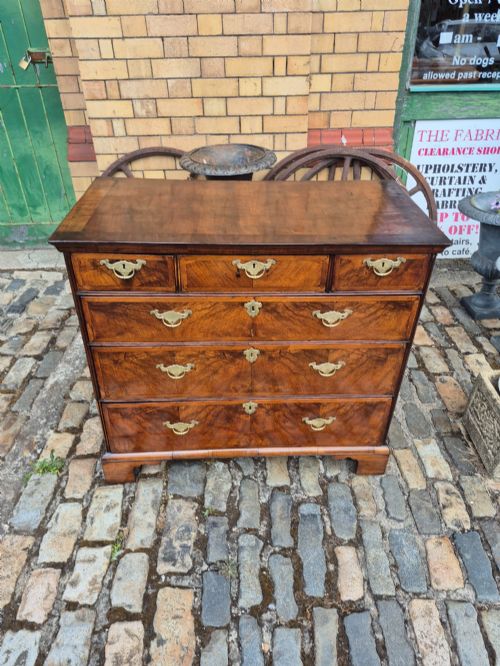
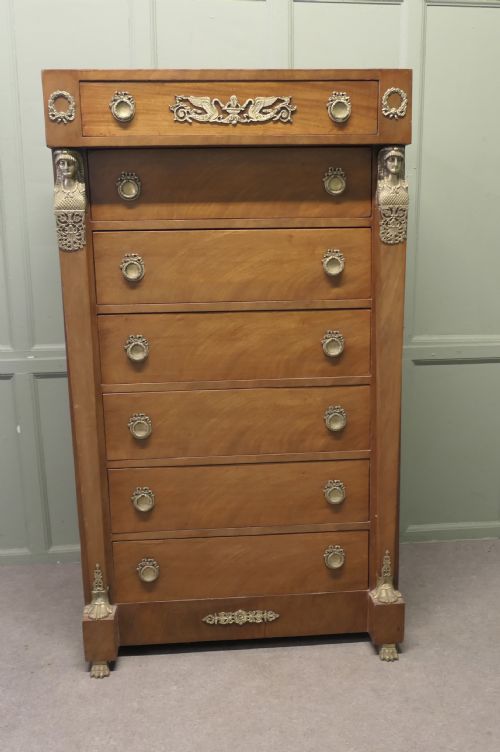
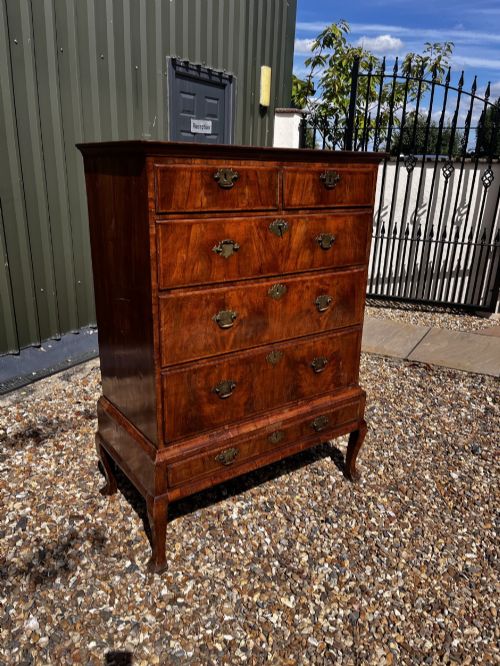
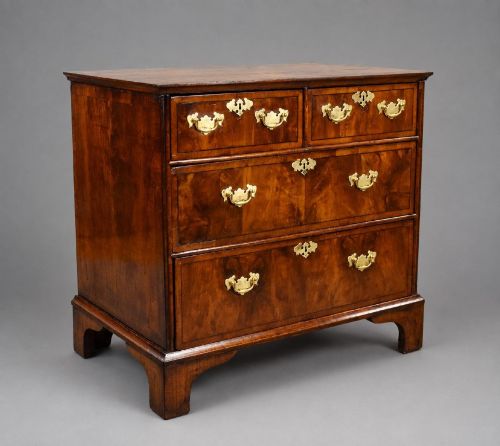
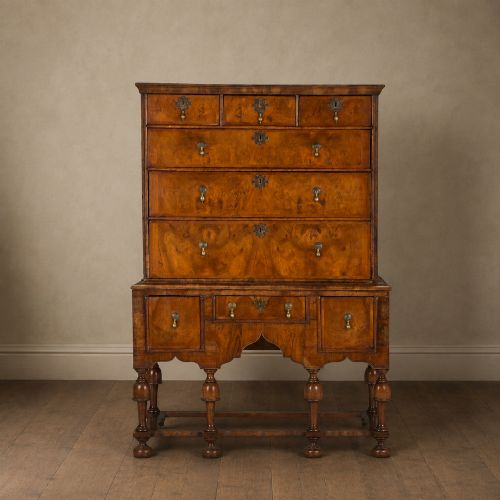
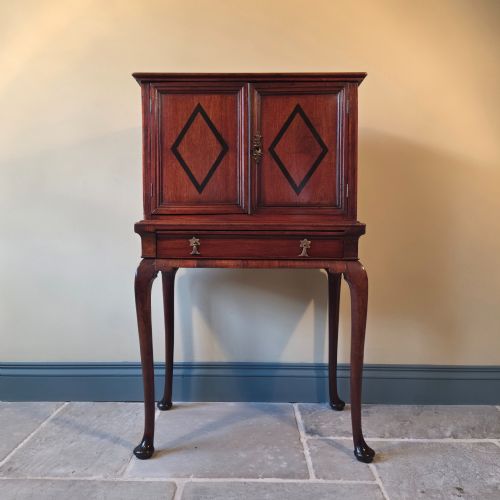
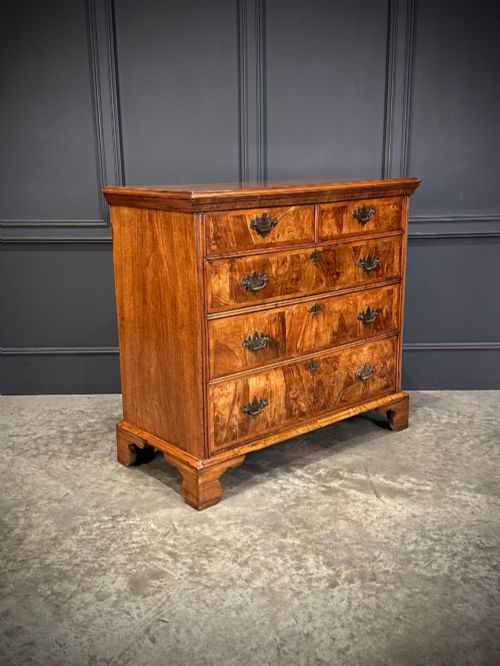
Period walnut drawers encompass forms ranging from straightforward Georgian chests to elaborate William and Mary cabinets on stands and Queen Anne bureaus. These pieces serve as functional storage while displaying the rich, dark tones of walnut timber developed over centuries. Buyers meet examples spanning the seventeenth through the nineteenth centuries, with eighteenth-century pieces particularly prominent.
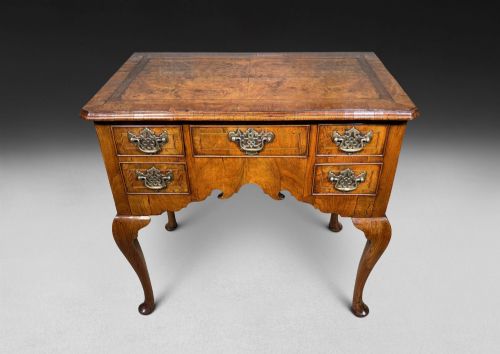
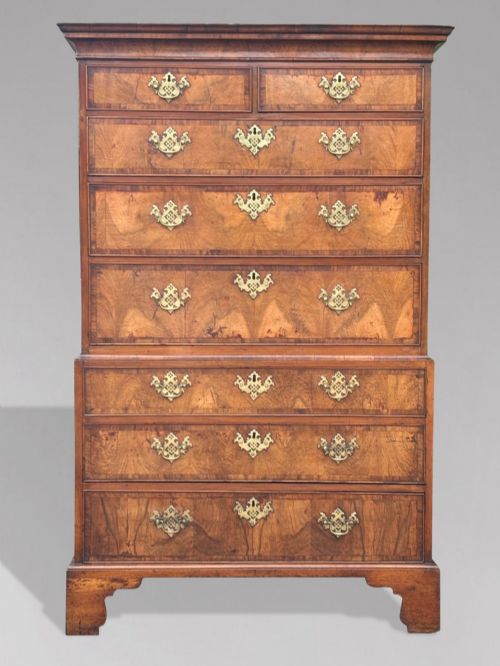
The category extends beyond standard chests to include lowboys, tallboys, and specialised writing desks with fitted interiors. Walnut veneer and burr walnut dominate the selection, often enriched by cross-banding and feather-banding details. Cabinets on stands and chest-on-chest configurations represent the grander expressions of this style.
Materials and Construction Techniques
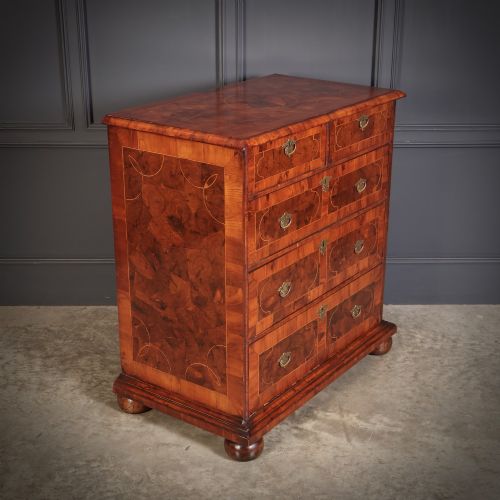
Cabinetmakers utilised native and imported walnut veneers applied to secondary woods such as oak and pine to create complex geometric patterns. Oyster cutting produced circular wooden roundels arranged across drawer fronts, while burr walnut provided heavily figured surfaces with natural swirling grains. Solid walnut also appeared frequently in earlier seventeenth-century and later nineteenth-century pieces.
Brass drop handles, escutcheons, and bracket feet complemented the dark timber, alongside boxwood stringing used for subtle border inlay. Dovetail joints secured the drawer construction, reflecting precise hand-tool methods employed by period joiners.
Apprentice chests offered young woodworkers a chance to demonstrate their dovetailing mastery on a miniature scale.
Distinctions in Quality
Quality rests heavily on the choice and preservation of the veneer, with matched figuring and minimal restoration separating superior examples from lesser pieces. The crispness of inlaid banding and the integrity of the secondary timber reveal the original maker's standard of execution.
Proportion and the retention of original brass hardware heavily influence the desirability of a piece. Finer examples maintain their original stands, feet, and surface patination without excessive re-polishing.
The Period Walnut Drawers Glossary
- Oyster veneer
- Slices of small branches laid transversely to form circular patterns resembling oyster shells. This technique flourished during the late seventeenth century.
- Burr walnut
- Timber taken from the growth excrescences on walnut trees, yielding intricate and highly decorative grain patterns. It commands attention for its swirling visual texture.
- Feather-banding
- Narrow strips of veneer cut diagonally and laid in herringbone patterns to frame drawer perimeters. It provides a neat border contrast against darker surfaces.
- Lowboy
- A small low dressing table or side table featuring one or more rows of drawers supported on four legs. These typically date from the Queen Anne and George II periods.
- Chest on chest
- A tall storage unit comprising an upper chest of drawers stacked directly upon a slightly larger lower chest. This form maximises vertical storage while maintaining balanced proportions.
Period Walnut Drawers: Frequently Asked Questions
How do I date period walnut drawers?
Examination of construction methods, handle types, and secondary woods helps determine the age of a piece. Earlier seventeenth-century items often feature geometric mouldings and oak carcases, while eighteenth-century versions display refined dovetails and veneered surfaces.
Changes in foot styles, from bracket feet to pad feet, also provide clear chronological markers aligned with William and Mary, Queen Anne, and Georgian reigns.
What is burr walnut?
Burr walnut is harvested from a tree growth that produces tightly clustered, swirling grain patterns rather than straight lines. Cabinetmakers prized this figured wood for veneering prominent surfaces like drawer fronts and tabletops.
Its complex patterns make each piece visually distinct from standard straight-grained walnut furniture.
Where should I place these drawers?
These chests suit studies, living rooms, and bedrooms where their dark timber tones provide a focal point. Keeping them away from direct sunlight and heat sources protects the fragile veneers from drying out.
Allowing adequate space around cabinets on stands or tallboys ensures their proportions remain visible in the room.
How do I care for walnut veneer?
Regular dusting with a soft, dry cloth prevents particulate accumulation on the polished surfaces. Applying traditional beeswax periodically nourishes the timber and maintains a soft sheen without sealing the wood permanently.
Avoiding moisture and maintaining stable indoor humidity levels prevents the veneer from lifting over time.