


Period Rosewood Furniture
Period rosewood furniture brings deep, dark grain and brass inlay into a room, offering the distinct elegance of Regency and nineteenth-century design.
Period Rosewood Furniture
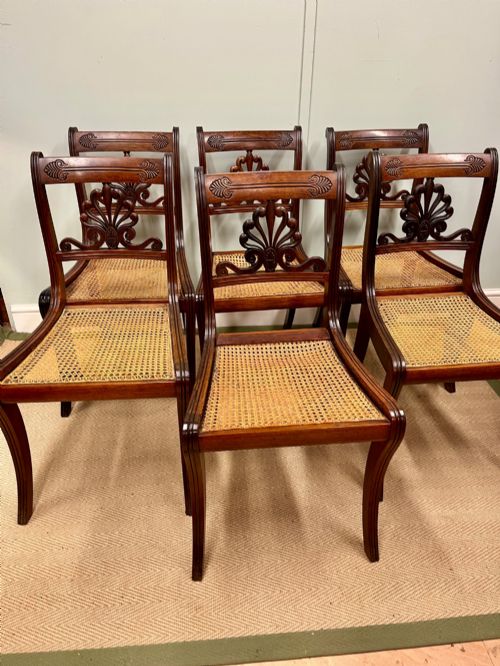
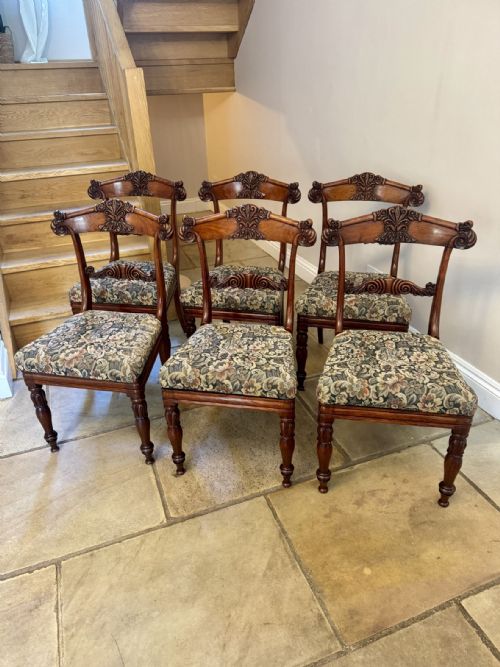
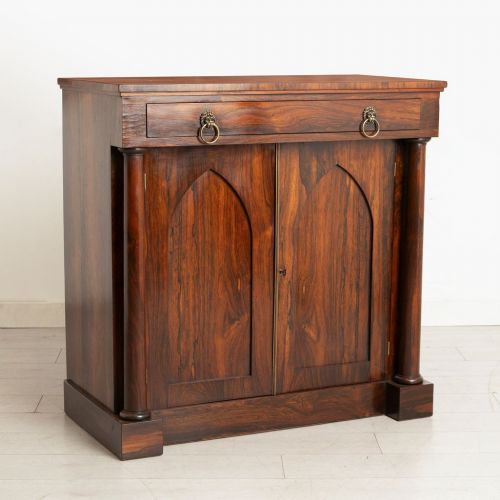
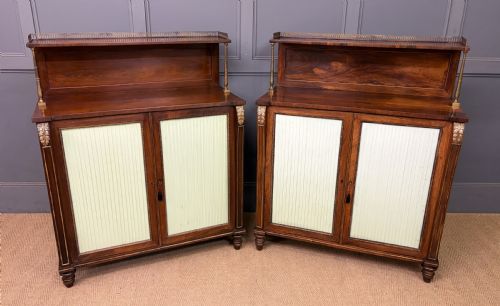
When buyers search for period rosewood furniture, they encounter timber pieces primarily from the Regency and nineteenth-century periods, spanning occasional tables, cabinets, and seating. These items range from compact card tables and nested quartetto tables to larger chiffoniers, side cabinets, and sets of dining chairs.
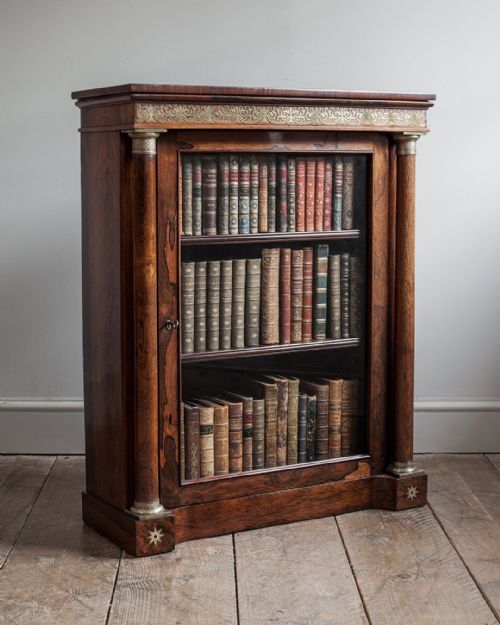
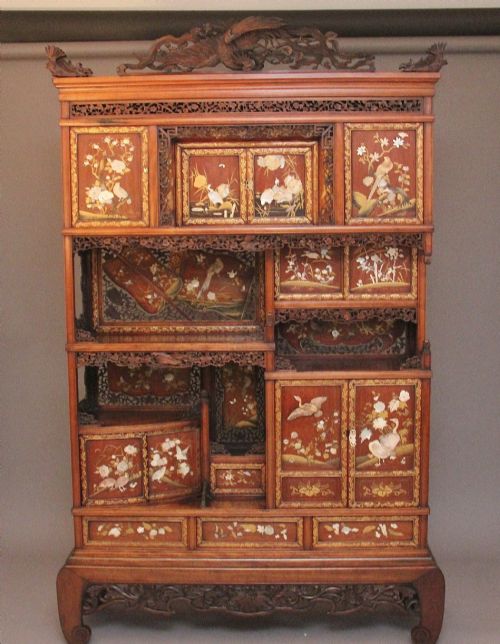
The selection on this page centres heavily on Regency and nineteenth-century British designs, alongside occasional French Charles X, French Régence, and Japanese Meiji period pieces. Cabinets, bookcases, and what-nots dominate the physical forms, alongside games tables and side cabinets set on castors or brass sabots.
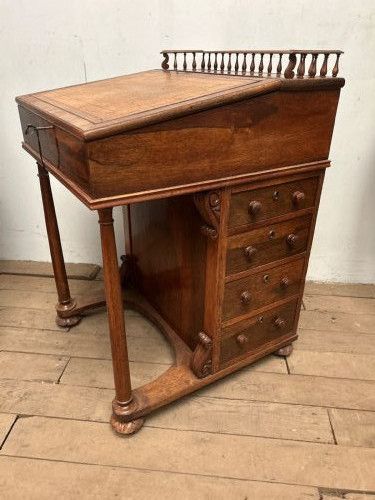
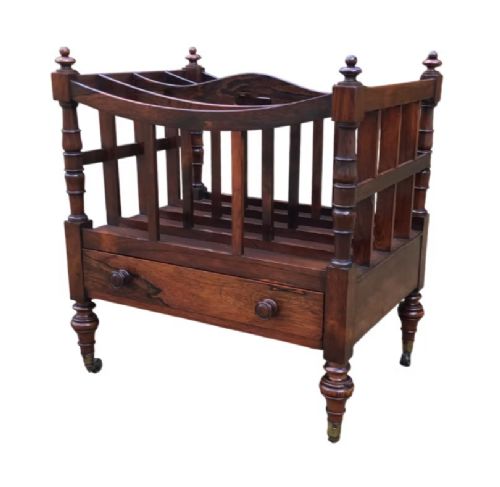
Buyers will also find specialised items like boat-shaped canterburys, Davenport desks, and sofa tables utilising hardwood framing and rich veneers. Each piece reflects the formal entertaining and domestic organisation of Georgian and Victorian interiors.
Materials and Construction Techniques
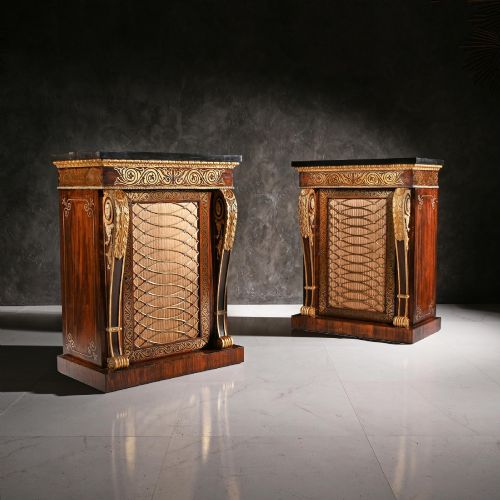
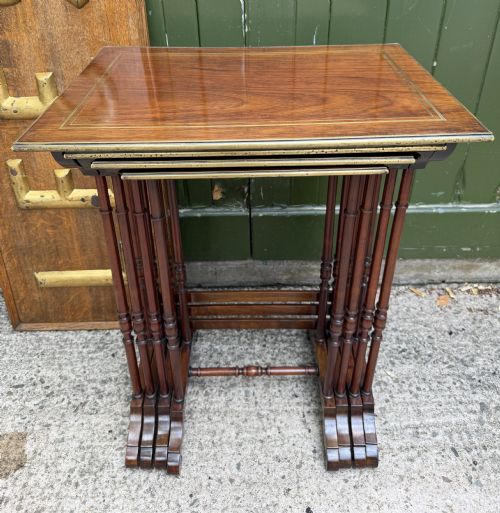
Makers utilised dense rosewood veneers and solids over secondary hardwoods, often selecting the timber for its heavy grain and warm reddish-brown hue. Surfaces frequently incorporated contrasting brass inlay in geometric scrolls, lines, or foliate motifs.
Structural elements relied on traditional joinery, with turned columns, carved dolphin bases, and shaped friezes supporting tabletops and cabinet carcasses. Metal components such as brass sabots, castors, and mounts provided both functional protection and decorative contrast against the dark timber.
The furniture forms range from dining chairs and card tables to Japanese Meiji period shodana cabinets and French commodes.
Assessing the Range of Quality
Quality separates ordinary utility pieces from those displaying refined cabinetwork through the precision of the brass inlay and the selection of the timber grain. Superior examples exhibit tightly fitted joints, original marble tops where applicable, and crisp carving on architectural elements like dolphin bases or panelled doors.
The sophistication of the secondary details, such as finely chased brass sabots, original castors, and balanced proportions, marks the distinction between standard workshop production and high-status commissions. Consistency in the rosewood surface patina further indicates how well a piece has survived through the nineteenth century.
Louis Constantin Le Gaigneur
The Period Rosewood Furniture Glossary
- Canterbury
- A low, multi-tiered stand fitted with slatted partitions, originally designed to hold sheet music or folios. These pieces often feature carrying handles and small drawer compartments beneath the main section.
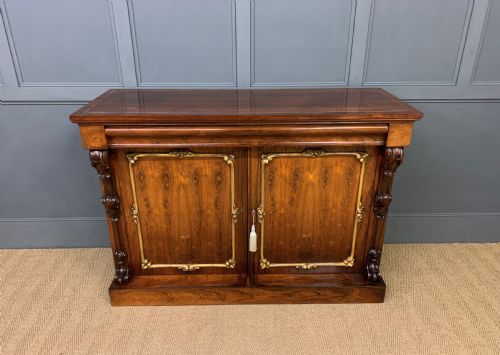
- Chiffonier
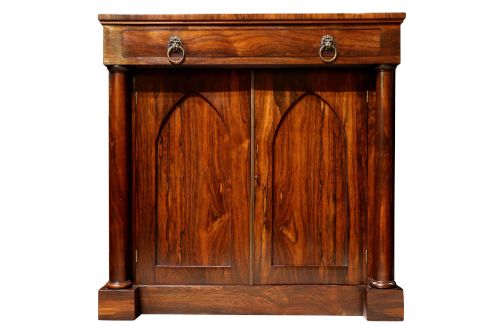
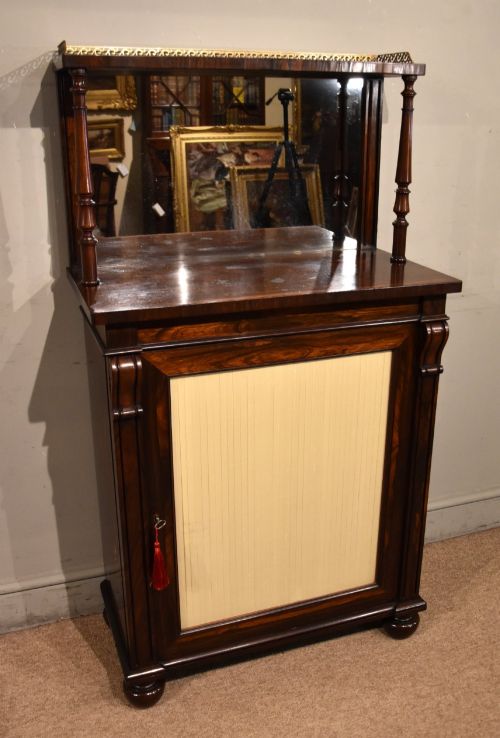
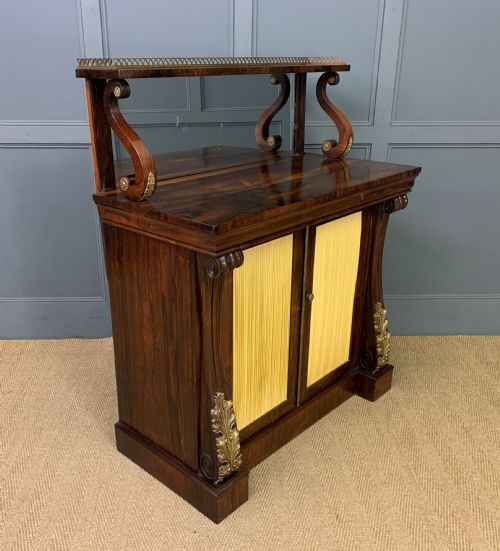
- A low cabinet featuring enclosed cupboards below, sometimes with drawer space or open shelving above. They became prominent during the Regency period as side furniture in dining rooms and drawing rooms.
- Quartetto
- A set of four graduated nesting tables designed to slide one beneath another when not in use. They appeared frequently in Regency interiors for serving tea or holding light objects.
- Shodana
- A traditional Japanese display cabinet featuring asymmetrical shelving, sliding doors, and small compartments. These items arrived in European collections during the Meiji period.
- Sabot
- A protective metal sleeve fitted to the foot of a table or cabinet leg. They are frequently cast in brass and paired with matching castors.
Period Rosewood Furniture: Frequently Asked Questions
What periods do these pieces date from?
The inventory spans the late eighteenth century through the nineteenth century, with a heavy concentration of Regency and Georgian items. Pieces from the Meiji period and French Charles X eras also appear.
Dates generally range from around 1800 to the late 1890s, reflecting the height of rosewood's popularity in British and international cabinetmaking.
How do I care for rosewood surfaces?
Rosewood requires stable indoor humidity and protection from direct sunlight to prevent the dark grain from fading or the timber from splitting. Regular dusting with a soft, dry cloth maintains the finish without stripping the natural oils.
Avoid placing damp items or hot cups directly on the polished wood. Wax can be applied sparingly to nourish the grain and preserve the historic patina.
What is a chiffonier used for?
A chiffonier served as a versatile storage and display surface in nineteenth-century dining rooms and drawing rooms. The lower enclosed cupboards typically stored table linens, silver, or documents.
The top surface and any accompanying upper shelves held decorative objects, books, or serving items during formal gatherings.
How do card tables function?
Card tables feature a hinged top that folds open to reveal a baize- or leather-lined playing surface. When closed, they stood flat against a wall as side tables.
The folding leaf is supported when open by a swing leg or a pivoting frieze drawer mechanism, allowing the table to convert quickly for evening games.