
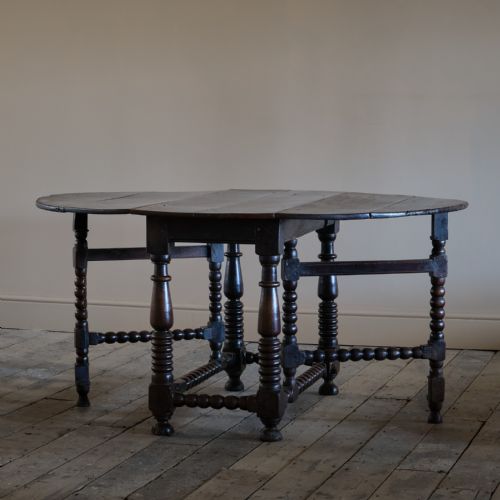
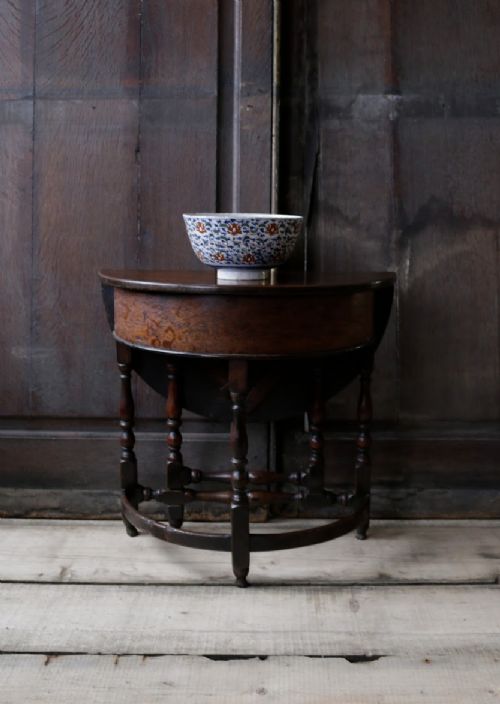
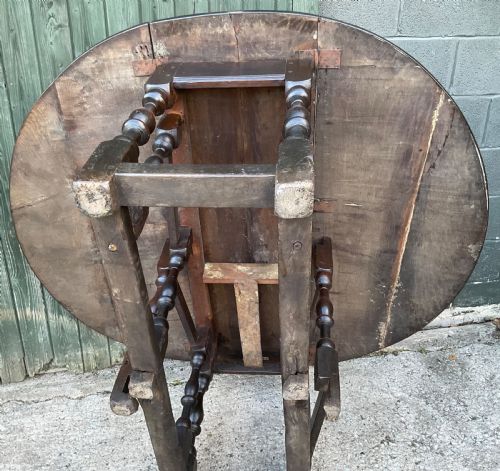


Period Oak Gateleg Table
A period oak gateleg table provides sturdy drop leaves and folding legs, offering flexible seating in a traditional interior.
What a period oak gateleg table is
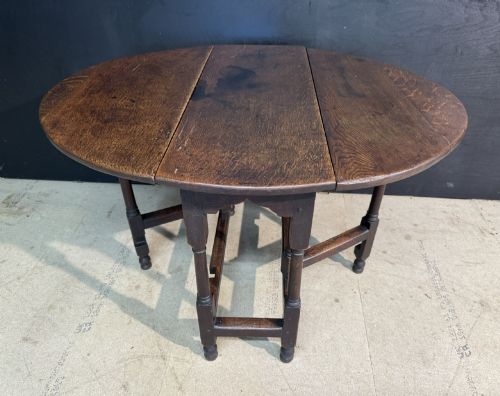
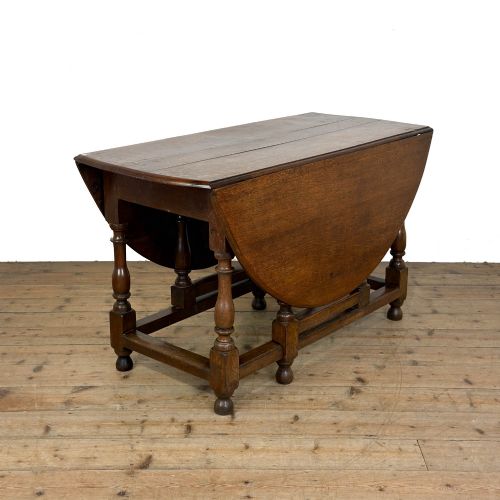
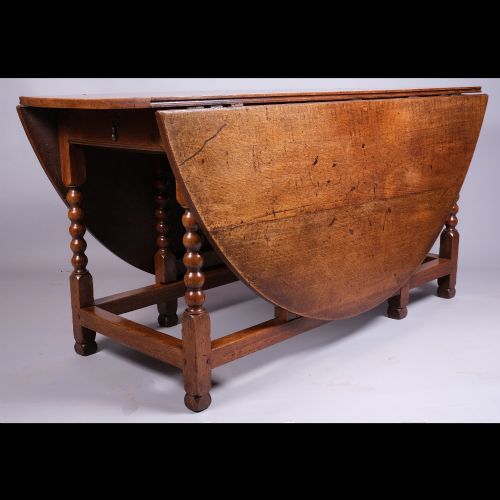
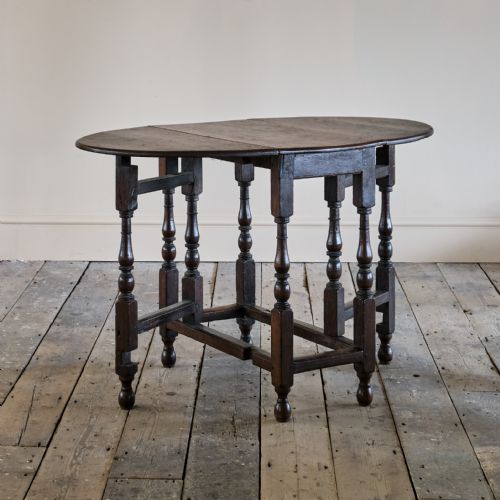
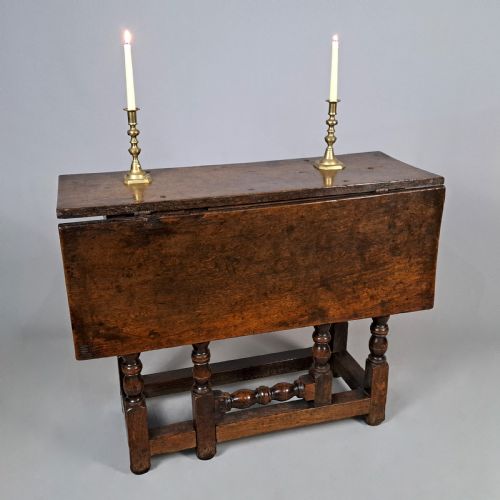
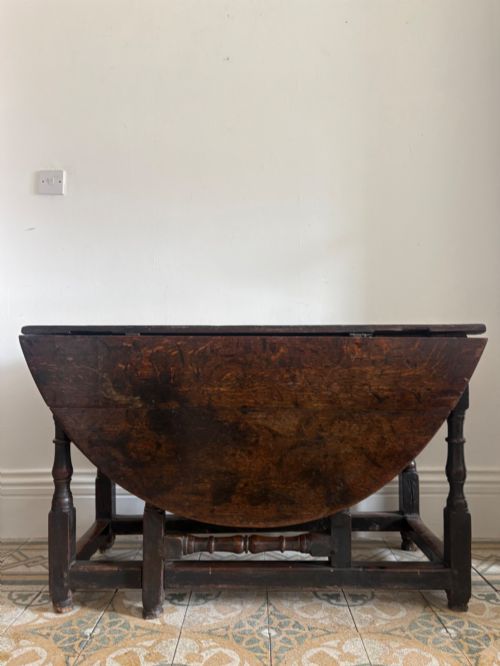
A period oak gateleg table is a traditional folding table design that relies on hinged leaves and swinging legs to support the extended top. Buyers searching for a period oak gateleg table typically encounter seventeenth-century and early eighteenth-century examples, including compact small proportions and large dining tables.
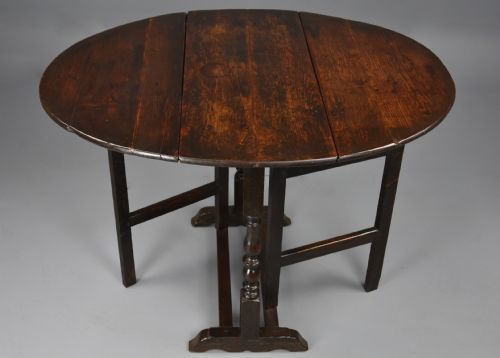
The pieces listed across current stock and archive records span the seventeenth century, seventeen hundred, the Jacobean period, the William and Mary period, the Queen Anne period, the George II period, and the early Georgian era. Forms range from large dining tables to small occasional tables, sometimes featuring sledge bases or trestle feet.
Most items appearing under this heading are constructed primarily from solid oak, with occasional examples highlighting specific turnings like bobbin turning. Buyers meet both substantial large dining pieces and smaller single tables suited to restricted spaces.
How they were made
These tables are constructed from solid timber, predominantly oak, using traditional joinery methods suited to seventeenth-century and eighteenth-century workshops. Iron and brass components such as hinges and fixings are incorporated to support the moving drop leaves and folding gateleg action.
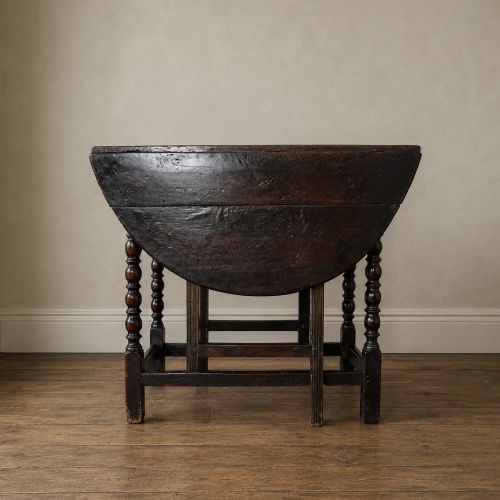
Turning techniques shape the structural supports and legs, with specific variations such as bobbin turning appearing alongside standard turned uprights. The surfaces often retain original patination developed through centuries of polish and handling.
Retail Price Guide 2026
Typical UK retail prices for period oak gateleg table, calculated from the Sellingantiques database of over a million retail prices indexed since 2003. This retail price guide relies exclusively on Sellingantiques data; no external sources or auction records are used, so the figures do not describe the wider market.
Listings for this phrase feature seventeenth-century and early eighteenth-century oak furniture, including Queen Anne and Jacobean styles.
What varies in quality
Quality in these tables is determined by the scale of the timber, the complexity of the turnings, and the preservation of original surfaces. Large dining tables and pieces with distinctive structural details like sledge bases or trestle feet represent the upper tier of the range.
The survival of original patina and smaller, more usable proportions differentiate superior examples from standard utility pieces. Finer specimens maintain structural integrity in their folding gate mechanisms alongside untouched timber surfaces.
The Period Oak Gateleg Table Glossary
- Gateleg table
- A table with hinged leaves supported by one or more legs that swing outward like a gate.
- Drop leaf
- A hinged section of a table top that can be folded down when not in use.
- Bobbin turned
- A style of furniture leg or stretcher shaped with a series of rounded, spool-like turnings.
- Patina
- The surface sheen and colour developed on wood over long periods through age, use, and polishing.
- Jacobean
- A design style spanning the early to mid-seventeenth century, characterised by solid construction and geometric ornamentation.
Frequently Asked Questions
How do I use a gateleg table daily?
You drop the leaves to save space against a wall or extend both sides to use the piece as a dining table. The folding gate legs swing out from the frame to support the drop leaves when open.
Position the table on a level surface so the swinging leg takes the weight of the leaf evenly. Avoid placing heavy loads on the unsupported outer edges of the extended leaves.
What periods do these tables come from?
These tables originate mainly from the seventeenth century and the early eighteenth century, covering periods such as Jacobean, William and Mary, Queen Anne, and George II. Dates span from the early seventeen-hundreds back into the sixteen-hundreds.
Construction details and turning styles help distinguish seventeenth-century examples from later Georgian pieces.
How do I care for period oak furniture?
Keep the timber away from direct heat sources and sudden temperature changes to prevent the solid oak from splitting or warping. Dust the surface regularly with a dry cloth and apply traditional wax sparingly when the wood appears dry.
Protect the original patina by avoiding harsh chemical cleaners and silicon-based polishes.