

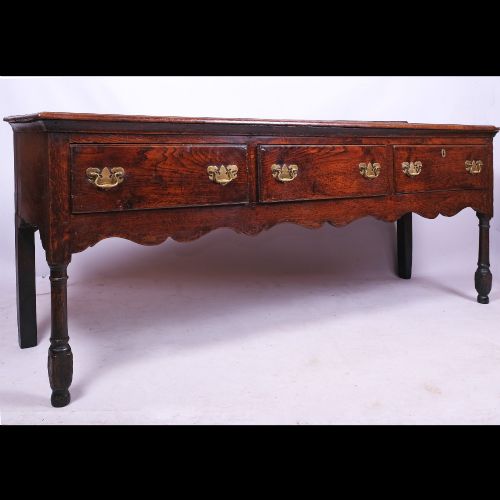
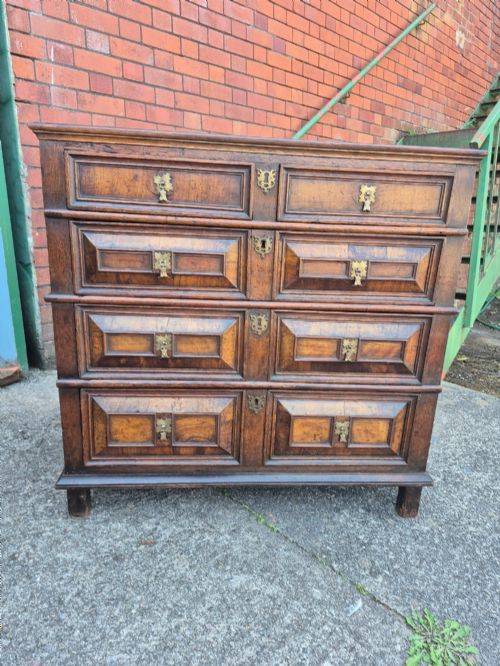


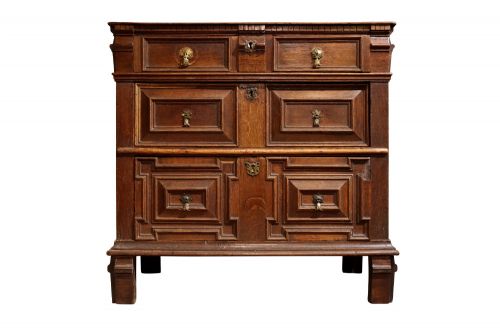
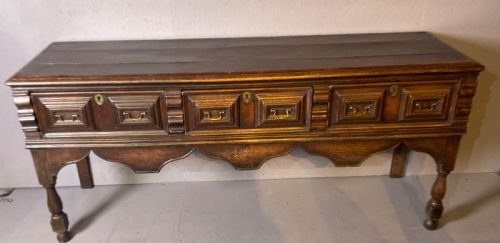


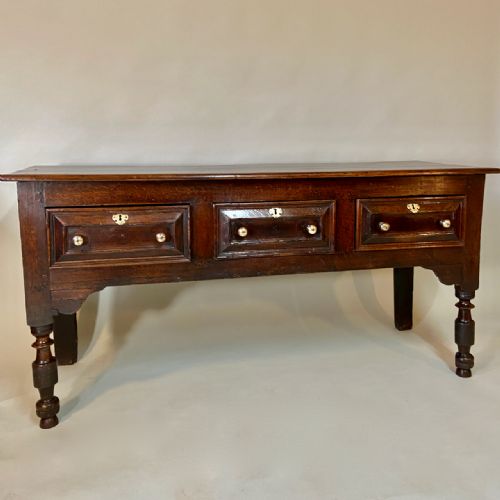


Period Oak Dresser Base
A period oak dresser base brings honest utility and centuries of timber character into a room.
Period Oak Dresser Base
A period oak dresser base is a heavy-duty serving and storage surface designed primarily for kitchens and dining rooms. The pieces found here span from the seventeenth century through the Georgian era, with later twentieth-century interpretations also appearing.
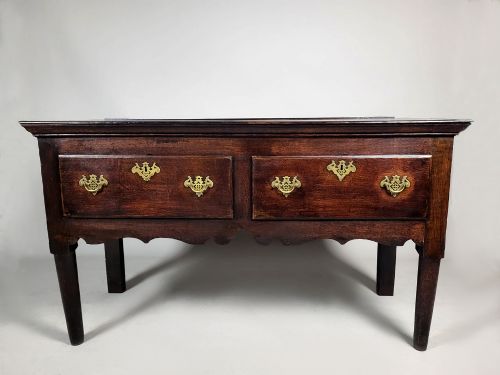
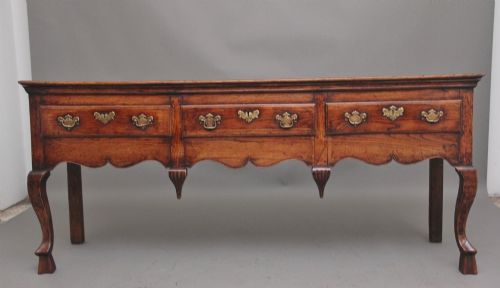
Most examples take the form of low wooden tables fitted with multiple drawers across the front. Many variants incorporate a lower shelf, known as a potboard, positioned just above the floor.
Makers built these items for hard domestic service rather than formal display. They served as primary work surfaces for food preparation and storage hubs for household plates and serving dishes.
How they were made
Joiners constructed these items using solid timber planks joined by traditional peg and mortise techniques. Oak provides the structural backbone, supplemented occasionally by walnut and elm.
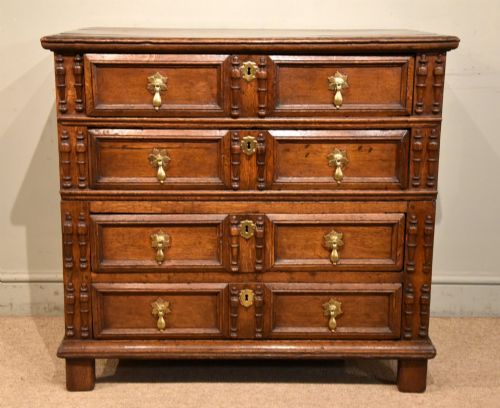
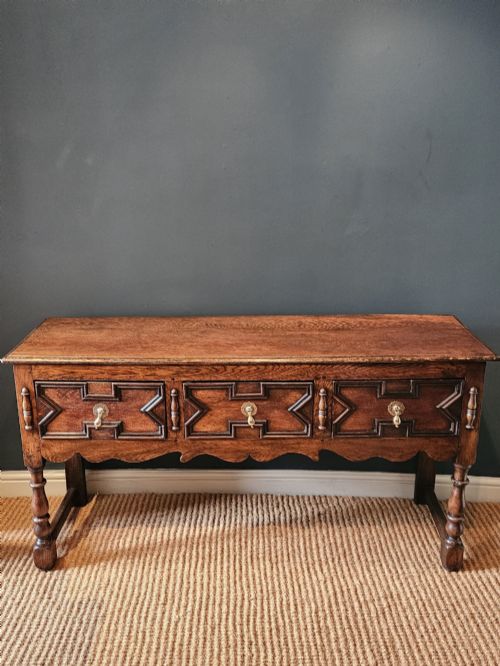
Drawer fronts and mouldings often display geometric patterns carved directly into the timber. Hardware relies on brass for handles and escutcheons, alongside iron for structural reinforcement.
Potboard shelves were originally designed to keep heavy pewter dishes off damp stone floors.
What varies in quality
Quality rests on the integrity of the original timber and the crispness of the joinery. Pieces retaining their initial brass furniture and untouched surface patination sit higher on the scale.
Proportion and scale dictate the visual weight of the item in a room. Stronger examples show minimal timber shrinkage and retain deep, rich colour developed through generations of use.
The Period Oak Dresser Base Glossary
- Potboard
- A low open shelf fitted between the legs of a dresser base near the floor. This surface provided extra storage space for heavy pots and pans.
- Geometric moulding
- Raised wooden profiling applied to drawer fronts or panels in angular patterns. This decorative technique appears frequently on seventeenth-century pieces.
- Escutcheon
- A protective metal plate surrounding a keyhole. These fittings are commonly cast in brass.
- Joined oak
- Furniture constructed using mortise and tenon joints secured with wooden pegs rather than metal nails. This method defines older cabinet work.
- Breakfront
- A piece of furniture where the central section projects forward from the outer wings. This configuration adds architectural depth to the frontage.
Period Oak Dresser Base: Frequently Asked Questions
What is a period oak dresser base used for?
These pieces function as sturdy sideboards or serving tables in modern dining rooms and kitchens. Their wide timber tops provide ample surface area, while the drawers organise table linen or cutlery.
Historically, they served as heavy work benches for food preparation before moving into formal dining spaces. Today, they suit hallways or living rooms as display surfaces.
How do I identify a seventeenth century piece?
Seventeenth-century examples display robust joinery, darker timber patination, and hand-carved geometric mouldings on the drawer fronts. They often lack the lighter neoclassical refinement seen in later Georgian furniture.
Construction relies heavily on joined oak pegged together rather than screwed. Iron and brass hardware on these early forms tends to be heavy and hand-hammered.
How do I care for an antique oak surface?
Protect the timber by keeping the piece away from direct heat sources and sudden temperature fluctuations. Regular dusting with a dry cloth prevents dirt build-up in the grain.
Apply a traditional beeswax polish sparingly to maintain the natural lustre of the wood. Avoid modern silicone sprays or liquid cleaners that strip the historic finish.
What is the difference between a dresser and a dresser base?
A complete dresser includes tall shelving racks mounted on top for displaying plates and ceramicware. A dresser base consists solely of the lower chest and table portion.
Many surviving pieces lost their upper plate racks over centuries of use. The base stands alone as a self-contained sideboard with drawers and cupboards.