




Edwardian Jacobean Style Cupboard
An edwardian jacobean style cupboard brings heavy timber and historic revival design into a room, offering both storage and strong architectural character.
Edwardian Jacobean Style Cupboard
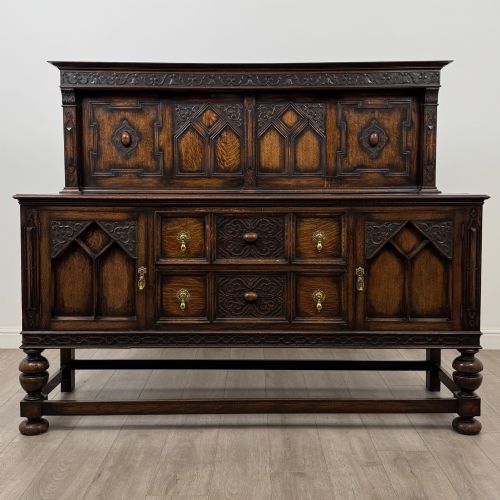
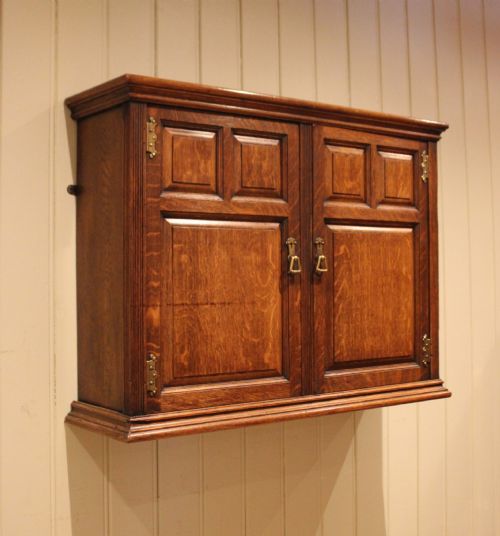
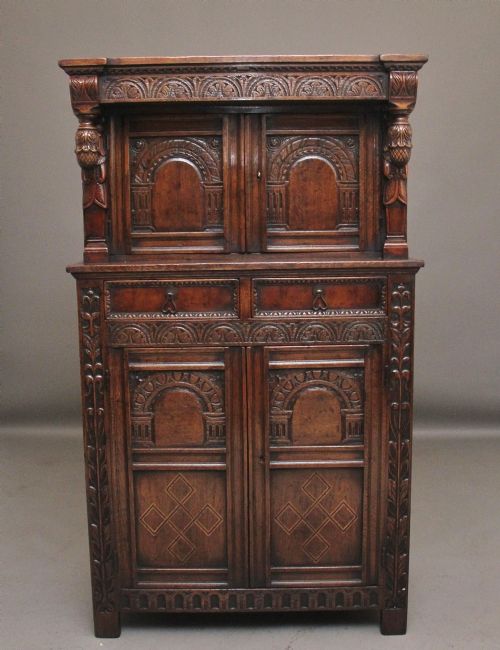
An edwardian jacobean style cupboard draws on seventeenth-century motifs while utilising the manufacturing methods of the late nineteenth and early twentieth centuries. Buyers seeking an edwardian jacobean style cupboard will find pieces ranging from sideboards and wall cabinets to court cupboards and bureaus.
The material predominantly seen across these listings is solid oak, often rendered in darker finishes that emphasise the period revival aesthetic. Forms vary from simple wall-hung units to substantial sideboards and court cupboards standing on sturdy legs or stands.
Materials and construction
Construction relies heavily on solid oak, chosen for its durability and suitability for traditional carving techniques. Metal hardware such as brass handles and iron hinges provides functional reinforcement and contrast against the dark timber.
Glazing and leaded glass appear in select cabinet doors to display contents while keeping them enclosed. Joinery methods reflect the standard cabinet-making practices of the Edwardian era and the subsequent decades of revival production.
Periods represented span from the seventeenth century through the Edwardian era into the nineteen-thirties.
Judging quality
Quality rests in the depth and crispness of the carved details on the oak panels and frames, alongside the proportion of the overall form. Pieces showing deliberate hand-carving stand apart from those with simpler mechanical finishing.
The selection of timber grain and the integrity of the structural joints also distinguish finer examples. Original brass and iron hardware contributes to the historical coherence of a piece.
The Edwardian Jacobean Style Cupboard Glossary
- Court cupboard
- A traditional enclosed piece of furniture used for storing food and utensils, featuring upper and lower tiers. These typically display heavy oak construction and revival carving.
- Jacobean Revival
- A style popular during the nineteenth and twentieth centuries that copies the heavy, ornate forms of the early seventeenth century. It utilises dark oak and geometric mouldings.
- Bureau cabinet
- A desk form that combines a sloping writing flap with enclosed shelving or cupboard space above. They are built in solid oak to provide sturdy work surfaces.
- Sideboard
- A long dining room cabinet designed for serving food and storing tableware. These often incorporate cupboards and drawers beneath a broad top surface.
Edwardian Jacobean Style Cupboard: Frequently Asked Questions
What is an edwardian jacobean style cupboard?
An edwardian jacobean style cupboard is a storage piece made around the turn of the twentieth century that imitates the heavy carved oak designs of the seventeenth century. These items bring historical revival character into modern interiors.
They appear in various forms, including court cupboards, wall cabinets, and sideboards. Each utilises solid oak and traditional aesthetic details to evoke an earlier period.
How do I date these cupboards?
Dating relies on examining the construction methods, timber preparation, and hardware used in the cabinet. Pieces from the Edwardian period or the nineteen-twenties combine revival styles with contemporary joinery techniques.
Comparing the specific carved motifs and structural proportions against known period examples helps clarify the age. The presence of period-appropriate brass or iron fittings also aids identification.
Where were these cupboards used?
These cupboards were traditionally placed in dining rooms, halls, or living spaces to store household goods, tableware, and documents. Their substantial oak presence anchored the room's decor.
Today, they serve similar practical functions while acting as statement furniture pieces. Their enclosed shelving keeps items organised out of sight.
How do I care for solid oak?
Solid oak furniture benefits from regular dusting with a dry or slightly damp cloth to protect the wood surface. Avoiding direct sunlight and extreme temperature changes preserves the dark finish.
Occasional treatment with appropriate wax helps maintain the lustre of the timber. Proper placement away from heat sources prevents the wood from drying out.