
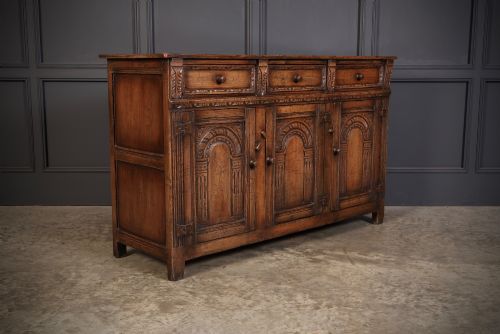
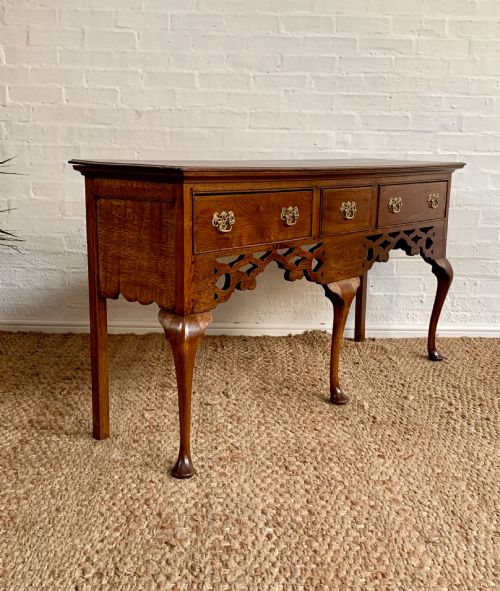
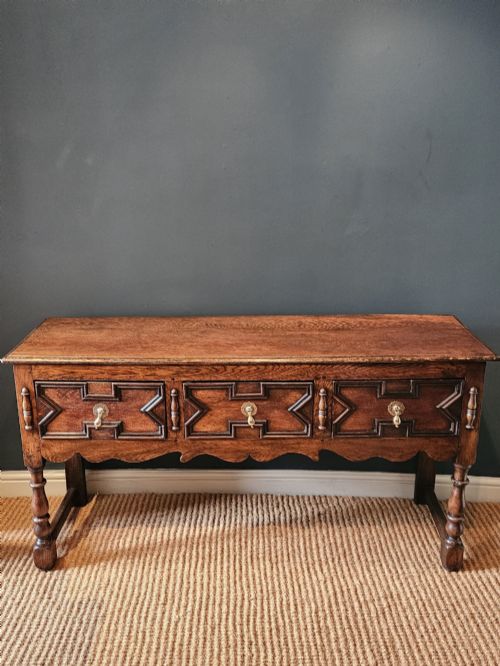
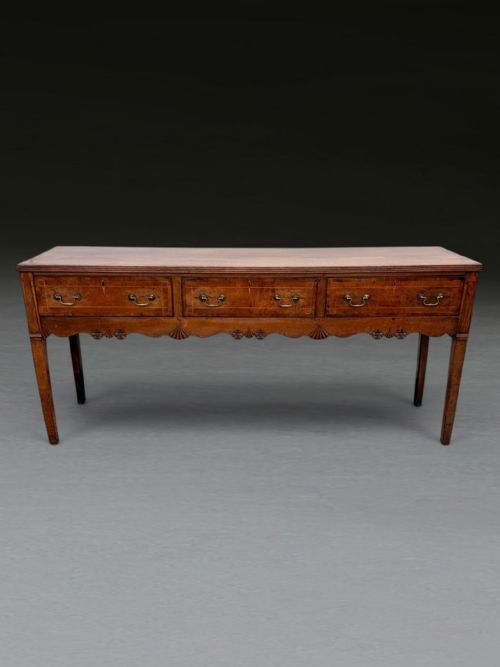
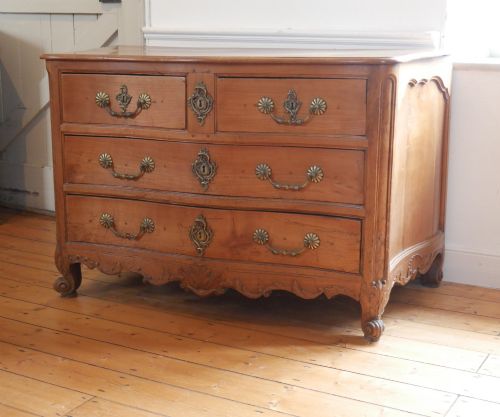


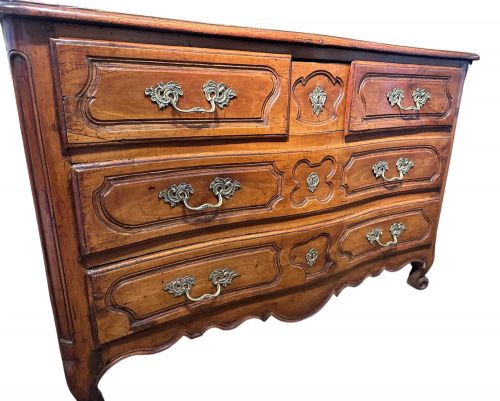


Carved Three Drawer Sideboard
A carved three drawer sideboard is a heavy, timber-built storage piece that anchors a room and organises dining linen or silver.
Carved Three Drawer Sideboard
When you search for a carved three drawer sideboard, you encounter substantial furniture items spanning several centuries, primarily oak and walnut constructions. These pieces often overlap with terms like dresser bases, commodes, and serving tables in the listings.
Early periods such as the eighteenth century sit alongside later revival pieces from the early twentieth century, showing how cabinet makers continually returned to these proportions. You find items ranging from austere country furniture to decorative painted and marble-topped commodes.
Materials and construction methods
Makers relied heavily on solid hardwoods, predominantly oak in British and regional pieces, alongside walnut, cherrywood, and fruitwood on the continent. Timber selection determined how well the frame endured daily use in kitchens, dining rooms, and hallways.
Joinery techniques involved hand-cut drawers and sturdy timber framing, often embellished with surface carving or geometric moulding applied to the drawer fronts. Iron and brass hardware completed the construction, functioning as structural pulls and decorative hinges.
Some provincial commodes feature secretly deepened bottom drawers designed to hide contraband from tax inspectors.
Distinguishing quality across the range
Quality rests in the selection of the timber and the crispness of the hand-carved detail, distinguishing workshop execution from mass-produced reproduction. Superior examples display thoughtful grain matching and well-proportioned mouldings that respect the original period aesthetic.
The integrity of the internal construction, including drawer linings and the smoothness of the drawer action, separates finer pieces from simpler utility items. Well-preserved patination on older wood surfaces adds depth that mechanical sanding and modern finishes cannot replicate.
The Carved Three Drawer Sideboard Glossary
- Dresser base
- A low cabinet featuring drawers, historically used in kitchens or dining rooms for food preparation and storage. They often stand on short legs or feet.
- Commode
- A low chest of drawers, of French origin, typically featuring two or three long drawers. They frequently include decorative veneers or painted finishes.
- Geometric moulded
- A decorative technique involving applied raised mouldings on drawer fronts to create geometric patterns. This style is particularly common on seventeenth and eighteenth-century oak furniture.
- Serpentine
- A curved furniture front characterised by a convex centre flanked by concave curves. This contour requires skilled carpentry to execute smoothly.
- Provenance
- The documented history of a piece's ownership and origin. It helps authenticate the age and geographical source of antique furniture.
Carved Three Drawer Sideboard: Frequently Asked Questions
Where should I place a sideboard?
These pieces suit dining rooms, hallways, and living spaces where surface area and enclosed storage are both required. Their shallow depth allows them to sit comfortably against walls without obstructing walkways.
Ensure you measure the available floor space and clearance for the drawers to pull out fully before deciding on a final location.
How do I care for antique wood?
Keep wooden furniture away from direct heat sources and strong sunlight to prevent the timber from drying out and splitting. Regular dusting with a dry, soft cloth maintains the surface finish.
Apply a traditional beeswax polish occasionally to nourish the timber and enhance the natural grain and patination over time.
Are these pieces suitable for daily use?
Solid timber construction makes these items durable enough for storing everyday items like crockery, linens, and household documents. The deep drawers accommodate substantial weight when loaded sensibly.
Treat the polished top surfaces with care by using coasters and mats to prevent water rings and heat marks from everyday objects.
How can I tell the age of a drawer?
Examine the joints inside the drawer box, where hand-cut dovetails indicate older, manual craftsmanship rather than modern machine production. The type of wood used for internal linings also provides clues to the manufacturing period.
Tool marks and irregular saw patterns on the underside or backboards confirm traditional hand-working methods.