
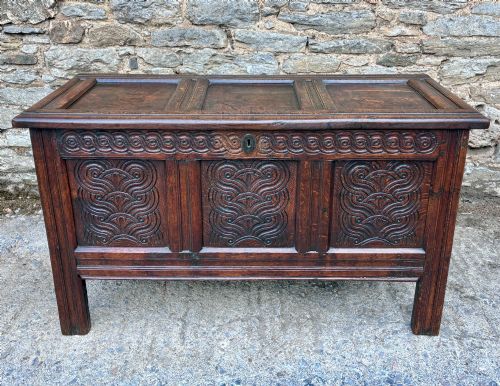
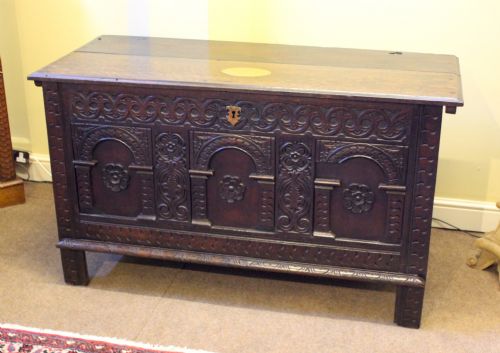

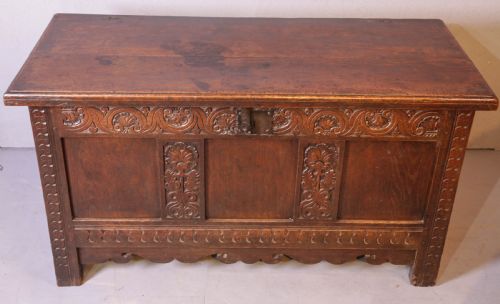


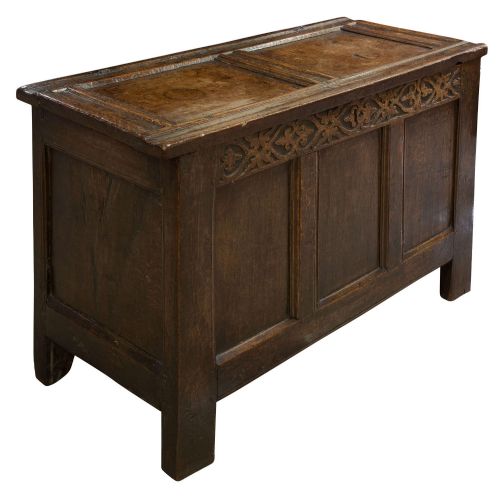


Period Oak Dower Chest
A period oak dower chest is a substantial household box for linen and valuables, built to last generations.
Period Oak Dower Chest
A period oak dower chest appears in forms such as coffers, storage chests, and mule chests with bottom drawers. These pieces date across the sixteenth, seventeenth, and eighteenth centuries, including Georgian and William III eras.
The regional examples present on this page include Welsh, Lancashire, and Lakeland origins. Buyers regularly encounter plain panelled constructions alongside carved fronts and geometric moulding.
Mule chests combine the deep upper lidded compartment of a coffer with one or more lower drawers. These dual-purpose items served domestic storage needs across British households for centuries.
Assessing Quality
The refinement of the timber selection and the depth of the carving set examples apart. Crisp geometric moulding and well-executed relief work indicate skilled workshop production.
Proportion and structural integrity distinguish superior pieces from utilitarian items. Original hardware, untouched surface patination, and undisturbed interior timber elevate the standing of a chest.
Listings include examples built across the sixteenth, seventeenth, and eighteenth centuries, featuring oak, fruitwood, iron, and brass.
The Period Oak Dower Chest Glossary
- Coffer
- A heavy wooden chest traditionally used for storing valuables, documents, or personal belongings. These items feature a hinged lid and robust boarded or panelled sides.
- Mule Chest
- A storage chest that incorporates one or more drawers beneath the main lidded compartment. This form developed during the late seventeenth and eighteenth centuries.
- Geometric Moulding
- Applied wooden strips arranged in repeating angular patterns on the front panels of seventeenth-century furniture. This technique adds depth and surface enrichment.
- Cross-Banding
- A decorative border technique where thin strips of veneer are laid across the grain of the primary wood. This method frames panels on eighteenth-century pieces.
- Kist
- A regional term, particularly Scottish and northern English, for a wooden chest or box used for storage. These items share the primary function of traditional coffers.
Period Oak Dower Chest: Frequently Asked Questions
What is a mule chest?
A mule chest is a storage piece that combines a traditional lidded coffer box on top with one or more drawers fitted beneath. This hybrid form emerged when makers realised drawers made access easier without moving items off the top.
They bridge the gap between simple chests and modern drawer units. The evidence shows these pieces spanning the seventeenth and eighteenth centuries.
How do I date an oak chest?
Dating relies on construction methods, timber treatment, and decorative styles such as geometric moulding or carved panels. Sixteenth and seventeenth-century pieces often use heavy boarded or joined frames, while eighteenth-century examples introduce drawer configurations.
Regional variations also help narrow the origin. Welsh and Lancashire pieces carry distinct local traits recorded in the listings.
Where were these chests made?
The pieces originate from various British workshops, with specific regional designations appearing in Welsh, Lancashire, and Lakeland examples. Local cabinet makers utilised native timber available in their immediate areas.
English styles evolved through the Jacobean, William III, and Georgian periods. Each era brought subtle shifts in proportion and decorative carving.
What was a dower chest used for?
A dower chest stored household linen, blankets, and personal valuables accumulated for a marriage. Families kept these substantial boxes in domestic chambers or halls for secure daily storage.
The deep interior held bulky textiles before fitted wardrobes became common. Lower drawers on mule chests allowed quicker access to smaller items.