





Period Oak Bureau Desk
A period oak bureau desk brings immediate character to a room, offering practical writing space alongside centuries of cabinet-making history.
Period Oak Bureau Desk
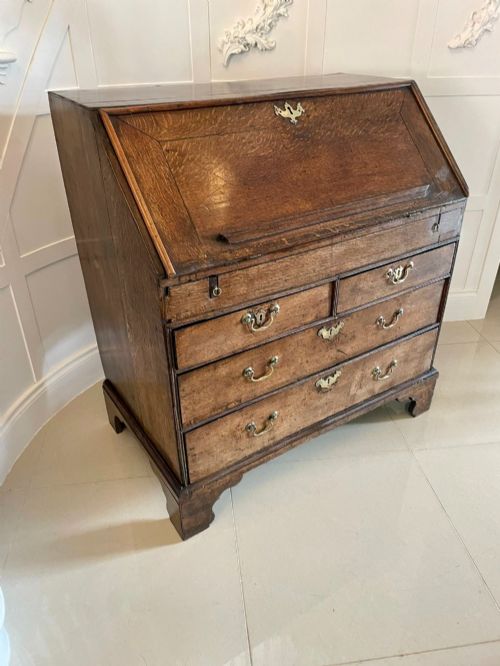
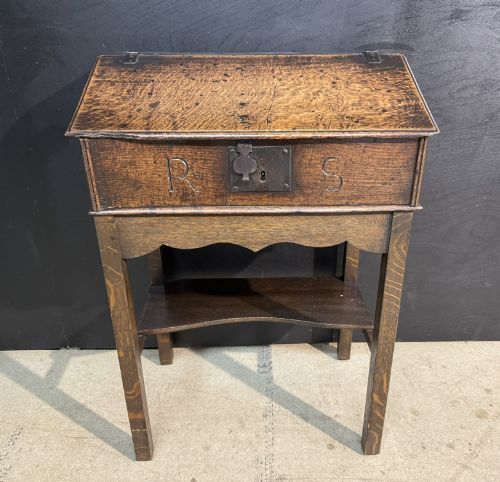
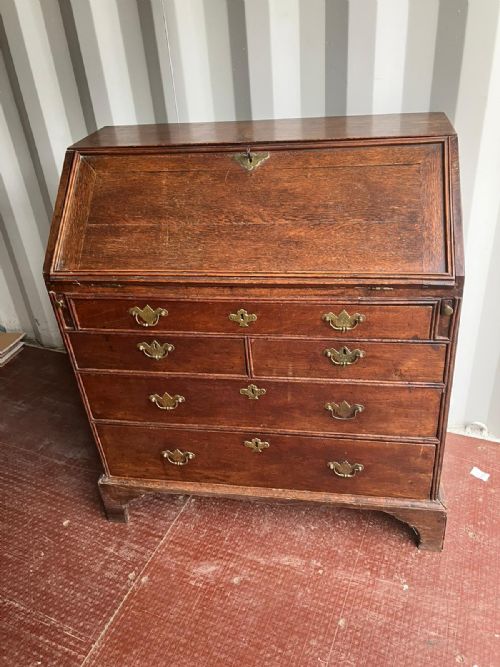
When you search for a period oak bureau desk, you are looking at sturdy writing furniture that spans several centuries of British craftsmanship. These pieces combine a writing surface with concealed compartments and drawers beneath, designed for correspondence and household administration.
The versions you are most likely to meet on this page date from the seventeenth and eighteenth centuries, alongside later nineteenth and early twentieth-century interpretations. They appear in forms ranging from compact table-top boxes to substantial pedestal writing desks and fall-front bureaus.
Makers utilised solid timber frames, often pairing oak carcasses with walnut or mahogany elements, brass handles, and fitted leather writing inserts. Styles shift from plain Jacobean construction to refined Georgian proportions and inlaid Regency details.
Construction and materials
These items rely on solid oak construction, chosen for its durability and rich grain, frequently combined with secondary timbers like mahogany and walnut for drawer linings and decorative veneers. Cabinet-makers used traditional joinery methods, including dovetail joints for drawers and pegged mortise and tenon frames.
Metalwork relies on cast brass for drop handles and escutcheons, securing drawers and fall-fronts with hand-filed iron locks. Writing surfaces often incorporate tooled leather inserts set within the wooden framework of the desk top.
Period Oak Bureau Desk Retail Price Guide 2026
Typical asking prices for period oak bureau desk among the pieces listed under this phrase on Sellingantiques today, from the lower quarter to the upper quarter. They describe what is for sale here now, not the wider market.
Many seventeenth-century writing boxes contain secret drawers hidden behind sliding panels for storing prized trinkets.
Judging quality and craftsmanship
Quality reveals itself in the handling of the timber and the complexity of the interior compartment arrangement, where superior pieces offer finely fitted pigeonholes and hidden drawers. The crispness of carved details and the weight of the brass hardware signal higher workshops.
Proportion and timber selection set the better examples apart, as skilled makers matched oak grains across wide drawer fronts and balanced the fall-front slope against the chest base. Lesser items show simpler joinery and utilitarian interior layouts without decorative crossbanding or inlay.
The Period Oak Bureau Desk Glossary
- Bureau
- A writing cabinet featuring a sloping fall-front that opens to reveal a fitted interior of pigeonholes and small drawers. This form provides a concealed workspace that can be closed when not in use.
- Secretaire chest
- A chest of drawers containing a fitted writing drawer that pulls out and drops down to form a desk surface. It merges storage capacity with a dedicated writing space.
- Writing slope
- A portable box with a slanted lid designed to hold writing materials and provide an angled surface for letters. These compact boxes sit on tables or desks.
- Dovetail
- A traditional interlocking joint used to join drawer corners together securely without nails. Fine, narrow dovetails indicate careful cabinet-making.
- Escutcheon
- A decorative metal plate surrounding a keyhole that protects the surrounding wood from wear. They are typically cast in brass.
Period Oak Bureau Desk: Frequently Asked Questions
How do I use a bureau desk?
Lower the fall-front flap to reveal the interior writing surface and pigeonholes. The hinged lid rests securely on support arms, providing a stable platform for correspondence.
Store stationery and paperwork inside the compartments when finished, then close and lock the front to keep your workspace tidy.
What is a table top bureau?
A table top bureau is a compact writing box designed to sit on top of an existing table or desk rather than standing on its own floor supports. It offers the fitted interior and sloping front of a full-size bureau in a smaller format.
These portable writing cabinets were popular for moving between rooms before modern fixed furniture became standard.
How do I date an oak bureau?
Examine the construction methods, handle styles, and timber choices to determine the period. Early pieces feature hand-cut dovetails, pegged frames, and heavy oak planks characteristic of seventeenth-century joinery.
Later eighteenth-century examples show more refined proportions, mahogany crossbanding, and lighter internal configurations typical of the Georgian era.
Where should I place an oak desk?
Position your desk in a room with steady ambient light, avoiding direct sunlight that can dry out old oak timber and fade leather inserts. Leave enough clearance behind the piece to lower fall-fronts or pull out writing drawers comfortably.
Keep wooden furniture away from direct heat sources like radiators to prevent splitting.