

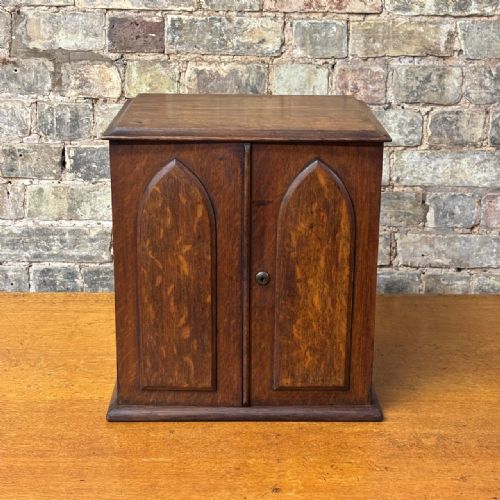


Tabletop Oak Desk
A tabletop oak desk brings practical writing space to any surface, offering sturdy timber construction and compact portable proportions.
Tabletop Oak Desk
A tabletop oak desk encompasses compact writing boxes, miniature chests, and small bureaus designed to sit upon larger surfaces. These pieces emerge across periods spanning the seventeenth century through to the Edwardian era and the nineteen-thirties.
Georgian kneehole desks and William and Mary bureaus appear alongside Gothic Revival pieces and Arts and Crafts designs. Buyers encounter everything from simple nineteenth-century examples to elaborate seventeenth-century desk furniture.
Assessing quality and craftsmanship
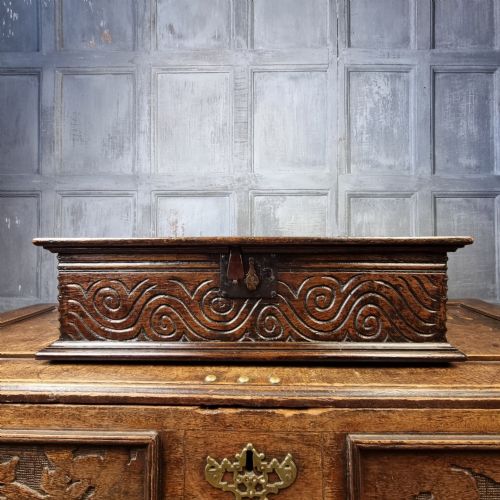
Quality rests in the selection of the timber grain, the crispness of any carved detailing, and the integrity of the original joints. Early pieces display hand-planed surfaces and traditional fixings that mark superior workshop output.
Hardware preservation alters the standing of a piece, with original brass drop handles, escutcheons, and working locks commanding greater appreciation. Finer examples retain their fitted interior compartments, small drawers, and structural harmony.
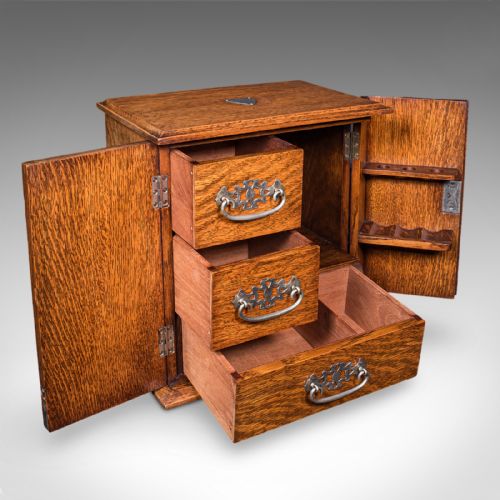
An eighteenth-century doctor managed his paperwork from a specialised Cambridge smoking cabinet and tabletop desk.
Arthur Simpson
The Tabletop Oak Desk Glossary
- Bible box
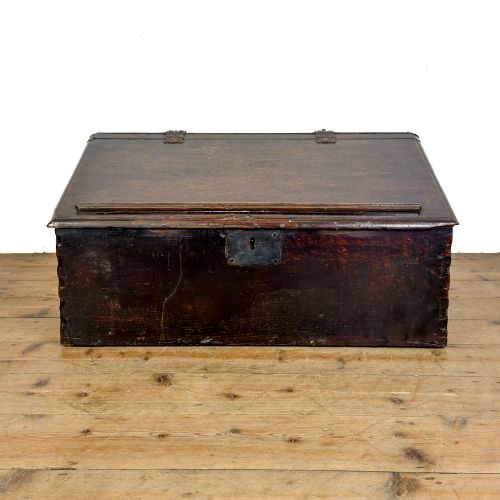
- A sloping-lidded wooden container originally made to store sacred texts and writing materials. These early forms often rested on tables before dedicated desks became common.
- Desk box
- A portable wooden chest with a slanted lid designed to hold paper, ink, and pens. They frequently feature internal compartments and date from the seventeenth and eighteenth centuries.
- Kneehole desk
- A small writing table featuring a central recess for the user's legs, flanked by columns of small drawers. Georgian examples represent sophisticated miniature iterations of full-sized furniture.
- Revolving bookcase
- A compact rotating book stand designed for tabletop use, popular during the Edwardian period. They allow easy access to a small collection of reference volumes.
- Table bureau
- A miniature drop-front desk that sits on a larger surface, revealing internal pigeonholes and small drawers when opened. William and Mary examples showcase early forms of this compact cabinetwork.
Tabletop Oak Desk: Frequently Asked Questions
What is a tabletop oak desk?
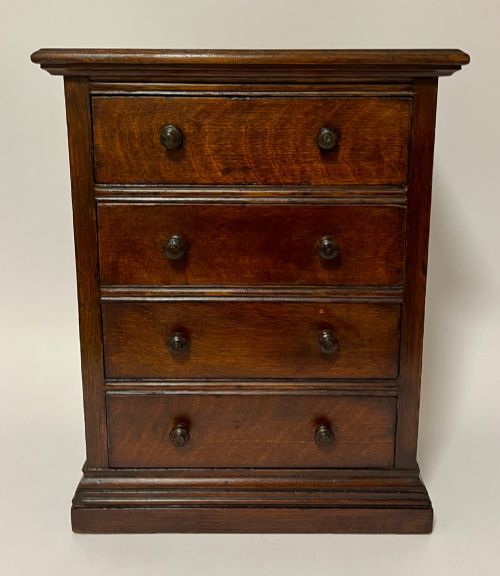
A tabletop oak desk is a small writing surface or storage box designed to sit on top of a table or chest rather than stand on the floor. These pieces include slope-front boxes, miniature bureaus, and small cabinets made from durable oak.
They provide compact storage for stationery and documents while taking up minimal room. Their portable nature allowed writers to move their workspace between rooms easily.
How were early desk boxes used?
Early desk boxes served as portable writing desks before dedicated stationery furniture became common in homes. Users placed them on ordinary tables and opened the sloped lid to write letters.
The interior compartments held inkwells, quills, and important papers securely. When finished, the owner could lock the box to protect private correspondence.
How do I date an oak desk box?
Dating relies on examining the construction methods, hinges, locks, and timber characteristics. Seventeenth-century examples often display pegged joinery, hand-carved panels, and board construction.
Later pieces from the Georgian and Edwardian periods incorporate machine-sawn timber, more refined dovetailing, and different brass hardware styles. Comparing the decorative motifs to known period styles helps narrow the manufacturing era.
Where should I place a tabletop desk?
These compact pieces fit well on sturdy sideboards, large tables, or dedicated desk surfaces where they add character and storage. Their small footprint makes them suitable for rooms with limited space.
Keep them away from direct heat sources and strong sunlight to protect the oak timber and finish. Placing them at a comfortable height allows you to use the writing slope or access internal compartments easily.