






Tabletop Desk Organiser
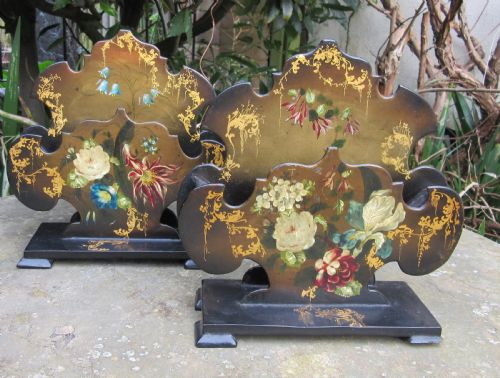
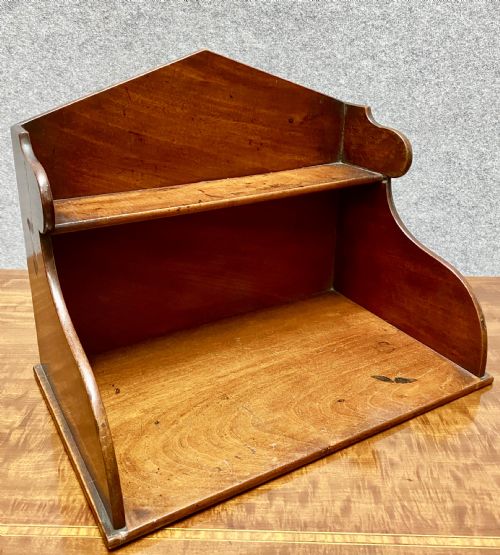
A tabletop desk organiser keeps correspondence and papers in order, bringing period timber and brass to a working surface.
Tabletop Desk Organiser
A tabletop desk organiser encompasses small oak and mahogany cabinets, stationery boxes, and miniature chests designed to sit on a desk. These pieces emerge across Georgian, Regency, Victorian, and Edwardian periods.
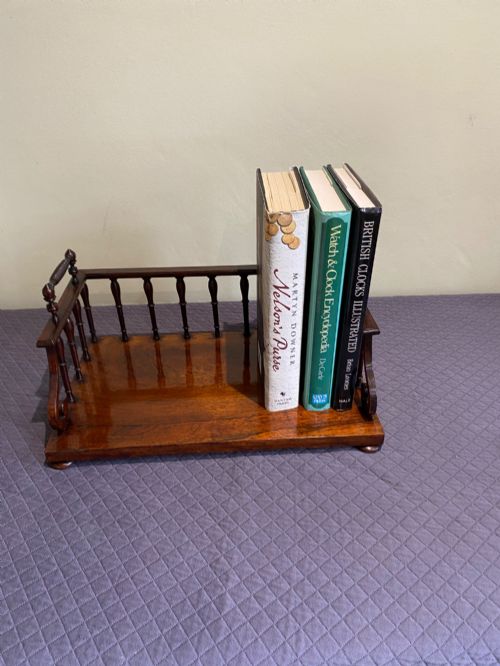
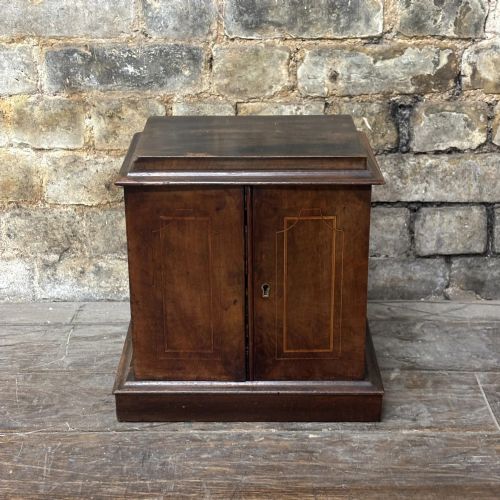
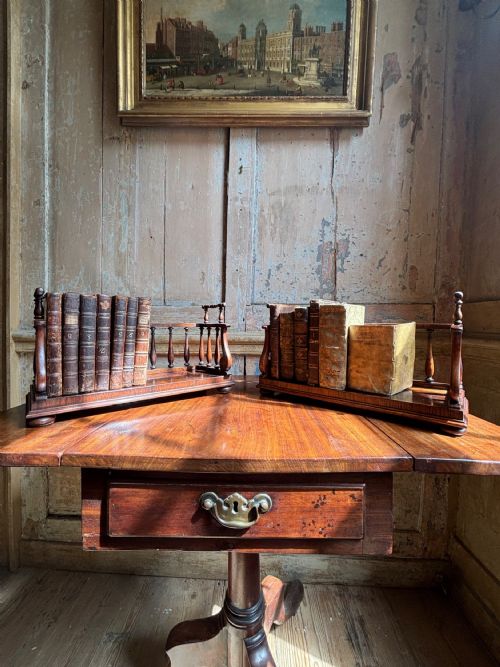
The most common forms on this page include mahogany stationery cabinets, rosewood book stands, and oak bible boxes or miniature chests of drawers. Buyers also encounter revolving bookcases and brass-mounted desktop cartonnieres.
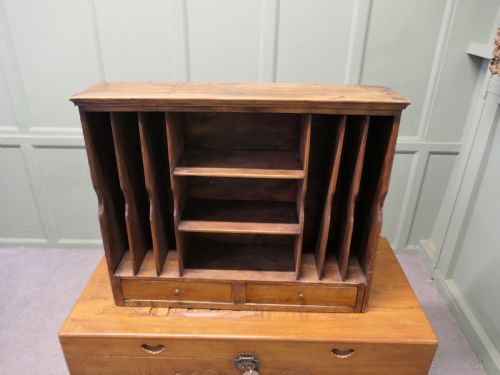
Origins span English cabinet-making traditions alongside French imports like Louis XV revival pieces and post office filing shelves. Each object serves to corral letters, books, and small writing implements within domestic and office settings.
Judging quality and execution
Quality rests in the selection of timber grain, the crispness of carved details or brass mounts, and the integrity of internal dividers. Finer pieces demonstrate meticulous dovetailing in the drawer construction and well-fitted locking mechanisms.
Proportion and balance define the superior examples, whether a miniature chest of drawers or a revolving bookcase. The integration of materials, such as contrasting brass inlay against dark rosewood, marks the work of skilled workshops.
Tabletop Desk Organiser Retail Price Guide 2026
Typical asking prices for tabletop desk organiser among the pieces listed under this phrase on Sellingantiques today, from the lower quarter to the upper quarter. They describe what is for sale here now, not the wider market.
Listings span the eighteenth, nineteenth, and early twentieth centuries, featuring woods like mahogany, oak, and rosewood.
The Tabletop Desk Organiser Glossary
- Cartonnier
- A piece of desk furniture fitted with compartments or drawers for holding papers, often ornamented with ormolu mounts in French revival styles.
- Book carrier
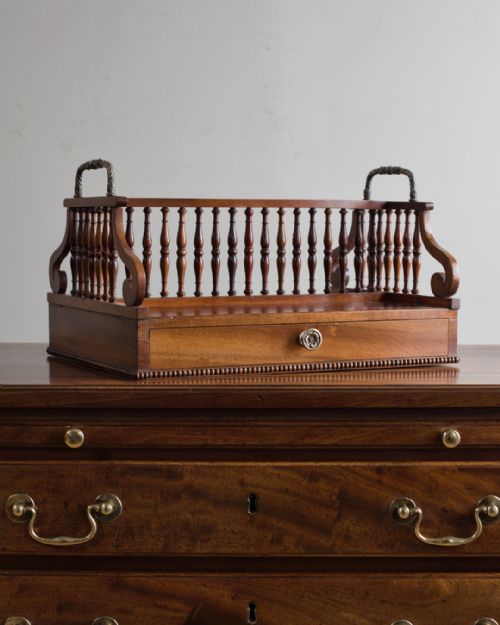
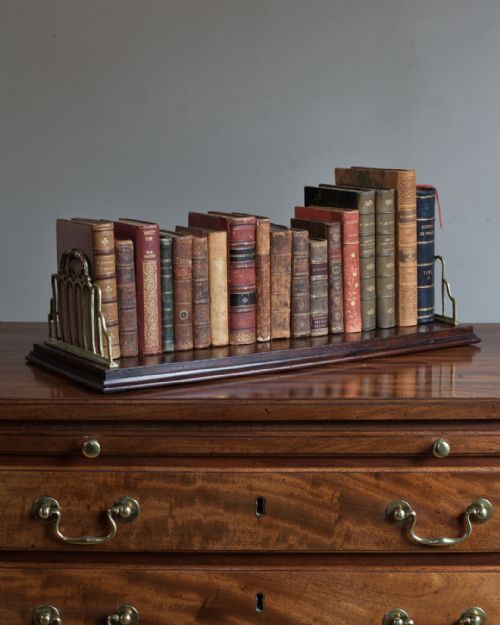
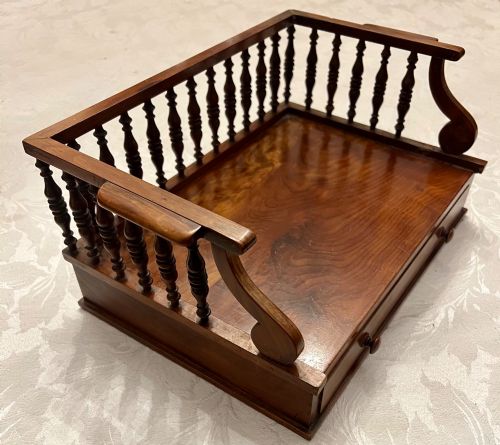
- A portable rack or trough designed to hold a small selection of books upright on a desktop or table surface.
- Stationery box
- A tabletop cabinet featuring tiered slots or compartments specifically sized for holding letter paper and envelopes.
- Apprentice piece
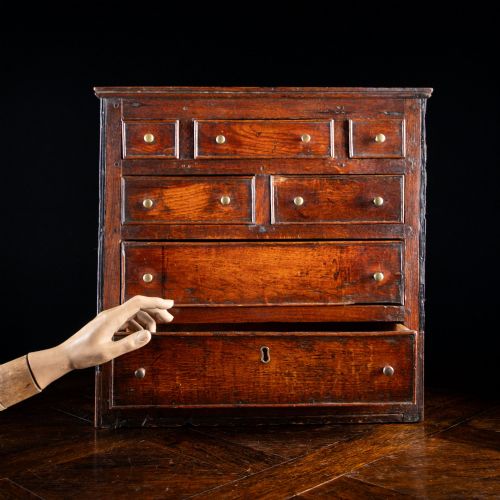
- A miniature version of a larger item of furniture, demonstrated by a maker to prove skill before joining a guild.
- Bible box
- A sloping-lidded wooden box originally made to hold sacred texts, frequently repurposed as a desk organiser for writing materials.
Tabletop Desk Organiser: Frequently Asked Questions
What fits inside a stationery box?
These boxes contain vertical dividers and slots designed for folded letters, envelopes, and paper sheets. They keep correspondence neatly separated.
Larger models also incorporate small drawers for stamps, nibs, and sealing wax.
How do I date a mahogany cabinet?
Georgian and Regency pieces tend to feature hand-cut dovetails, solid mahogany secondary woods, and simple brass pulls. Later Victorian and Edwardian examples often utilise machine-sawn elements and different internal paper linings.
Style indicators like Art Nouveau curves or Gothic tracery also point to specific nineteenth and twentieth century decades.
Where were miniature chests used?
Miniature chests served on large writing desks or tabletops to store valuable papers, receipts, and small personal items. Their small scale allowed them to sit within arm's reach of the writer.
Some were demonstration pieces made by craftsmen showcasing their woodworking proficiency.
How do I care for rosewood?
Rosewood benefits from being kept away from direct sunlight and sudden changes in room temperature. This prevents the dense timber from drying out or splitting.
Occasional light dusting with a dry cloth maintains the natural sheen of the polished wood.