
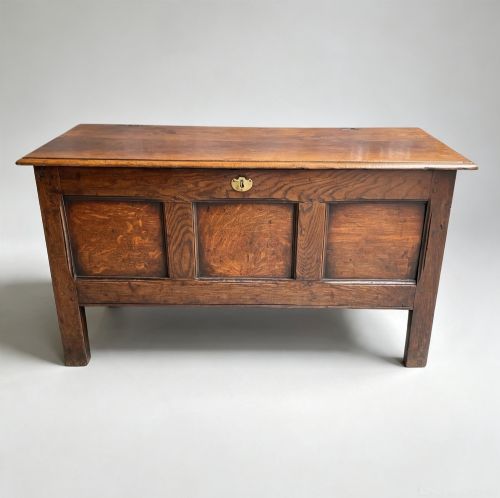

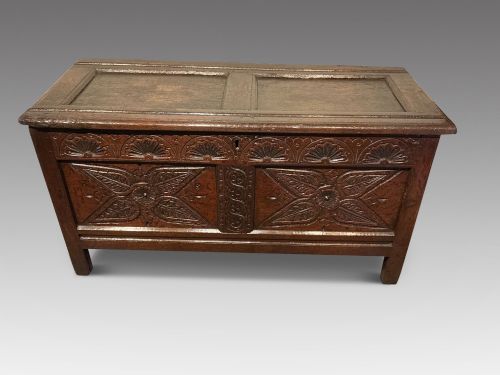
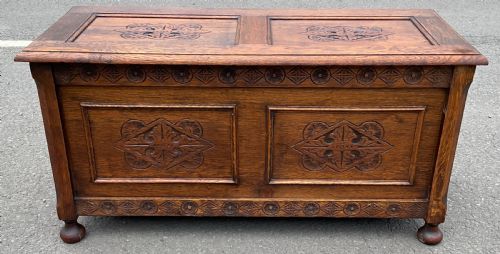


Period Oak Bedding Chest
A period oak bedding chest is a sturdy timber storage piece designed to hold textiles, and buyers choose them for genuine historical utility.
Period Oak Bedding Chest
A period oak bedding chest spans centuries of domestic storage, appearing frequently as seventeenth century coffers and eighteenth century mule chests. These items served traditional households for storing linens, blankets, and garments safely away from damp floors and pests.
The pieces on this page include seventeenth century English examples, eighteenth century Georgian items, and later revival interpretations made around nineteen ten. Buyers encounter simple panelled blankets chests alongside complex mule chests featuring lower drawers for smaller garments.
Forms vary from regional North Country items to Welsh mule chests and small Kists. Each format reflects the specific storage needs and workshop traditions of its particular era and geographic origin.
Quality differences in timber storage
Quality rests in the selection of timber and the precision of the joinery rather than mere age. Superior examples display well-figured oak boards, harmonious proportions, and crisp, purposeful hand carving rather than mechanical regularity.
The integrity of the original structure, including authentic iron or brass hardware and stable panel construction, distinguishes finer survivals from heavily altered pieces.
Listings feature oak material combined with iron, wrought iron, and brass across seventeenth and eighteenth century styles.
The Period Oak Bedding Chest Glossary
- Coffer
- A heavy wooden chest traditionally used for storing valuables, documents, or textiles. These sturdy boxes formed a central part of early household furnishings.
- Mule chest
- A traditional storage chest featuring one or more drawers built into the base beneath the main compartment. This hybrid form emerged to provide more accessible storage for smaller items.
- Kist
- A regional term, particularly Scottish and northern, for a wooden chest or box used for storage. They served similar domestic purposes to southern coffers.
- Panelled
- A method of construction where flat boards are fitted within a grooved frame to accommodate natural timber movement. This technique prevents warping as the wood responds to humidity.
- Jacobean
- A design style associated with the early seventeenth century, characterised by geometric mouldings and stiff, formal carved decoration. Pieces from this era display robust proportions.
Period Oak Bedding Chest: Frequently Asked Questions
What is a period oak bedding chest used for?
These wooden boxes served households primarily for keeping blankets, heavy textiles, and precious linens safe and dry. Their deep interiors protected fabrics from dust and dampness in unheated rooms.
Today, modern homes utilise them at the foot of a bed or in living spaces for extra storage while adding historical character to a room.
How do I tell seventeenth and eighteenth century chests apart?
Seventeenth century examples often display simpler plank-and-stile construction, heavy mouldings, and formal geometric or strapwork carving. Their proportions tend to be robust and low to the ground.
Eighteenth century pieces frequently incorporate drawers beneath the main lid, lighter framing, and softer carved motifs characteristic of the Georgian period.
Are mule chests different from standard coffers?
Mule chests include one or more functional drawers fitted beneath the main storage compartment. This development made accessing smaller garments easier without lifting the heavy top lid.
Standard coffers consist solely of a top-opening box resting directly on legs or the floor, lacking the lower drawer section.
How do I care for antique oak furniture?
Keep timber storage pieces away from direct heat sources and rapid temperature fluctuations to prevent wood splitting. Natural beeswax applied occasionally helps nourish the dry grain.
Avoid excessive moisture on the surface and ensure iron or brass fittings remain clean and dry to protect the surrounding wood.