
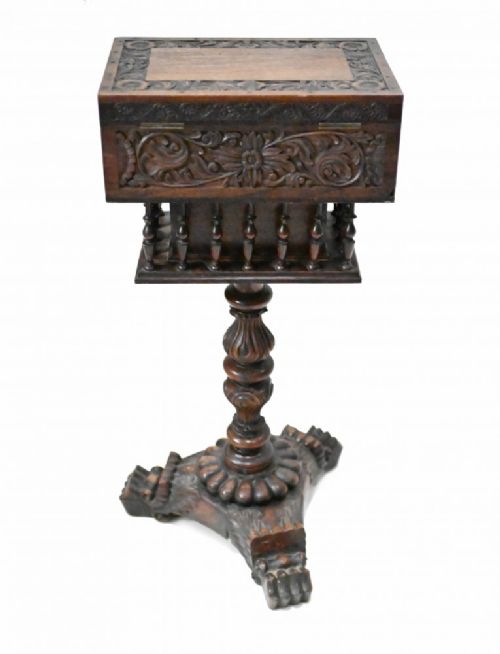


Pedestal Tea Chest
A pedestal tea chest is a fine tea storage vessel elevated on a central column, offering a stately focal point for period drawing rooms.
Pedestal Tea Chest
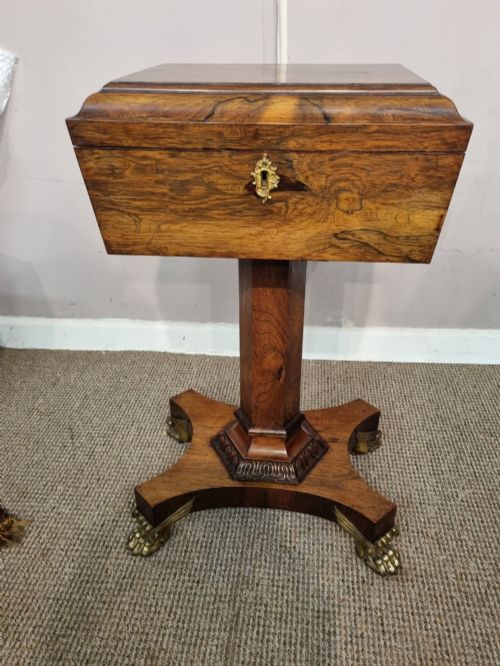
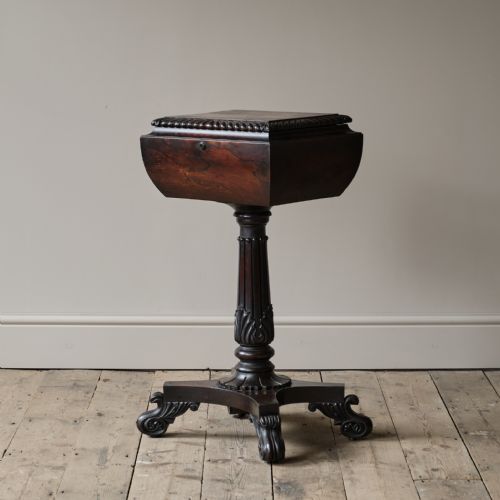
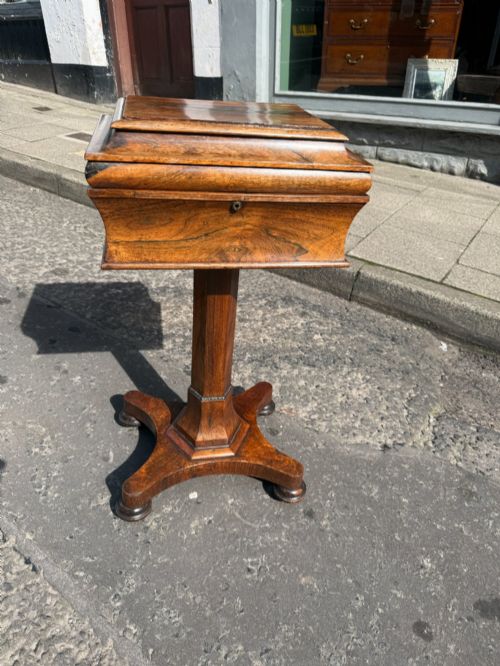
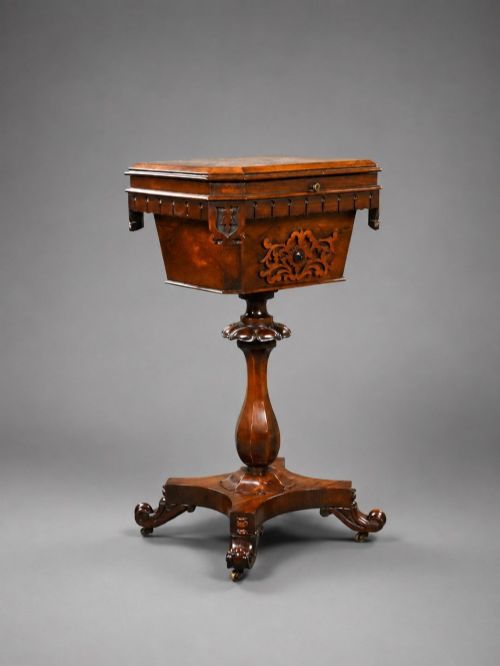
When a collector searches for a pedestal tea chest, they encounter forms frequently catalogued as teapoys or tea poys across Regency, Georgian, and Victorian periods. These pieces serve as elegant lidded storage boxes for dry tea leaves, traditionally mounted upon a central pillar and platform base.
The most common examples on this page date from the nineteenth century, including Regency rosewood and William IV mahogany variants. Alongside standard English pieces, rarer regional items such as Swedish burr elm or Anglo-Indian carved padouk surface in the listings.
The box portion often takes a sarcophagus or rectangular shape, sometimes doubling as a work box with fitted interior compartments. They sit comfortably as occasional or side tables in traditional interiors, blending utility with formal cabinet-making.
Materials and construction methods
Cabinet-makers relied on dense exotic timbers, shaping them into smooth veneers or solid frames of rosewood, mahogany, and walnut. Flame mahogany and burr walnut provide striking grain patterns, whilst brass inlay and marquetry add geometric or floral ornamentation to the exterior surfaces.
The structural integrity relies on a sturdy central pedestal column, typically rising from a platform base supported by carved feet. Interior compartments often retain remnants of foil lining or fitted wooden caddies designed to keep loose leaves dry.
Some chests double as work boxes, hiding sewing compartments beneath the tea canisters for discreet Victorian multitasking.
Evaluating craftsmanship and provenance
Quality rests in the choice of timber and the precision of the cabinet-making, distinguishing standard workshop production from premier cabinet-makers like Gillows. Superior examples display meticulously matched veneers, crisp carving on the feet, and intact brass inlay without replacement sections.
The sophistication of the internal fittings also dictates the desirability of the piece, with complete original caddies and working locks commanding greater attention. Timber selection plays a crucial role, as richly figured burr elm, burr yew, or padouk elevate the visual impact of the design.
Gillows
The Pedestal Tea Chest Glossary
- Teapoy
- A small stand or table designed specifically for holding tea caddies and storing loose tea leaves. The term originates from the Hindi word for three feet, though many later examples rest on a single central pillar with a platform base.
- Sarcophagus shape
- A box design featuring a steep-sided, sloping lid reminiscent of an ancient stone coffin. This silhouette became immensely popular for tea chests during the Regency period.
- Caddy
- A small container or box used for storing tea. Inside a tea chest, these were often individual lidded canisters made of wood or metal.
- Burr walnut
- A prized wood veneer harvested from the wart-like growths on walnut trees, creating swirling, highly decorative grain patterns. It adds immense visual texture to Victorian cabinet work.
Pedestal Tea Chest: Frequently Asked Questions
What is a pedestal tea chest?
A pedestal tea chest is a decorative lidded box mounted on a central pillar, historically used to store expensive loose tea leaves under lock and key. Wealthy households kept tea securely stored in the drawing room.
Today, these pieces function as decorative occasional tables or small side tables. Their distinctive architectural forms bring period character to modern living spaces.
How do I tell Regency from Victorian pieces?
Regency pieces often showcase rich rosewood timber, elegant brass inlay, and sharp classical proportions inspired by ancient Greek and Roman designs. They typically date from the early nineteenth century.
Victorian versions frequently utilise burr walnut or mahogany, featuring heavier carving and more exuberant, rounded silhouettes. The proportions became bolder as the century progressed.
Were these used for drinking tea?
Tea was an extremely valuable commodity in the Georgian and Regency eras, so the leaves were stored securely inside the chest rather than brewed upon it. The host would unlock the box to measure out the leaves before service.
Inside, you will often find fitted compartments or small canisters designed to keep different varieties of black and green tea separated.
How do I care for a rosewood tea chest?
Keep the wood away from direct sunlight and strong heat sources to prevent the delicate rosewood veneer from drying out and cracking. Maintain a stable indoor climate to protect the polish.
Apply a gentle beeswax polish occasionally to nourish the grain. Avoid using modern chemical sprays that can strip the historic finish.