
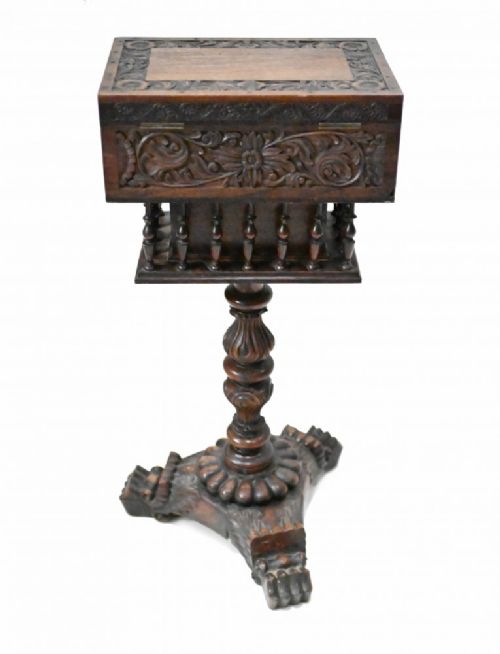


Rosewood Pedestal Caddy
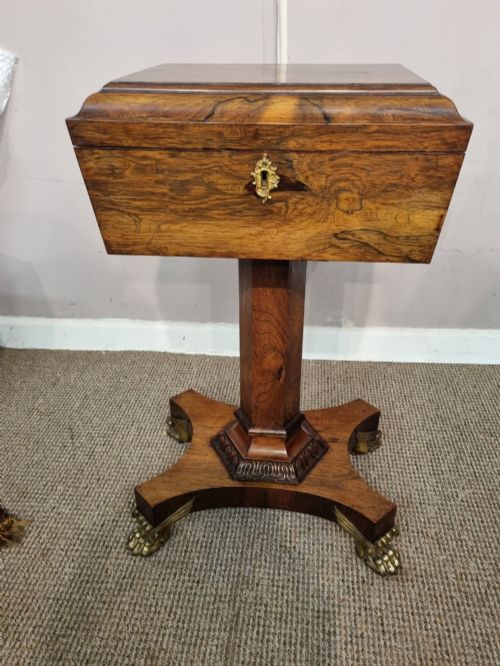
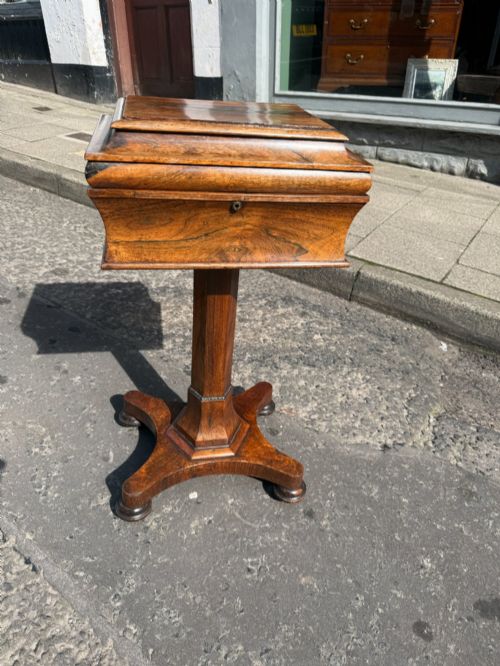
These rosewood pedestal caddy pieces are grand containers for dry tea leaves, combining fine timber with sturdy pillar supports to anchor a room.
Rosewood Pedestal Caddy
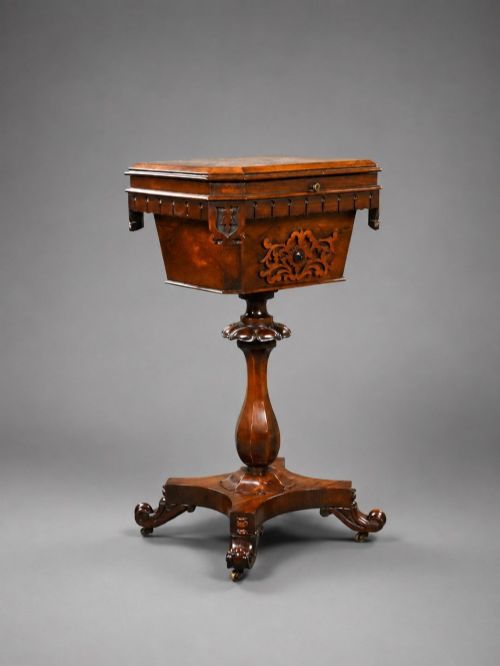
A rosewood pedestal caddy, frequently encountered here as a teapoy or work table, is a substantial container raised on a central pillar and stable base. Buyers search for this phrase to find functional Victorian, William IV, and Regency examples that double as small tables or sewing boxes.
The dominant forms on this page include classical teapoys and work boxes fitted with internal compartments, alongside occasional tables derived from the same tradition. These pieces originate across Georgian, Regency, and later nineteenth-century workshops, maintaining a distinct presence in domestic interiors.
Materials and Construction
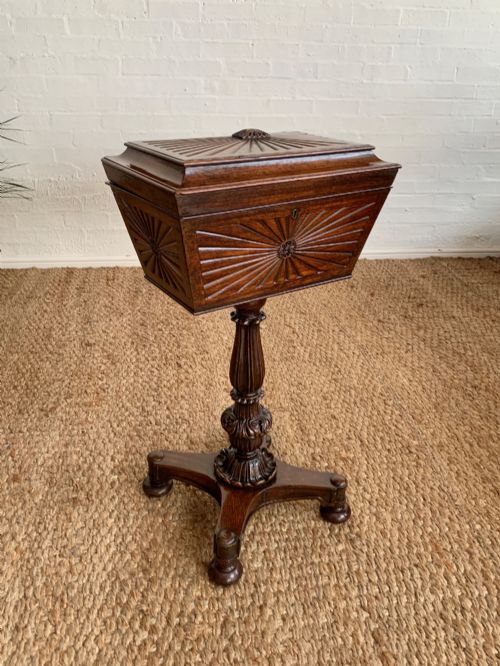
Construction relies heavily on rich rosewood veneers and solid timbers, sometimes paired with padouk or mahogany depending on whether the piece originates from English or Anglo-Indian makers. Artisans utilised brass inlay and delicate carving, such as sunburst motifs, to decorate the exterior surfaces.
Internal arrangements often incorporate fabric or velvet linings alongside glass components for storage. These vessels sit upon turned or carved pedestal supports designed to bear the weight of the timber top and its fitted interior.
Listings on this page span the Regency, Georgian, and Victorian periods, alongside items dated to eighteen-ninety.
Distinguishing Quality in Construction
Quality separates objects by the precision of their brass inlay and the depth of their timber carving, particularly around the pedestal and pillar joints. Superior examples exhibit tightly fitted internal compartments and stable pillar mountings that resist shifting over time.
The choice of primary timber grain and the condition of the rosewood surfaces dictate the visual impact of each piece. Better workmanship is visible in the crispness of applied ornamentation and the balanced proportions of the supporting base.
The Rosewood Pedestal Caddy Glossary
- Teapoy
- A small stand or box designed for holding tea, often featuring a lidded compartment atop a central pillar. These pieces served a central role in formal domestic entertaining during the nineteenth century.
- Work Table
- A multi-functional item containing compartments for sewing and needlework, frequently sharing the pedestal format of a tea caddy. They combine storage utility with display surfaces.
- Padouk
- A dense tropical hardwood utilised in colonial furniture production, prized for its durability and rich colour. It appears frequently in Anglo-Indian pieces on this page.
- Regency
- An English design period spanning the early nineteenth century, characterised by classical restraint and ornamental brass work. Pieces from this era often display clean architectural lines.
Rosewood Pedestal Caddy: Frequently Asked Questions
What is a teapoy?
A teapoy is a lidded box designed to store loose tea leaves securely, elevated on a pedestal stand. They were placed in reception rooms where hosts prepared tea for guests.
Over time, many of these containers evolved to serve multiple domestic functions, including needlework storage and general display.
How do I date these pieces?
Dating relies on stylistic markers such as the presence of brass inlay, classical pedestals, and specific timber choices like rosewood and padouk. Regency and William IV examples display distinct proportions compared to later Victorian items.
Construction methods inside the internal compartments also offer clues regarding the manufacturing period.
Where were they made?
The listings show pieces originating from English workshops as well as Anglo-Indian colonial makers. English examples often align with Georgian and Regency aesthetic traditions.
Colonial pieces introduce alternative timbers like padouk alongside deeper, distinct regional carving techniques.
How do I maintain rosewood?
Rosewood surfaces benefit from stable indoor environments away from direct sunlight and excessive temperature shifts. Regular dusting with a dry cloth helps preserve the finish of the timber.
Internal velvet and fabric linings require careful handling to avoid moisture damage.