




Pedestal Coal Bucket
These pedestal coal bucket examples bring functional nineteenth-century hearth furniture into modern rooms as striking decorative vessels.
Pedestal Coal Bucket
A pedestal coal bucket combines a sturdy container for solid fuel with an elevated base or foot, creating a sculptural presence by the fireplace. When searching for a pedestal coal bucket, buyers encounter various forms including helmet scuttles, lidded vessels, hods, and purdoniums alongside related items like peat buckets and Dutch teestoofs.
How they were made
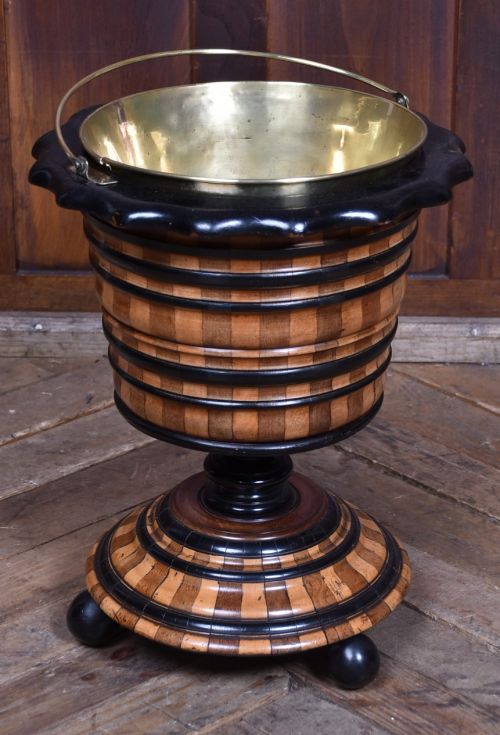
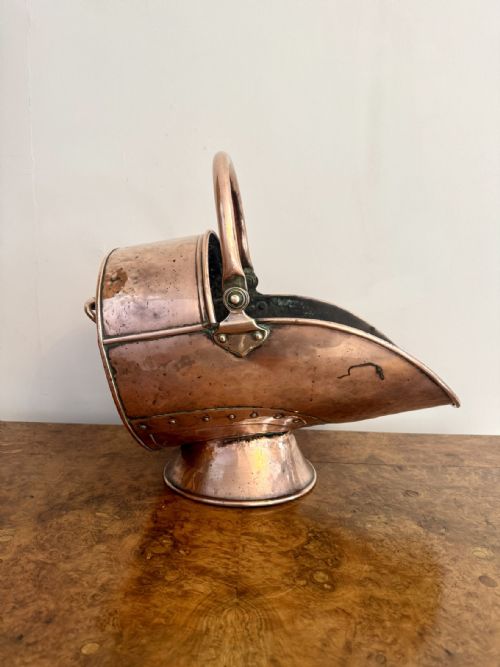
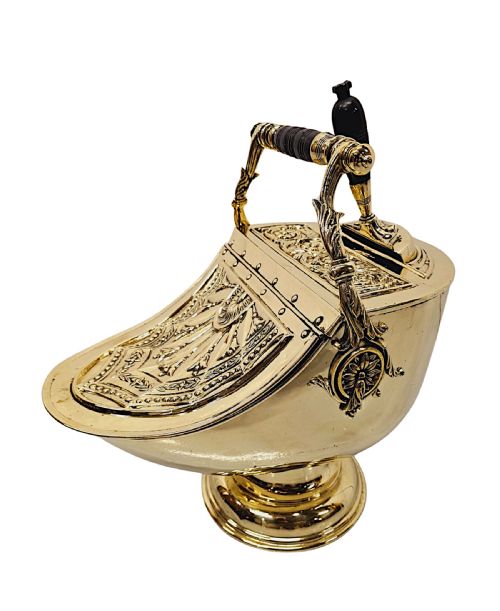
Metal versions rely heavily on hammered and polished copper and brass, frequently incorporating swing handles and matched shovels. Cabinetmakers constructed wooden variants utilising walnut, ebony, and ebonised wood, often pairing dark timber bodies with contrasting brass liners and accents.
Construction techniques combine traditional joinery for wooden buckets with raised metalwork and riveted seams for brass and copper vessels. Surface finishes range from high-polish brass to rich dark wood grains, designed to withstand daily fireside use while maintaining an ornamental finish.
Several pieces come equipped with their original metal shovels, surviving centuries of hearthside service together.
What varies in quality
Material thickness and structural integrity separate robust functional items from purely decorative later copies. Heavy-gauge copper and solid hardwoods indicate higher standards of original construction, ensuring the vessel bears the weight of fuel without failing.
Benham & Froud
The Pedestal Coal Bucket Glossary
- Coal scuttle
- A container designed to hold household coal for the fireplace, often featuring a sloped mouth or hinged lid for easy pouring.
- Purdonium
- A box-style coal container with a hinged front flap, popular in the Victorian period to keep fuel neatly enclosed.
- Teestoof
- A traditional Dutch warming vessel, sometimes utilised with a metal liner for domestic use.
- Helmet coal scuttle
- A coal bucket shaped with a flared rim resembling a classical helmet, aiding the transfer of fuel into the grate.
- Peat bucket
- A deep wooden or metal container originally intended for carrying turf or peat briquettes to the hearth.
Pedestal Coal Bucket: Frequently Asked Questions
What is a pedestal coal bucket?
A pedestal coal bucket is a raised hearth accessory designed to store and transport solid fuel to an open fire. These vessels elevate the coal container off the floor on a footed base or pedestal.
They combine practical utility with decorative metalwork or woodwork, serving as a prominent feature beside period fireplaces. The selection includes various nineteenth-century forms ranging from copper helmets to wooden buckets.
How were copper coal scuttles used?
Copper coal scuttles held coal or other solid fuel near the fireplace for easy access during heating. Their rigid handles and shaped spouts allowed householders to tip fuel cleanly into the grate.
Alongside their daily utility, polished copper and brass vessels reflected firelight and added warmth to nineteenth-century rooms. Many included matching shovels stored in side brackets or compartments.
How do I care for brass and copper?
Metal hearth containers require gentle cleaning with appropriate metal polishes to maintain their bright finish over time. Regular dusting prevents soot and ash accumulation from dulling the surface of the brass or copper.
Avoid abrasive cloths that might scratch the original metalwork. Storing them away from damp environments prevents corrosion and preserves the historical patina.
How do I identify Victorian coal buckets?
Victorian coal buckets often display characteristic heavy copper construction, rolled rims, and riveted joints. Stylistic cues include classical revival motifs, embossed brass details, and sturdy swing handles.
Comparing materials like ebonised wood, walnut, and polished brass helps distinguish Victorian pieces from earlier Georgian or later Edwardian examples. Maker marks, where present, provide definitive dates of origin.