
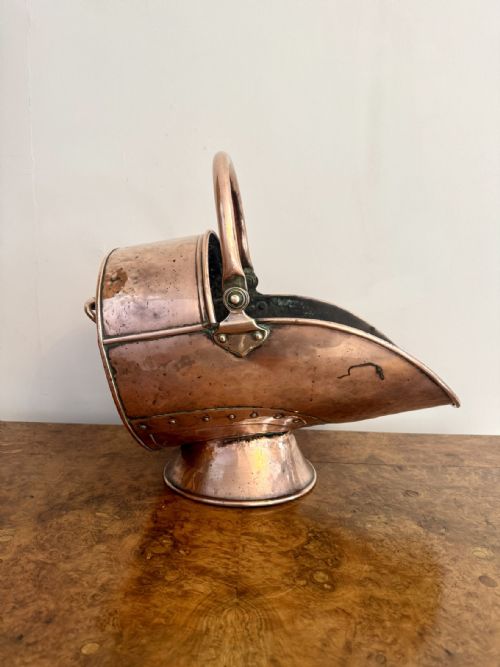


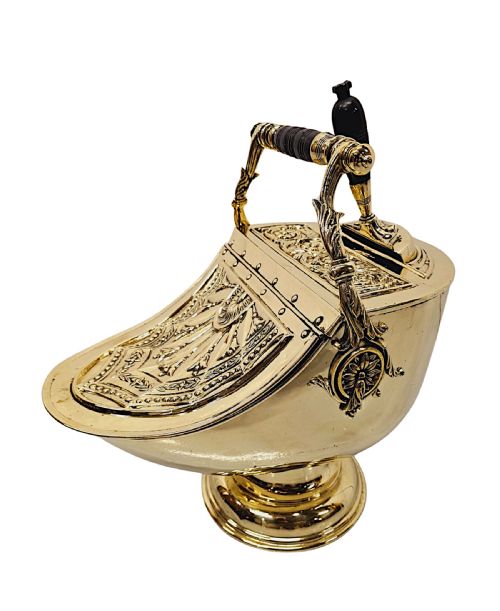


Pedestal Brass Coal Scuttle
These pedestal brass coal scuttle pieces are practical fireside accessories that bring period warmth and solid metalwork into a room.
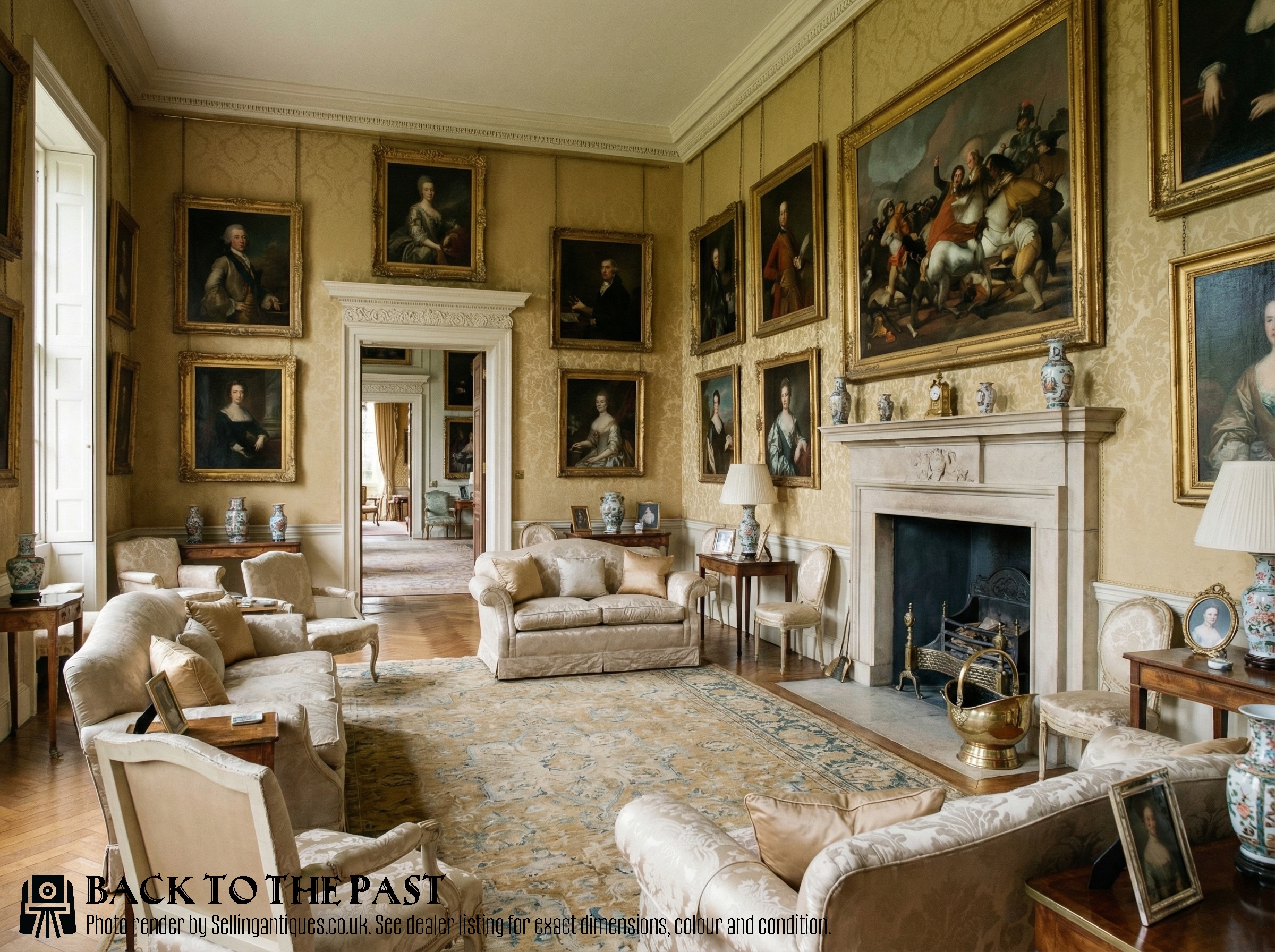
Pedestal Brass Coal Scuttle
When you search for pedestal brass coal scuttle, you are looking at fireside accessories designed to hold solid fuel close to a hearth. The examples seen here span the 19th Century, Victorian, Edwardian, and Regency periods, alongside George III items.
The dominant forms on this page include helmet coal scuttles, coal buckets, coal hods, and purdoniums. Many incorporate copper alongside polished brass, while wood appears in ebonised and walnut variants.
How They Were Made
These vessels are shaped from sheet brass and copper, often utilising beaten or polished finishes that catch the firelight. Metal components are combined with wood elements such as walnut and ebonised wood for handles and trim.
Construction methods include riveted and seamed metalwork designed to endure the weight of heavy coal. Detail work reflects Georgian, Regency, Adam Style, and Dutch Colonial influences across the centuries.
A sturdy metal scoop kept your hands clean while feeding the flames on a brisk Victorian evening.
What Varies in Quality
Quality reveals itself in the weight of the metal and the integrity of the construction. Thicker brass and copper sheet retain their structural form better over generations of lifting and carrying.
The crispness of decorative detailing, whether in the handle mountings or the shaping of a helmet cowl, separates standard production from finer workshop output.
Benham and Froud
The Pedestal Brass Coal Scuttle Glossary
- Helmet coal scuttle
- A fireside container featuring a flared rim and shaped body resembling a classical helmet. This design allows for easier pouring of coal onto a fire.
- Coal hod
- A deep metal bucket or container used for carrying and storing domestic fuel. These often feature a swing handle and a flat base for standing.
- Purdonium
- A box-style coal container with a sloping front drop-down door, frequently housing a removable metal liner. They often accommodate a matching shovel.
- Ebonised wood
- Timber treated to resemble ebony, providing a deep black contrast to polished brass and copper surfaces. It appears frequently on handles and decorative trims.
Pedestal Brass Coal Scuttle: Frequently Asked Questions
How do I clean brass and copper?
Clean metal surfaces with a suitable polish to maintain their lustre, taking care around older joins and patinated areas.
Avoid abrasive materials that might scratch the original finish of a 19th Century or earlier piece.
What is a coal purdonium?
A purdonium is an enclosed cabinet or box designed to store coal neatly beside a fireplace. It typically includes a hinged front and a metal interior liner.
Many Victorian and Edwardian examples were built to keep fuel hidden away while complementing surrounding furniture.
How can I tell periods apart?
Periods are identified by characteristic design styles, such as Adam Style neoclassical motifs or George III proportions. Materials also offer clues, with certain types of ebonised trim and specific brass gauges pointing to Victorian or Edwardian manufacturing.
Examining the construction methods and handle attachments helps narrow down the decades.
Are these items still usable?
Many of these pieces remain robust enough for holding logs or coal near a modern hearth. Their solid brass and copper construction ensures practical durability alongside decorative appeal.
Care should be taken with older liners and historical seams if used daily.