



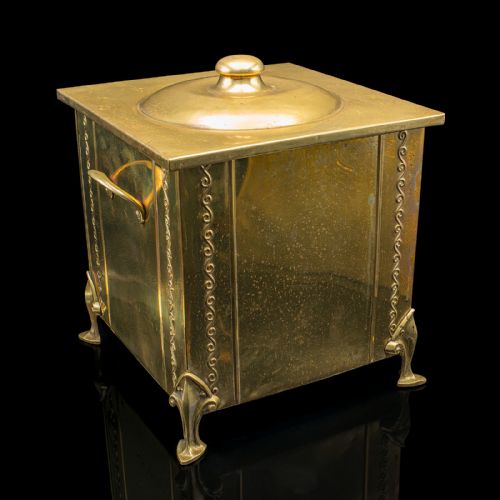


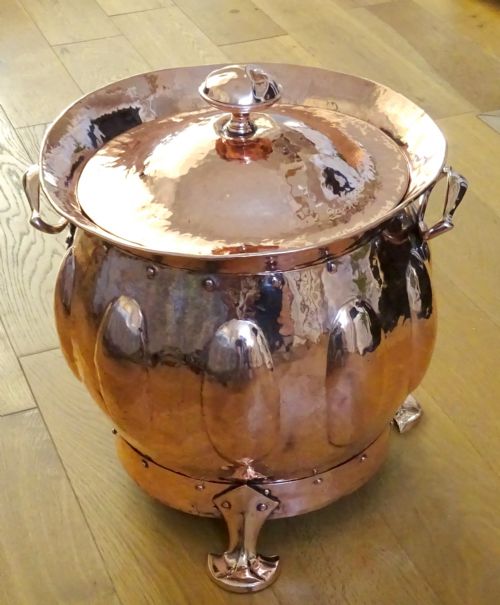
Lidded Coal Bucket
A lidded coal bucket keeps fuel tidy beside the hearth, combining heavy metal construction with domestic utility.
Lidded Coal Bucket
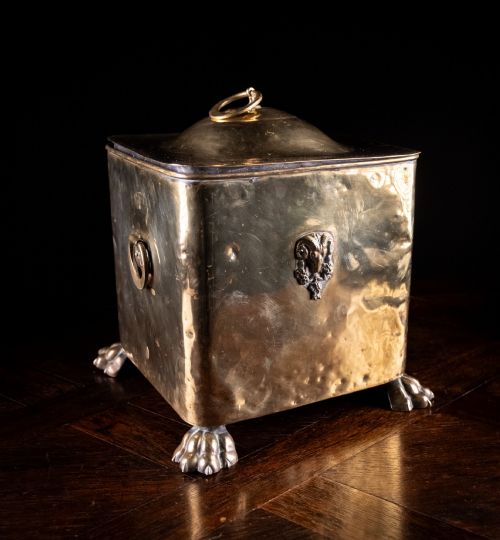
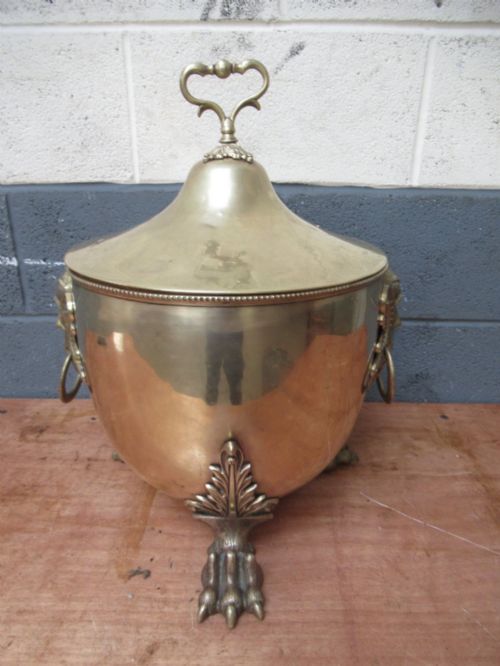
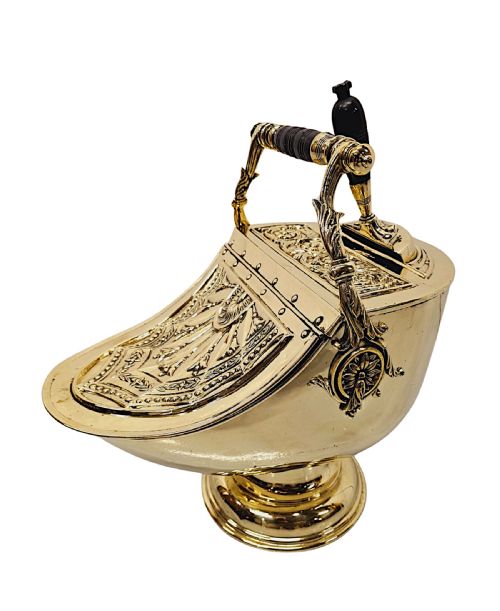
When you search for a lidded coal bucket, you are looking at substantial hearth containers designed to store fuel out of sight beside the fireplace. These functional vessels appear in various forms, from cylindrical bins to double-lidded scuttles.
The versions you are most likely to meet on this page date from the nineteenth and early twentieth centuries, spanning Victorian, Edwardian, and Art Nouveau periods. They typically emerge in resilient metals like brass and copper, sometimes featuring iron frames or wooden liners.
Makers fashioned these storage containers to sit neatly by the grate while containing dust and debris. Many examples double as log bins or planters, reflecting how domestic accessories served multiple functions in period interiors.
How they were made
Metalsmiths constructed these pieces primarily from hammered or sheet brass and copper, utilising rolled seams and riveted joints for durability. Wrought iron and painted iron frequently formed the structural frames and internal elements.
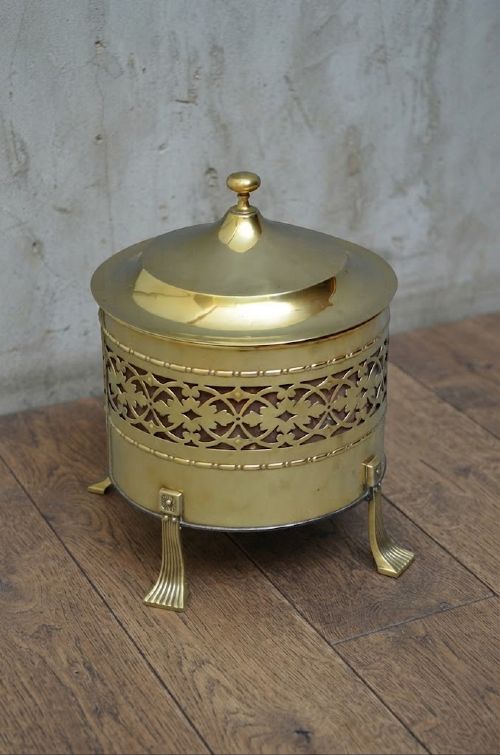
Some examples incorporated timber components, such as oak and fruitwood bodies or internal liners, combining wooden cabinetmaking with metalwork. Artisans applied decorative fretwork and hinged lids to finish the vessels.
The listings span the Victorian, Edwardian, Georgian, and Regency periods, utilising brass, copper, oak, and wrought iron.
What varies in quality
The distinction between standard domestic hardware and finer hearth equipment lies in the thickness of the metal and the precision of the joinery. Thicker gauge copper and heavy brass retain their shape better under regular use.
Decorative detailing also separates everyday items from superior examples. Pierced fretwork, crisp hand-hammering, and original cast brass fittings indicate careful workshop production rather than mass manufacture.
Tonks
The Lidded Coal Bucket Glossary
- Coal scuttle
- A container specifically designed for holding coal near a fireplace. These often feature a sloped opening or a hinged lid for easy access.
- Log bin
- A large vessel intended for storing firewood rather than smaller pieces of coal. They frequently appear in copper or brass with sturdy carrying frames.
- Fretwork
- Ornamental openwork pattern cut into sheet metal or wood. This technique appears on Edwardian examples to lighten the appearance of heavy metal bodies.
- Liner
- An internal container placed inside the main bucket to catch debris and protect the outer metal. Liners are often made of iron or secondary metals.
Lidded Coal Bucket: Frequently Asked Questions
What were lidded coal buckets used for?
These vessels held coal or logs near the fireplace to keep fuel close at hand without creating mess in the room. The lids contained dust and kept the hearth area looking neat.
Over time, owners also repurposed them as plant holders or general storage bins when open fires fell out of regular daily use.
How do I tell Victorian from Edwardian pieces?
Victorian examples often feature heavier construction with darker patination and simpler, robust forms suited to coal storage. Brass and copper predominated during this era.
Edwardian pieces frequently introduce lighter decorative touches, such as pierced fretwork designs on the body or alternative uses like planters.
Can I use these buckets for logs?
Many larger copper and brass vessels function perfectly well as log bins alongside modern or period fireplaces. Their sturdy metal construction easily withstands the weight of firewood.
Check the internal dimensions and the condition of any wooden or metal liners before loading them with heavy logs.
How do I clean antique brass and copper?
Most collectors prefer to leave a warm, aged patina on nineteenth-century metal rather than polishing it to a bright shine. Gentle dusting with a dry cloth is usually sufficient for regular maintenance.
Avoid harsh chemical abrasives that strip away the historical surface finish and reduce the character of the metal.