
Pearl Choker Necklace
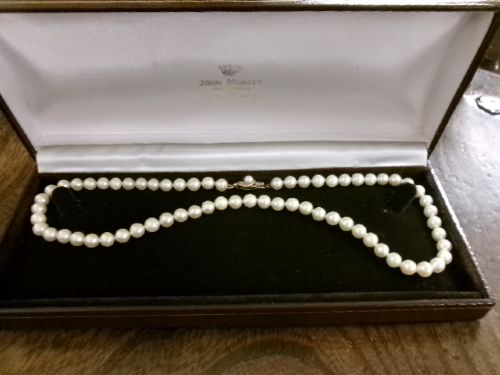
When you select a pearl choker necklace, you choose a short strand that sits high on the neck, often finished with a gemstone and precious metal clasp.
Pearl Choker Necklace
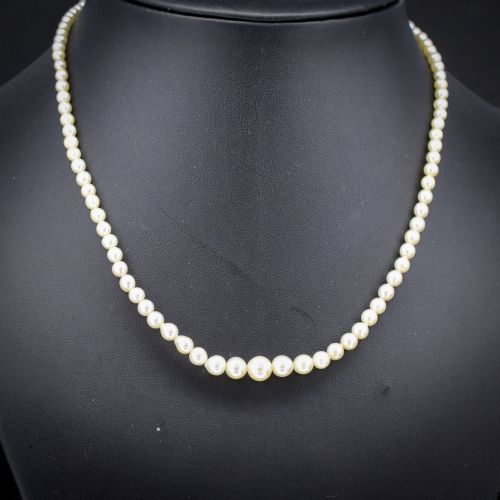
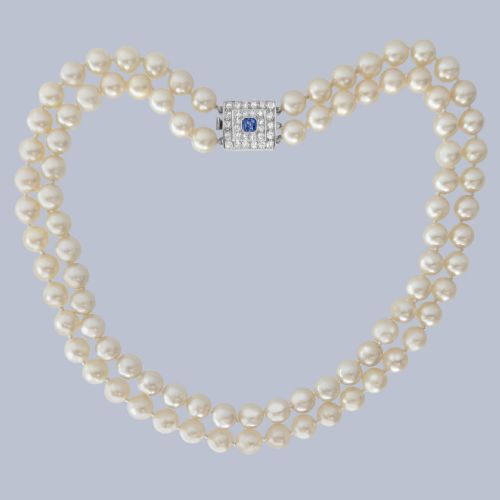
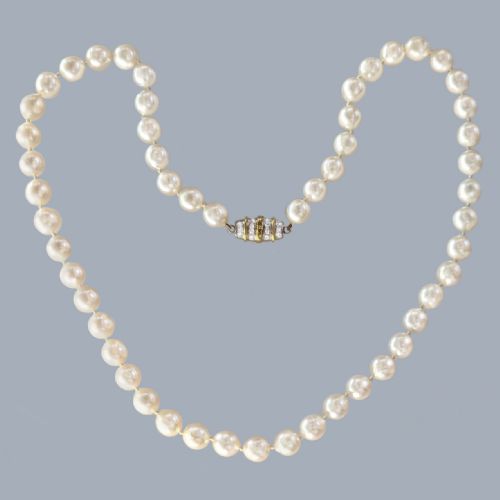
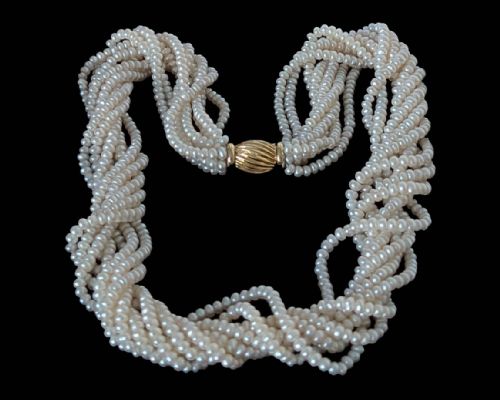
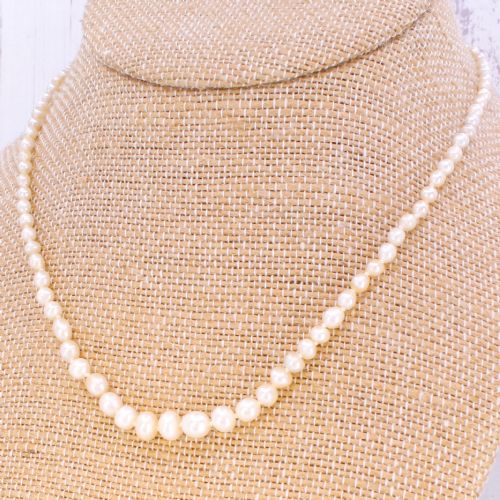
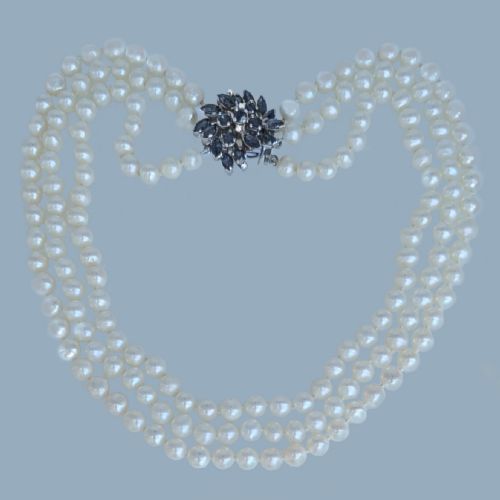
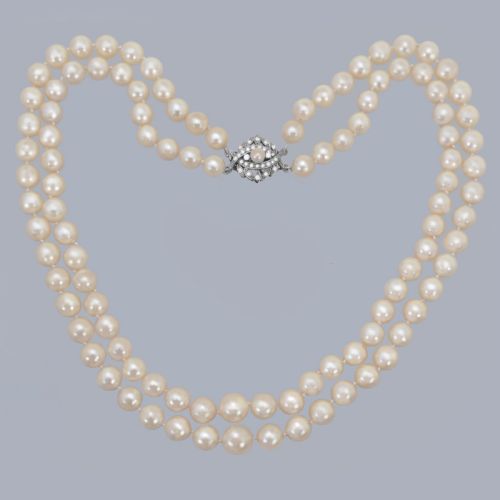
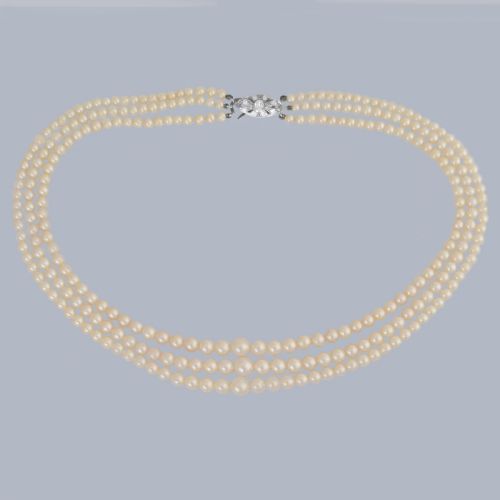
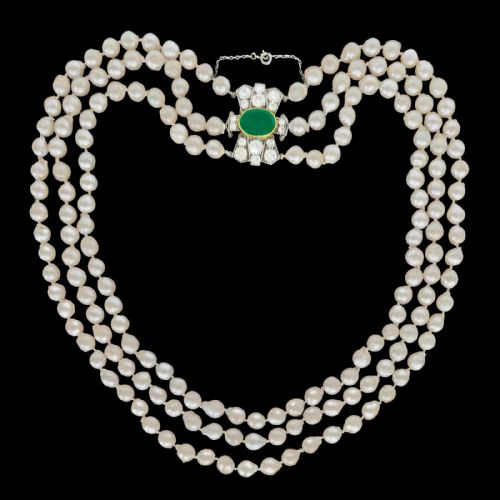
A pearl choker necklace sits snugly around the base of the neck, typically measuring between sixteen and eighteen inches in length. These pieces appear in single, double, triple, and multi-strand configurations, reflecting the designs popular throughout the Victorian, Edwardian, Art Deco, and Mid-Century periods.
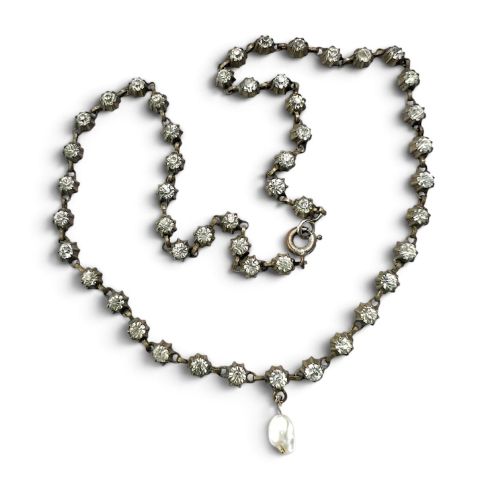
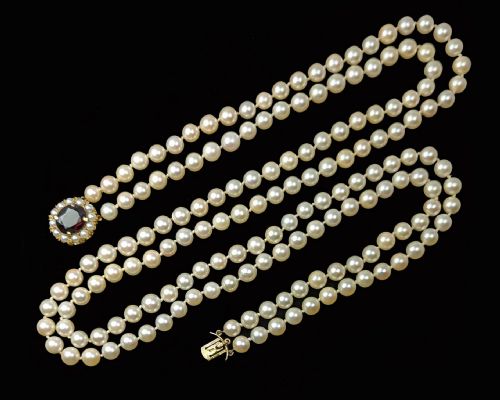
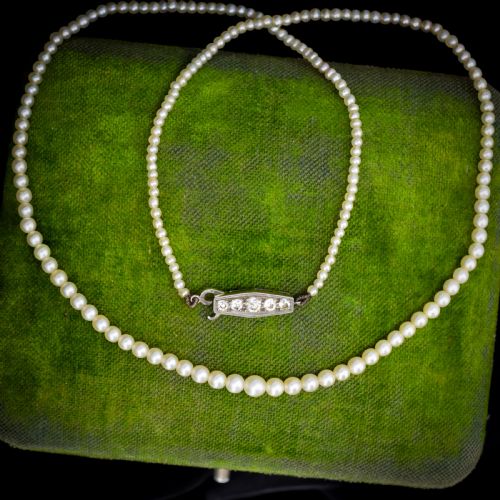
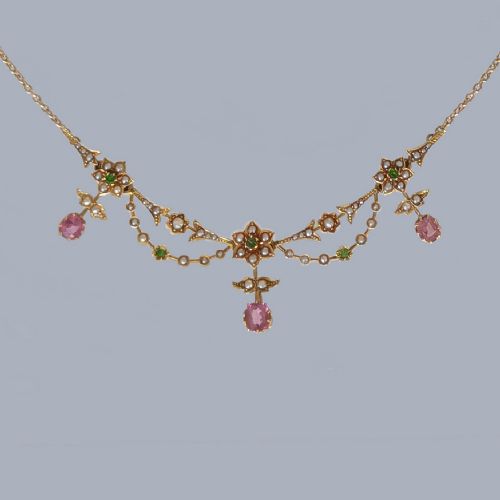
The selections available range from delicate seed pearl drop chains to substantial multi-row cultured pearl strands. Many examples feature elaborate clasps set with diamonds, sapphires, emeralds, garnets, or rubies, which were often worn at the front as a decorative feature.
Materials and Construction
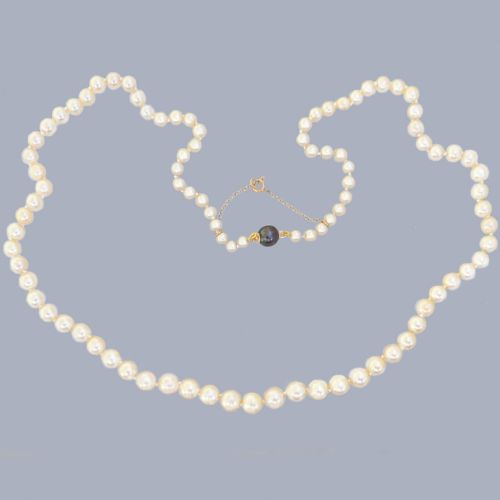
Makers threaded natural saltwater or cultured pearls onto silk or synthetic cords, frequently knotting the thread between individual pearls to protect the nacre from friction and to maintain the drape of the strand.
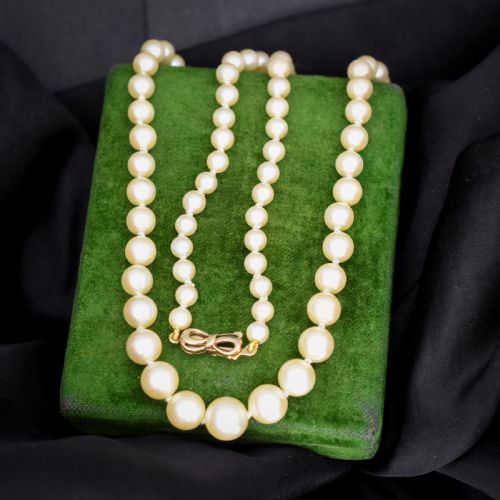
Clasps utilise precious metals including nine-carat gold, eighteen-carat white and yellow gold, platinum, and silver, securing the pearls with box clasps, bolt rings, or barrel fasteners.
Listings feature pearl choker necklaces across the Edwardian, Victorian, Art Deco, and Mid-Century periods, utilising gold, platinum, and silver.
Judging Quality
The uniformity of the pearls, their lustre, and the thickness of the nacre determine the baseline quality of any strand. Graduated pearls demand careful sorting for size and tone, while uniform strands require precise matching.
The craftsmanship extends to the clasp, where the integration of precious stones like diamonds, emeralds, or sapphires and the presence of maker's marks or assay office hallmarks elevate the piece.
Mikimoto·Chaumet·Kutchinsky·John Van Der Vet·Steltman Juwelier
The Pearl Choker Necklace Glossary
- Cultured pearl
- A pearl formed by the introduction of a nucleus into an oyster by human intervention, allowing layers of nacre to accumulate over time.
- Nacre
- The iridescent organic-inorganic composite material secreted by molluscs that forms the outer coating of a pearl.
- Graduated
- A strand arranged so that the largest pearl sits at the centre front, tapering down to smaller pearls near the clasp.
- Seed pearl
- Very small natural or cultured pearls, often measuring under two millimetres, frequently used in clusters or multi-strand layouts.
- Box clasp
- A secure fastening mechanism where a shaped metal tongue clicks into a decorative rectangular box.
Pearl Choker Necklace: Frequently Asked Questions
Are these pearls natural or cultured?
The pieces span both natural saltwater pearls recovered from oceans and cultured pearls grown with human assistance in pearl farms. Edwardian and earlier pieces more commonly contain natural saltwater pearls, while mid-century strands frequently utilise cultured varieties.
Gem lab reports and certificates accompanying specific listings often confirm the origin and treatment of the pearls.
How do I care for antique pearls?
Pearls are organic gems with a soft nacre surface that reacts to acids, cosmetics, perfumes, and hairsprays. Put your necklace on after applying makeup and perfume, and wipe the pearls gently with a soft cloth after wearing.
Store the strands flat in a lined box rather than hanging them, as weight can stretch the silk thread over time.
What does restrung mean in a listing?
Restrung indicates that the original silk or thread holding the pearls together has been replaced with fresh material. Over decades, old thread weakens, frays, or stretches.
Fresh stringing ensures the necklace is secure to wear and restores the correct tension between the individual pearls.