


Vintage Coral Jewellery
Vintage coral jewellery brings warm, organic hues and deep historical character to your collection.

Vintage Coral Jewellery
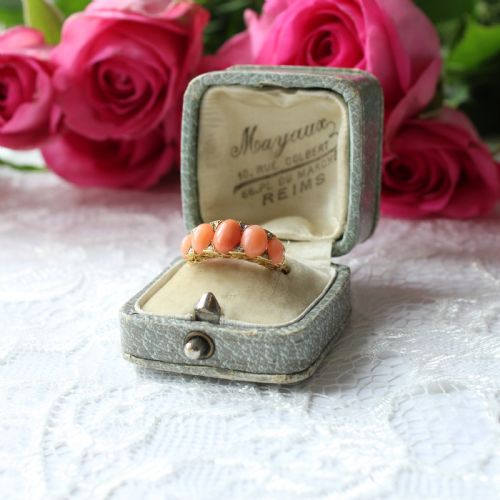
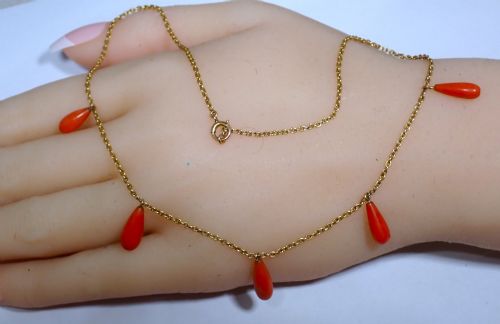
Vintage coral jewellery encompasses a rich variety of wearable ornaments, from necklaces and bead strands to rings, earrings, bracelets, and brooches. When exploring vintage coral jewellery, you encounter pieces originating from diverse eras including the Victorian period, Edwardian years, Art Deco movement, and Mid-Century designs.
The selections span simple natural un-dyed red coral branches and carved cameos to elaborate cluster rings and multi-stranded bead necklaces. Gold and silver mounts frequently accompany the coral, sometimes accented with pearls, diamonds, or turquoise depending on the stylistic conventions of the decade.
What Varies in Quality
Quality rests significantly on the natural state and saturation of the coral material itself, where deep Mediterranean red or uniform pink tones command attention alongside un-dyed surfaces. The integrity of the coral, whether smooth round beads, well-preserved carved cameos, or substantial natural branches, defines the upper tier of execution.
Additionally, the supporting metalwork contributes to the overall standard, distinguishing simple commercial production from fine artisan goldsmithing or silversmithing. Pieces that integrate complementary gemstones like diamonds, pearls, or emeralds within cohesive stylistic designs demonstrate superior craftsmanship.
Vintage Coral Jewellery Retail Price Guide 2026
Typical asking prices for vintage coral jewellery among the pieces listed under this phrase on Sellingantiques today, from the lower quarter to the upper quarter. They describe what is for sale here now, not the wider market.
Materials appearing across the current selection include 18ct gold, 15ct gold, 14ct gold, 9ct gold, silver, diamonds, pearls, and natural coral.
The Vintage Coral Jewellery Glossary
- Coral
- An organic marine material formed by polyps, utilised extensively in jewellery for its vibrant red, pink, and salmon shades.
- Cameo
- A method of carving where a design is raised against a contrasting background, frequently seen in Victorian coral brooches and rings.
- Festoon
- A necklace style featuring suspended chains or swags of beads and gemstones, popular during the Arts and Crafts period.
- Boat Ring
- A ring style featuring an elongated, boat-shaped setting that often stretches across the finger to showcase multiple stones.
- Bangle
- A rigid bracelet that slips over the hand or fastens with a hinge, sometimes constructed as twin matching bands.
Vintage Coral Jewellery: Frequently Asked Questions
How do I care for vintage coral jewellery?
Coral is a delicate organic material that is sensitive to acids, cosmetics, and harsh cleaning agents. Wipe gently with a soft, damp cloth after wearing and store it away from harder gemstones to prevent scratching.
Avoid submerging vintage coral pieces in ultrasonic cleaners or chemical solutions. Protecting the surface preserves the natural polish and rich colour of the material for years to come.
Can I wear vintage coral necklaces daily?
Many vintage coral necklaces, particularly sturdy bead strands, suit regular wear if handled with reasonable care. However, older stringing materials on long necklaces may weaken over time and benefit from professional restringing.
For daily use, consider securing the clasp properly and putting the necklace on after applying perfumes or hairsprays. Treating the piece gently ensures the organic beads remain secure in their mountings.
What is the difference between natural and dyed coral?
Natural coral displays its authentic colour formed within the marine environment, ranging from pale pink to deep un-dyed red and salmon. Dyed coral has undergone chemical colour enhancement to achieve a more vibrant or uniform appearance.
Examining the drill holes and surface under magnification often reveals the true nature of the material. Natural un-dyed specimens generally hold greater interest for traditional collectors.