




Peach Glass Mirror
A peach glass mirror brings warm tones and geometric lines into a room, capturing the distinctive style of the interwar period.
Peach Glass Mirror
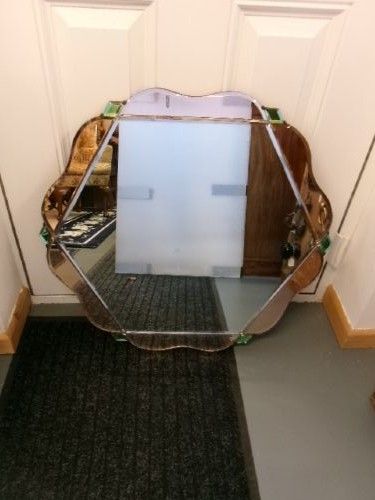
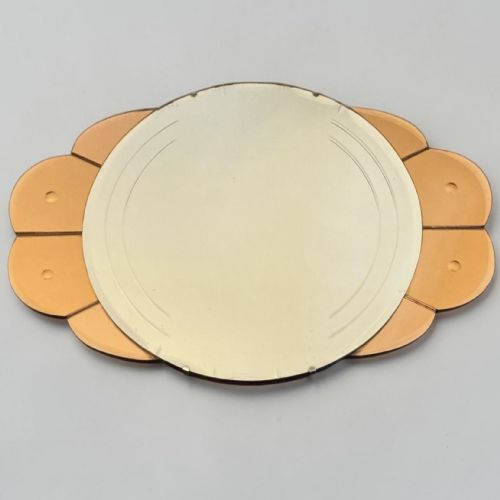
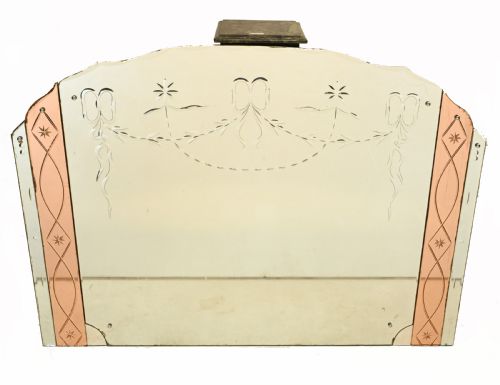
A peach glass mirror most commonly appears as an Art Deco wall hanging, circular plate, or overmantel piece dating from the 1920s and 1930s. These examples frequently combine peach-tinted sections with clear or green mirrored glass, creating multi-tonal compositions.
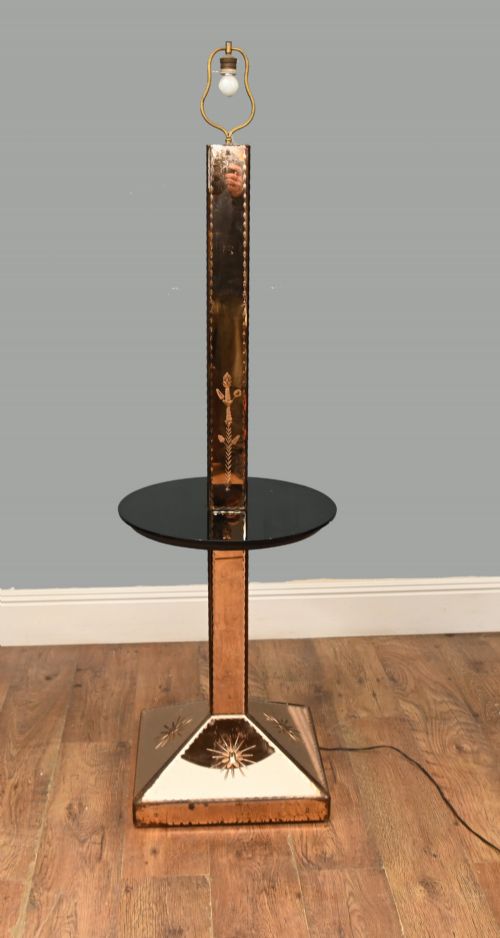
Beyond standard wall mirrors, the category encompasses related furnishings and functional objects incorporating peach glass panels. These include side tables, floor lamps with integrated cocktail shelves, mantel clocks, and vanity mirrors.
Most pieces originate from English and French makers of the interwar era, relying on geometric shapes, bevelled edges, and layered plates to achieve their characteristic decorative impact.
Materials and Construction
Makers constructed these pieces using heavy mirror glass and standard glass tinted with metallic oxides to produce the characteristic peach hue. Panels were cut into geometric shapes, often featuring bevelled edges, and assembled onto wooden backs or metal frames.
Clock makers and furniture producers integrated peach glass directly into functional objects, mounting glass plates onto chrome, metal, or carved silvered wood frames using screws, clips, or adhesive backings.
Peach Glass Mirror Retail Price Guide 2026
Typical asking prices for peach glass mirror among the pieces listed under this phrase on Sellingantiques today, from the lower quarter to the upper quarter. They describe what is for sale here now, not the wider market.
Listings span the 1920s and 1930s, featuring materials such as peach glass, chrome, carved wood, and mirrored glass across various wall and tabletop forms.
Evaluating Quality and Execution
Quality depends on the precision of the glass cutting, the complexity of the multi-tone glass arrangements, and the integrity of the original backing. Pieces that combine peach glass with contrasting clear or green sections demonstrate higher ambition than plain single-tone items.
The sophistication of the supporting structure separates standard production items from finer examples. Heavy wooden backs, original hanging chains, and integrated mechanical movements by established clock companies elevate the standing of a piece.
Smiths Clock Company
The Peach Glass Mirror Glossary
- Overmantel Mirror
- A wide mirror designed to hang above a fireplace mantel. These pieces often span the width of the hearth and served as focal points in interwar reception rooms.
- Bevelled Edge
- An angled edge ground along the perimeter of a glass plate. This technique catches light and adds depth to multi-panel mirrors.
- Girandole
- An ornamental mirror incorporating candle sconces or electric light branches attached to the frame. The reflective glass amplifies the light source in the room.
- Art Deco
- A design style prevalent in the 1920s and 1930s characterised by streamlined geometric forms, symmetry, and modern industrial materials.
- Two Tone
- A decorative scheme utilising contrasting glass colours, such as peach paired with clear or green glass, to create pattern and definition.
Peach Glass Mirror: Frequently Asked Questions
How do I hang a heavy peach glass mirror safely?
Most wall-hanging examples rely on original wooden backs fitted with sturdy hanging chains or brackets. Ensure your wall fixings match the weight of the glass and wood frame before mounting.
Distribute the weight evenly across secure anchor points to prevent twisting the glass plates or straining the original construction.
How were peach glass mirrors used in period homes?
These mirrors served as decorative focal points above fireplaces, in entrance hallways, and across boudoirs. Their warm tones softened the stark geometry common in interwar interior design.
Functional variants like vanity mirrors and mantel clocks combined reflective surfaces with everyday utility in domestic spaces.
How do I distinguish a 1930s mirror from a later copy?
Examine the reverse side for original wooden backs, ageing patination on the silvering, and period mounting hardware. Interwar pieces often display specific bevelling techniques and maker stamps.
Modern reproductions typically feature uniform backing materials and lack the subtle tonal variations found in vintage tinted glass.
Can I place a peach glass mirror in a bathroom?
Original vintage mirrors feature fragile silvered backs that react poorly to sustained moisture and humidity. Bathrooms can cause the backing to degrade and the edges to oxidise.
Dry living spaces, hallways, and bedrooms provide a more stable environment for preserving antique tinted glass.