

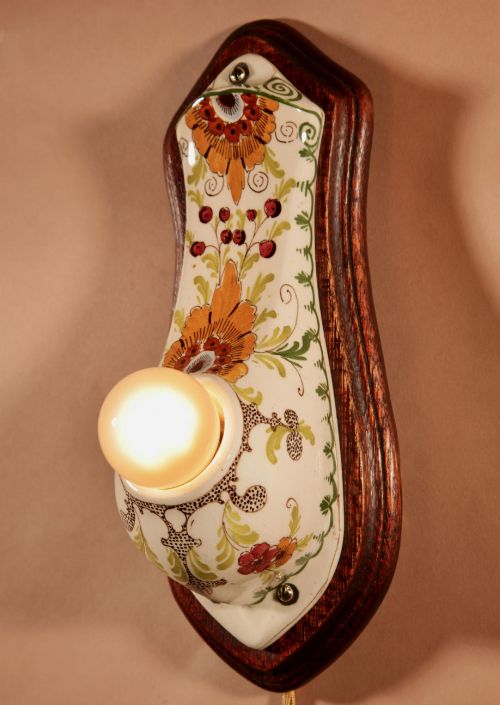


Art Deco Wall Sconce
These art deco wall sconce pieces combine geometric lines with industrial metals to illuminate period interiors.
Identifying an art deco wall sconce
When searching for an art deco wall sconce, buyers encounter architectural light fixtures designed to mount directly onto interior surfaces. These pieces predominantly date from the nineteen thirties, though some cross over into Edwardian production.
The most frequent version on this page is the paired wall light utilising chrome and glass components. French designs appear regularly alongside English cinema and domestic variants, taking forms such as girandoles, tubular shades and trumpet profiles.
Makers occasionally produced figural models featuring carved parrots or female forms alongside more abstract geometric configurations. Scale ranges from single compact fixtures to large matching sets of three or four branches.
Materials and construction
Manufacturers built these lights using a combination of metal frames and glass elements. Chrome, steel and copper form the structural metalwork, paired with silvered wood on specific decorative mirror frames.
The light diffusion relies on glass variants including frosted, opaline, pink mirror glass, lucite, acrylic, bakelite and catalin. Components were cast, pressed and tubular-formed to achieve the characteristic geometric profiles of the period.
Retail Price Guide 2026
Typical UK retail prices for art deco wall sconce, calculated from the Sellingantiques database of over a million retail prices indexed since 2003. This retail price guide relies exclusively on Sellingantiques data; no external sources or auction records are used, so the figures do not describe the wider market.
Makers occasionally perched carved parrots right onto the wall shelf, letting tropical birds hold the illumination.
Distinguishing quality in period lighting
Quality rests in the substantive weight of the metal chassis and the complexity of the glass moulding. Superior examples employ thick, heavy-gauge chrome or mixed metals like steel and copper rather than thin plated alternatives.
The artistic merit of the shade design separates standard production from finer work. Moulded glass with deep relief, such as shell, flame or figural motifs, demonstrates superior craftsmanship compared to plain tubular forms.
Arthur Wood·ROS
The Art Deco Wall Sconce Glossary
- Girandole
- A branched wall light or sconce, frequently incorporating a mirror to amplify illumination. These often feature carved and silvered wood frames.
- Lucite
- A transparent thermoplastic material utilised for light shades and decorative panels in modernist designs. It offered a durable alternative to traditional glass.
- Opaline glass
- A milky, semi-translucent glass that diffuses light evenly across the room. It was widely utilised in cinema and domestic sconces.
- Bakelite
- An early synthetic plastic used for electrical fittings, bases and decorative details. Its dark, dense finish is characteristic of nineteen thirties manufacturing.
Frequently Asked Questions
How do French and English styles differ?
French pieces frequently lean towards theatrical moulded glass shades and expressive figural forms like female figures or birds. English production often emphasises cinema styling with robust chrome and bakelite combinations.
Both origins share the core geometric vocabulary of the period but express it through distinct regional manufacturing priorities.
Can these fixtures use modern wiring?
Most period fixtures accommodate standard modern electrical components during installation. Electricians adapt the internal lamp holders while retaining the original external metalwork and glass shades.
Careful handling ensures the fragile glass elements remain secure during the modern rewiring process.
What defines the modernist influence here?
Modernism stripped away excessive ornamentation in favour of clean tubular lines and exposed industrial materials. Chrome, steel and glass became both the structure and the decoration.
This functionalist approach produced streamlined fixtures that prioritised geometric purity over traditional decorative carving.