



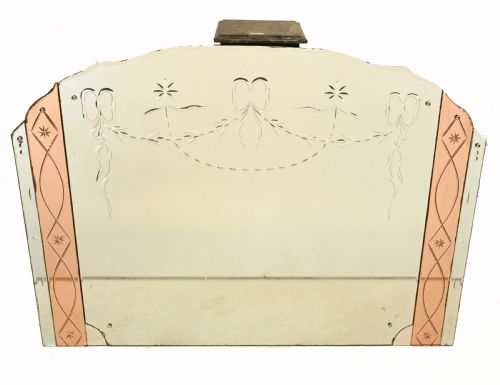

Art Deco Peach Mirror
Art deco peach mirror pieces bring a distinct warm tint and geometric symmetry into interiors.
Art Deco Peach Mirror
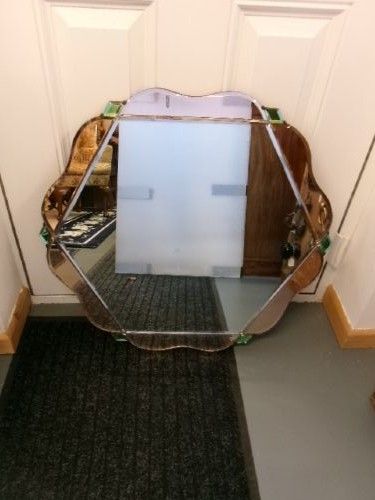
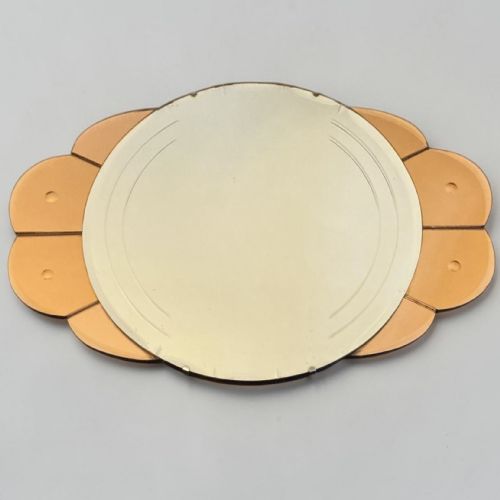
When you search for art deco peach mirror, you encounter wall mirrors, overmantels, picture frames and small furniture items from the 1920s and 1930s. The peach tint provides a warm alternative to standard silvered glass, frequently combined with clear glass, green glass or metal elements.
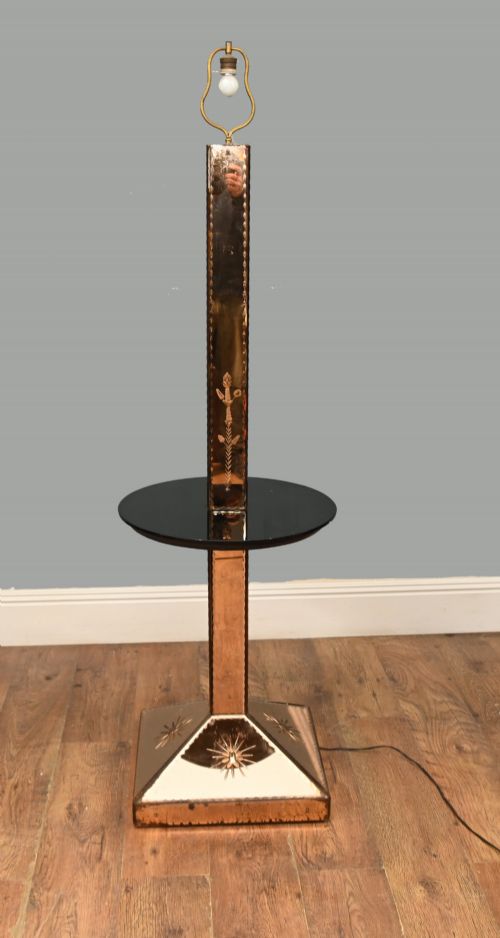
You are most likely to meet wall-hanging mirrors with bevelled edges, scalloped details, or waterfall side panels. Alongside wall pieces, the selection includes mantel clocks, side tables, floor lamps, and vanity mirrors sharing the same distinctive glasswork.
Originating largely from English and French workshops of the interwar period, these objects utilise tinted mirror glass cut into geometric or curved shapes. Pieces range from simple circular plates to large architectural overmantel mirrors designed for period fireplace surrounds.
Materials and construction
Makers utilised glass, mirrored glass, and peach mirror glass, frequently mounting the plates onto wooden backs supported by hanging chains or oak plinth bases. Frames incorporate carved silvered wood, chrome, and metal structures to hold the glass segments securely.
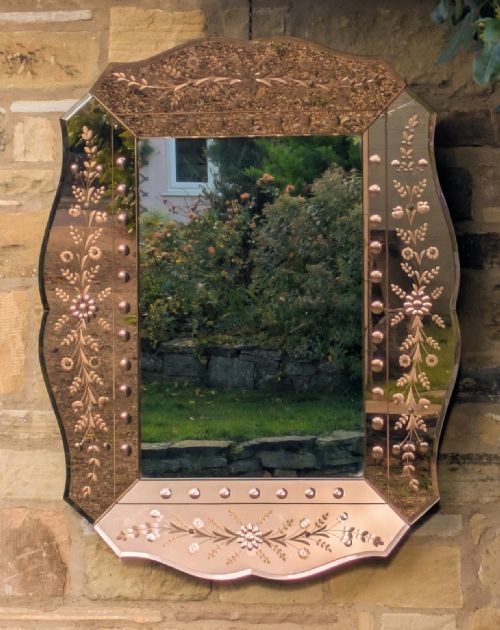
Techniques involve cutting, bevelling, and embossing the glass, alongside acid etching for decorative motifs such as figures or floral details. Two-tone compositions combine peach glass with clear or green glass panels fixed together to form layered geometric designs.
A glamorous mechanical clock keeps time behind a peach glass facade, proving that art deco practicality could also blush.
Assessing quality
The sophistication of the glass cutting and the precision of the panel assembly distinguish finer examples from standard production. Multi-layered two-tone designs and complex bevelled edges require advanced glassworking skill compared to basic single-plate mirrors.
The integrity of the original wooden backing, framing materials, and specialised mechanisms in clocks or tables influence the overall character. Original peach glass combined with contrasting green or clear glass panels demonstrates superior design ambition.
Smiths Clock Company
The Art Deco Peach Mirror Glossary
- Peach mirror glass
- Tinted glass treated with a reflective backing to produce a warm pinkish-orange tone. It defines the colour palette of interwar decorative items.
- Overmantel mirror
- A large horizontal mirror designed to sit directly above a fireplace mantel. These often incorporate architectural shapes and side panels.
- Bevelled edge
- An angled edge cut and polished along the perimeter of the glass plate. This technique catches the light and adds depth to the mirror.
- Girandole
- An ornate wall mirror featuring attached candle branches or electrical lights. The glass reflects the illumination back into the room.
Art Deco Peach Mirror: Frequently Asked Questions
How do I date an art deco peach mirror?
Dating relies on stylistic markers from the 1920s and 1930s, such as geometric symmetry, stepped top scrolls, and waterfall glass panels. Original wooden backs and period mechanical clock movements further help confirm the era.
Evidence from this category points to production primarily across the interwar decades in England and France. Examining the construction methods and glass bevelling provides additional context for the period.
Where were these mirrors placed originally?
These mirrors typically hung above fireplaces as overmantels, in hallways, or served as dressing table vanity mirrors. Side tables and floor lamps with peach glass sections functioned as decorative living room furniture.
Their warm reflective surfaces suited interwar interior schemes seeking glamour and diffused light. Smaller picture frames and clocks were designed for mantelpieces and tabletops.
How do I clean and maintain peach mirror glass?
Maintenance requires gentle cleaning with a soft dry or slightly damp cloth to avoid damaging the silvered backing behind the tinted glass. Harsh chemical cleaners can seep into edges and cause deterioration of the mirror coating.
Original wooden backs and antique hanging chains should be handled with care during placement. Keeping the pieces away from excessive moisture preserves both the glass and the wooden structure.
What styles accompany peach glass mirrors?
Art deco and Venetian styles dominate the aesthetic, featuring symmetrical lines, stepped profiles, and layered glass panels. Venetian influences bring decorative engraving and scrolled crests to the frames.
Combinations of peach glass with clear glass, green glass, and chrome or silvered wood create distinct visual contrasts. These varied stylistic elements reflect the modernist design shifts of the 1920s and 1930s.