





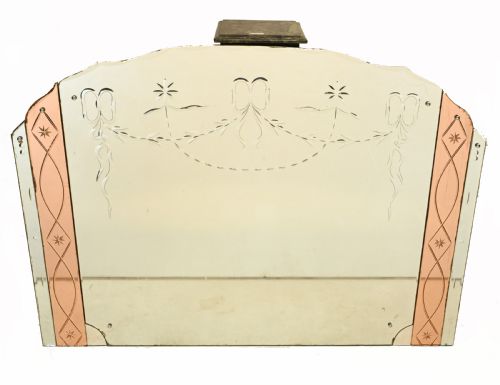
Vintage Tinted Glass Mirror
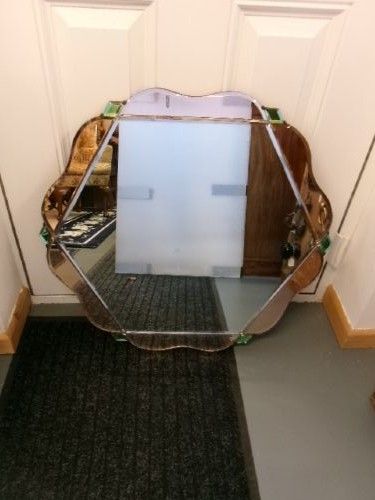
These vintage tinted glass mirror pieces bring striking colour and geometric form to a room, offering both reflection and decorative impact.
Vintage Tinted Glass Mirror
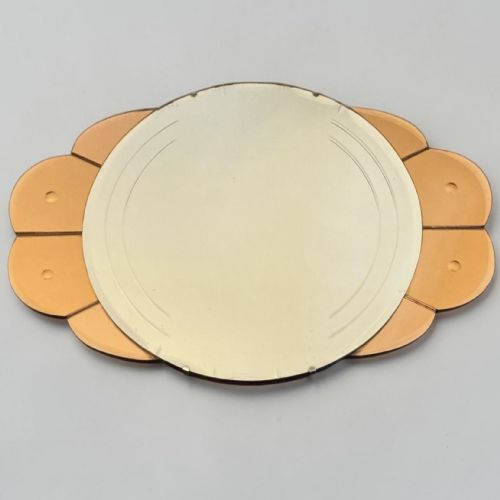
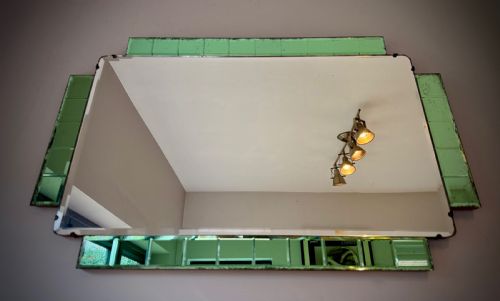
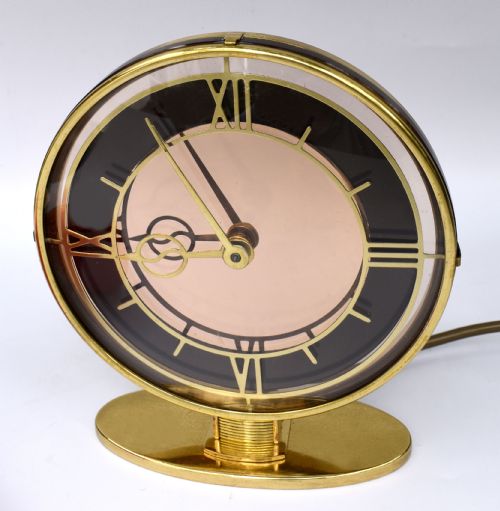
A vintage tinted glass mirror brings together functional reflection and the distinct decorative geometry of the early twentieth century. When searching for a vintage tinted glass mirror, buyers encounter wall mirrors, overmantel pieces, vanity mirrors, and even mechanical mirror clocks originating from the 1920s and 1930s. Art Deco and Venetian designs dominate the selection, utilising peach glass, blue glass, and emerald green glass panels.
The pieces on this page lean heavily towards English and French manufacture from the interwar period. Forms range from frameless multi-tone designs and large diamond wall mirrors to brass-mounted mantel clocks and easel vanity mirrors. Buyers are most likely to meet peach coloured glass overmantle mirrors and panelled wall designs featuring contrasting metal or wood mounts.
How they were made
Makers constructed these mirrors using combinations of plain mirror glass, tinted mirror panels, and structural elements of wood, brass, chrome, and copper. Artisans bevel-edged the glass plates to catch the light, securing coloured panels with metal clips or mounting them onto wooden backings.
Specialised techniques included combining peach, blue, and emerald green glass panes into geometric multi-tone compositions. Some items incorporated mechanical clock movements directly behind the mirrored surface, fusing horology with decorative glasswork.
Vintage Tinted Glass Mirror Retail Price Guide 2026
Typical asking prices for vintage tinted glass mirror among the pieces listed under this phrase on Sellingantiques today, from the lower quarter to the upper quarter. They describe what is for sale here now, not the wider market.
Materials recur in combinations of wood, brass, chrome, and copper supporting standard, peach, blue, and emerald green tinted glass.
What varies in quality
Quality in these mirrors rests on the complexity of the glass arrangement and the integrity of the coloured panels. Multi-tone compositions and pieces featuring uncommon hues such as blue or emerald green demonstrate higher ambition than standard single-tone items.
The sophistication of the mounting hardware, whether brass, chrome, or copper, distinguishes standard production from more substantial overmantel and clock variations. Intricate bevelling and the preservation of original tinted glass panels separate the finest examples from simpler utilitarian forms.
The Vintage Tinted Glass Mirror Glossary
- Art Deco
- A design style characterised by sleek geometric shapes, streamlined forms, and vibrant colour palettes popular during the 1920s and 1930s. It heavily influences the framing and panel layout of these mirrors.
- Overmantel Mirror
- A large mirror designed specifically to be hung above a fireplace mantelpiece. These pieces often feature wide proportions to span the width of the hearth.
- Peach Glass
- A warm-toned tinted glass popular in interwar interior decoration. It provides a softer reflection than standard silvered mirror glass.
- Easel Vanity Mirror
- A portable dressing table mirror supported by a hinged rear leg or stand. These smaller pieces allow adjustment of the viewing angle.
- Bevelling
- The practice of angling the outer edges of a glass mirror plate to create a decorative framed border effect. This technique adds depth and catches ambient light.
Vintage Tinted Glass Mirror: Frequently Asked Questions
How do I hang a heavy vintage mirror safely?
These substantial wall-hung pieces require sturdy fixings suited to the wall construction, such as masonry plugs or direct mounting into timber studs.
Weight distribution across the original frame or backing board must be assessed before installation to ensure secure support.
Were these coloured mirrors used in specific rooms?
Interwar households typically placed decorative wall mirrors in reception rooms, hallways, and principal bedrooms to amplify natural light and project glamour.
Smaller easel and vanity versions belonged strictly to dressing tables and boudoirs for personal grooming.
How should I clean tinted glass surfaces?
Gentle wiping with a soft, lint-free cloth and mild glass cleaner preserves the silvering and prevents moisture from creeping behind the coloured panels.
Harsh chemical abrasives must be avoided, particularly around the exposed edges of tinted glass and metal mounting brackets.
How do I distinguish 1920s pieces from 1930s pieces?
Pieces from the 1920s often display exuberant Venetian influences, symmetrical diamond geometries, and delicate frameless profiles.
By contrast, 1930s examples frequently incorporate bolder colour blocking with peach and blue glass, alongside integrated mechanical clock elements.