




1930s Frameless Mirror
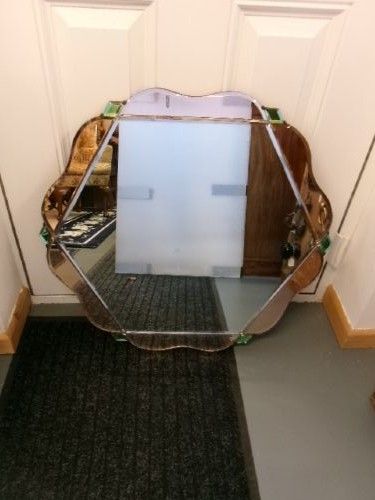
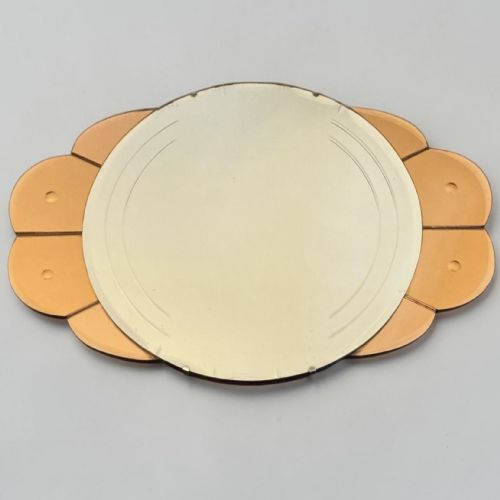
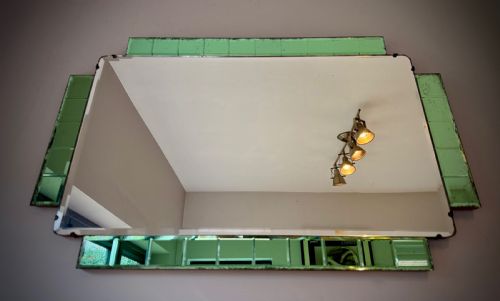
These 1930s frameless mirror examples bring clean geometric lines and striking tinted glass to a wall, offering authentic period character for a modern interior.
1930s Frameless Mirror
A 1930s frameless mirror sits squarely within the Art Deco style, relying on the geometry of the glass itself rather than a traditional timber or gilt surround. These pieces function as architectural wall ornaments, catching light while presenting clean edges and unadorned surfaces.
The selection here encompasses several distinct formats, including large wall mirrors, circular wall mirrors, overmantel mirrors, and smaller easel vanity mirrors. Many examples introduce coloured elements such as peach glass, emerald green glass panels, or two-tone configurations to break up the silvered field.
Origins span English and French workshops, capturing the international reach of the design movement. Buyers frequently encounter geometric shapes like diamonds alongside simple rounds, rectangles, and elaborate stacked plates.
Materials and construction
Makers constructed these pieces using mirror glass, peach glass, silvered glass, and mirrored glass, often mounting them onto a timber or metal backing board to support the heavy plate. Chrome and other metal components appear as structural fixings or decorative clips that hold the glass sections securely in place.
Techniques relied on bevelling the edges of the main plate to refract light, alongside surface treatments such as etching and embossing. Coloured glass panels were integrated into the primary silvered field, sometimes using embossed motifs like a soldier to create distinct focal points.
1930s Frameless Mirror Retail Price Guide 2026
Typical asking prices for 1930s frameless mirror among the pieces listed under this phrase on Sellingantiques today, from the lower quarter to the upper quarter. They describe what is for sale here now, not the wider market.
The selection includes both English and French origins, spanning circular, diamond, and rectangular overmantel configurations.
Evaluating quality and design
Quality in a frameless design rests on the complexity of the glass cutting and the integrity of the original silvering. Pieces that combine multiple tones, such as peach and white glass or emerald green accents, demand greater skill in assembly than a standard single plate.
The presence of structural elements like secure easel backs on vanity mirrors or heavy wooden backing plates on large wall mirrors indicates robust construction. Unusual geometry, such as diamond configurations or etched figural details, distinguishes more ambitious workshop production from basic utility mirrors.
The 1930s Frameless Mirror Glossary
- Art Deco
- A design style of the 1920s and 1930s characterised by sleek lines, geometric shapes, and stylised motifs. It rejected Victorian ornamentation in favour of modern industrial aesthetics.
- Overmantel mirror
- A large horizontal mirror designed to hang directly above a fireplace mantelpiece. These pieces often anchor the proportions of a principal room.
- Silvered glass
- Glass coated on the reverse with a reflective metallic compound to create a mirror surface. The ageing of this chemical layer produces characteristic patination.
- Peach glass
- Tinted mirror glass exhibiting a warm pinkish-orange hue, frequently utilised in 1930s decorative mirrors to soften reflections and introduce colour.
1930s Frameless Mirror: Frequently Asked Questions
Where should I hang a frameless wall mirror?
These mirrors suit principal living spaces, hallways, or above a fireplace where their geometric plates can reflect natural light.
Ensure the wall construction and fixings can support the substantial weight of the glass and its backing board.
How do I clean an antique mirror safely?
Use a soft, dry microfibre cloth to remove dust without disturbing the edges of the glass or any exposed metal fixings.
Avoid commercial chemical sprays that might seep behind the plate and damage the original silvering.
Are easel vanity mirrors stable?
Easel mirrors feature a hinged rear support stand designed for tabletop placement on dressing tables or chests of drawers.
They should be positioned away from high-traffic edges where the support arm might be knocked.