

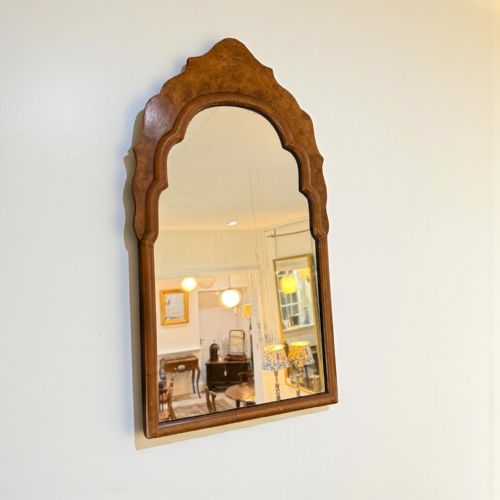
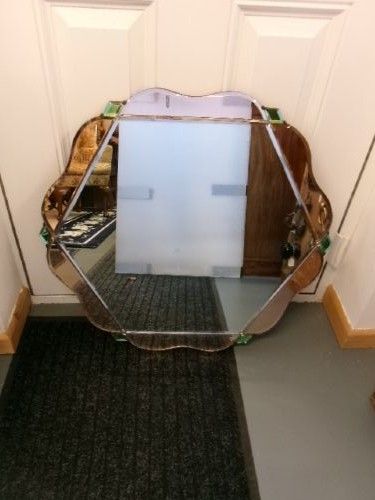
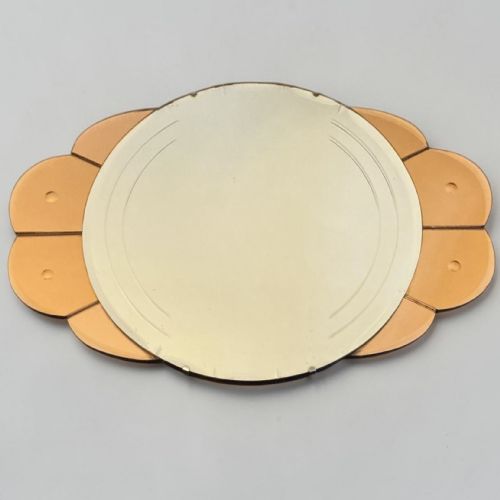
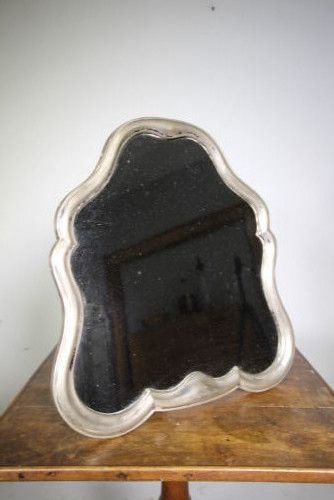


Scalloped Wall Mirror
A scalloped wall mirror brings architectural edge and reflected light to a room, ranging from simple Art Deco glass to heavy Victorian gilt.
Scalloped Wall Mirror
A scalloped wall mirror catches the eye through shaped edges, curved silhouettes, and period framing. When you search for a scalloped wall mirror, you encounter everything from austere modernist geometry to elaborate nineteenth-century revival styles.
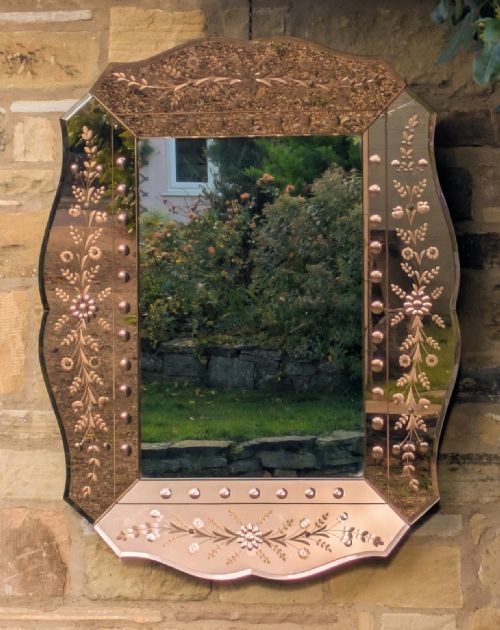
The pieces appearing here span the Victorian era, the 1870s and 1880s, and the Art Deco period of the 1920s and 1930s. You are most likely to meet circular, oval, and overmantel formats executed in peach-tinted glass or clear mirror plate.
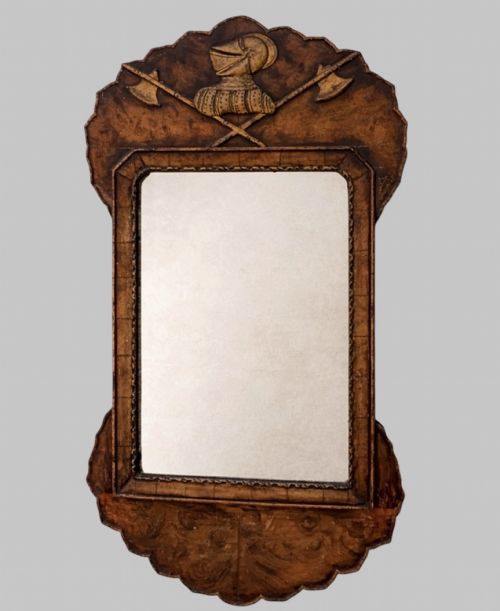
Makers and designers drew on diverse aesthetics, producing Venetian influences, French wavy edges, and carved walnut frames with armorial crests. These variations ensure the form suits both compact hallways and grand drawing rooms.
Materials and Construction
Makers built these mirrors using traditional timbers such as walnut, oak, and mahogany veneer, often finished with parcel gilt or mounted in brass. Gesso provided the base for intricate moulded decoration on overmantel and revival pieces.
Glass plates were bevelled by hand or etched with geometric and floral motifs, sometimes incorporating peach-coloured glass panels characteristic of the 1930s. Original metal fittings and backing boards frequently survive to confirm the age of the piece.
Scalloped Wall Mirror Retail Price Guide 2026
Typical asking prices for scalloped wall mirror among the pieces listed under this phrase on Sellingantiques today, from the lower quarter to the upper quarter. They describe what is for sale here now, not the wider market.
Several mirrors double as display stands, proving that practical Victorians and moderns alike appreciated multitasking glass.
Judging Quality and Execution
Quality rests in the crispness of the carved detail on wooden frames and the depth of the bevelling on the glass plate. Heavy natural gesso and solid walnut construction distinguish finer examples from standard commercial output.
The integrity of the original mirror plate, the presence of period brass fittings, and the clean execution of shaped or scalloped edges separate superior specimens from later replacements.
The Scalloped Wall Mirror Glossary
- Overmantel mirror
- A large mirror designed to hang specifically above a fireplace mantelpiece. These often feature extended horizontal proportions and substantial frames.
- Bevelled glass
- Glass with an angled edge polished down to a thinner border. This technique catches light and adds visual depth to the mirror plate.
- Gesso
- A plaster-like mixture applied to wood frames to create a smooth surface for gilding or intricate moulding. It allows for sharp decorative relief.
- Peach glass
- Tinted mirror glass with a warm pinkish-orange hue, frequently utilised in 1930s Art Deco interior design. It softens reflections considerably.
- Parcel gilt
- Partially gilded woodwork where gold leaf highlights specific carved details rather than covering the entire surface. Walnut frames often employ this finish.
Scalloped Wall Mirror: Frequently Asked Questions
Where should I hang a scalloped wall mirror?
These mirrors suit hallways, living rooms, and bedrooms where their shaped edges can function as a focal point. Overmantel versions belong above a fireplace, while smaller circular or octagonal pieces work well on narrow wall spaces.
Ensure the wall fixings match the weight of the frame, particularly for heavy nineteenth-century wooden and gesso examples.
How do I identify an Art Deco mirror?
Art Deco mirrors from the 1920s and 1930s typically feature geometric silhouettes, peach-coloured glass panels, and frameless or subtly etched designs. They lean towards clean lines rather than the ornate carving of Victorian pieces.
Original hanging chains and wooden backing boards help confirm the period manufacture.
What is an overmantel mirror?
An overmantel mirror is built to be mounted horizontally above a fireplace opening. They dominated nineteenth-century and mid-century interiors to reflect light and fill large wall expanses.
Their substantial proportions mean they require secure wall anchoring into masonry or solid studs.
How do I care for antique mirror glass?
Clean the glass gently with a soft microfibre cloth and a mild glass cleaner sprayed onto the cloth rather than directly onto the mirror. Avoid harsh chemicals that might seep behind the plate and damage the silvering.
Protect wooden or gilt frames from direct sunlight and excessive moisture to preserve the finish.