



Patterned Tapestry Accent Chairs
Patterned tapestry accent chairs bring rich textile depth and period character into a room, offering both seating and visual warmth.
Patterned Tapestry Accent Chairs
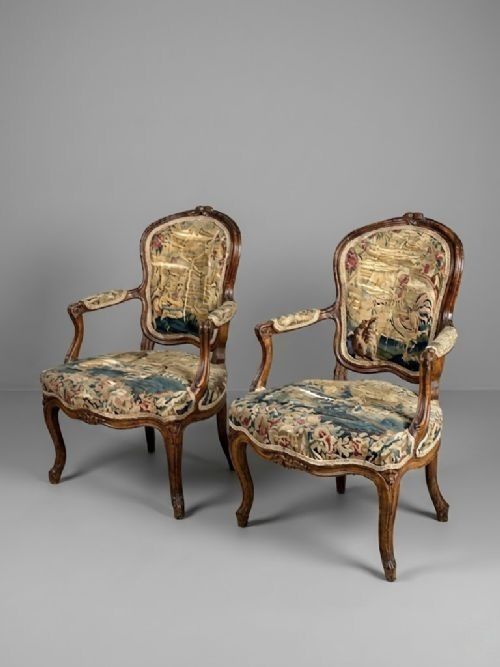
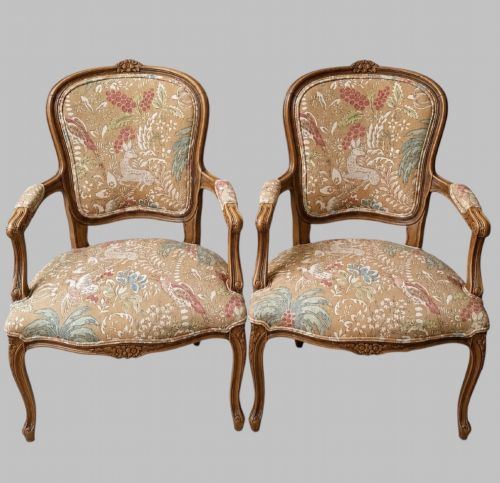
When you search for patterned tapestry accent chairs, you are looking at substantial seating upholstered in woven or needleworked textiles, ranging from Victorian needlework to French Louis XV style covers. These pieces function as decorative focal points in a room while providing functional seating.
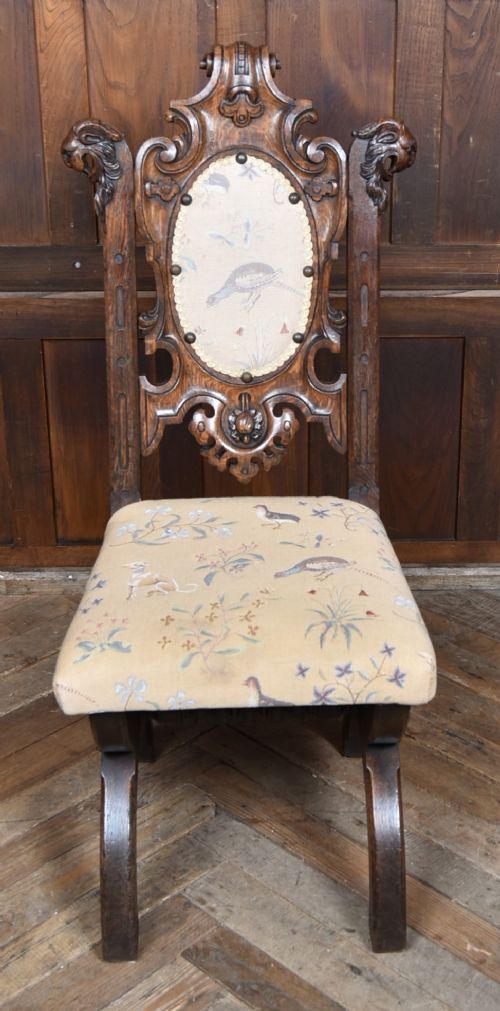
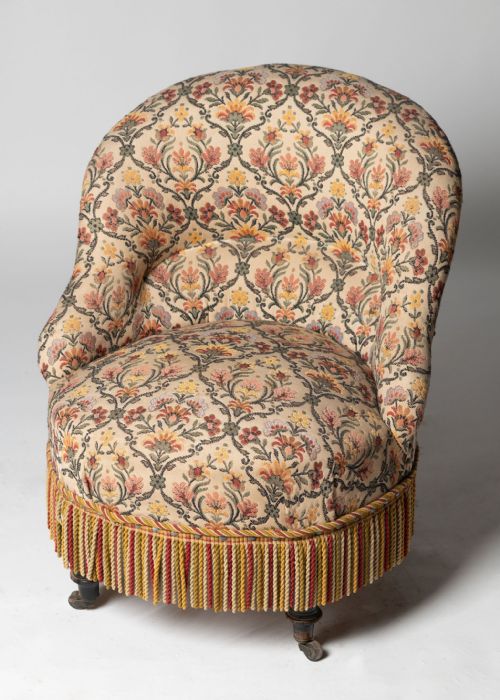
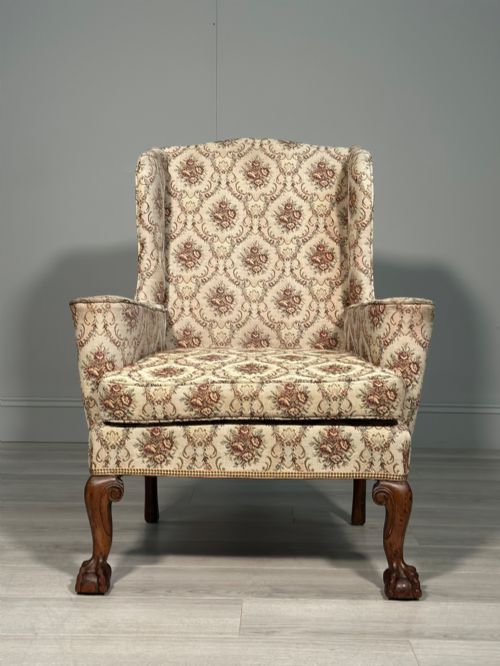
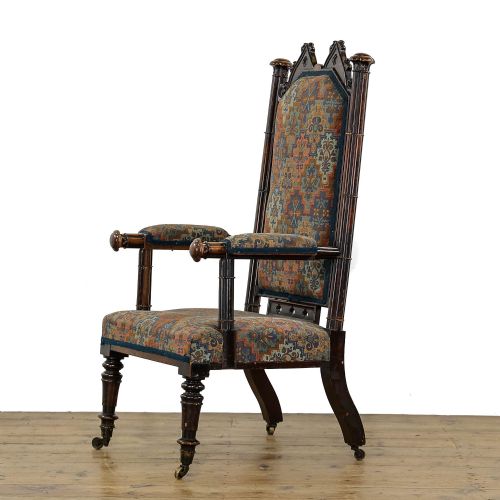
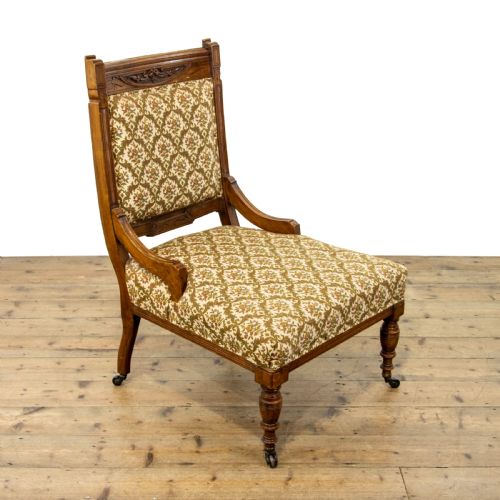
On this page, you are most likely to meet Victorian and 19th-century examples alongside earlier 18th-century pieces and later Edwardian or 1930s interpretations. Forms vary from open armchairs and wingbacks to side chairs, frequently featuring carved wood frames paired with patterned upholstery.
The styles span Gothic Revival, Baroque Revival, and Art Deco, demonstrating how different eras reinterpreted traditional upholstered seating. The variety reflects shifts in taste from heavy carved wood to clean bentwood frames.
How they were made
Makers utilised solid timbers such as walnut, mahogany, oak, and rosewood to construct the structural frames of these chairs. These woods were often heavily carved or turned, depending on the prevailing style of the period.
Upholstery relied on textile techniques including wool tapestry, needlework, and kilim coverings applied over traditional stuffing. Brass elements occasionally appeared in castors or decorative detailing on the wooden framework.
Patterned Tapestry Accent Chairs Retail Price Guide 2026
Typical asking prices for patterned tapestry accent chairs among the pieces listed under this phrase on Sellingantiques today, from the lower quarter to the upper quarter. They describe what is for sale here now, not the wider market.
One chair even brings its own forest along, complete with claw and ball feet.
What varies in quality
The distinction between ordinary and exceptional pieces lies in the crispness of the timber carving and the integrity of the frame construction. Heavier woods and sophisticated joinery elevate a chair far above standard production.
Upholstery quality depends on the fineness of the weaving or needlework and how sympathetically the textile matches the period of the frame. Original fabric execution and well-preserved textiles command greater attention from discerning buyers.
Heals·William Morris·Howard & Sons
The Patterned Tapestry Accent Chairs Glossary
- Tapestry
- A form of textile art, traditionally woven on a loom, used here for heavy upholstery. It provides durable surface pattern and texture.
- Needlework
- Stitched textile decoration worked by hand onto a canvas ground. This creates dense, colourful pictorial surfaces on chair backs and seats.
- Neo-Rococo
- A 19th-century revival style mimicking the fluid, asymmetrical curves of 18th-century French design. Frames feature scrollwork and naturalistic floral carvings.
- Bentwood
- Wood softened by steam and bent into curved structural forms. This technique defines modernist seating from the early decades of the twentieth century.
Patterned Tapestry Accent Chairs: Frequently Asked Questions
How do I date a tapestry armchair?
Dating relies primarily on the style of the wooden frame, such as cabriole legs or heavy Gothic carving, combined with construction methods. Secondary clues come from the type of textile and the underlying stuffing materials used during upholstery.
Changes in stylistic revivals across the Victorian and Edwardian periods mean details like stretcher placement and wood species help narrow down the decade of manufacture.
Where should I place an accent chair?
These chairs work well in living rooms, studies, or large bedrooms where their patterned upholstery can act as a visual anchor. They suit corners or fireplace settings that benefit from a distinct period piece.
Because the textiles often feature rich colours and pictorial designs, pairing them with neutral walls allows the upholstery and carved wood frame to stand out clearly.
Are these chairs comfortable for daily use?
Comfort varies significantly depending on the age, era, and internal stuffing of the individual armchair. Deep wingbacks and sprung Victorian frames generally offer a more relaxed sit than upright side chairs.
Many antique examples retain supportive traditional padding, though older upholstery may feel firmer or require careful handling compared to modern seating.
How do I care for antique tapestry?
Protect woven and needlework upholstery from direct sunlight to prevent the wool and textile threads from fading over time. Gentle vacuuming through a mesh guard helps remove dust without damaging the fibres.
Avoid harsh chemical cleaners on antique fabric, and consult a specialist textile restorer if deeper cleaning or conservation work becomes necessary.