
Louis XV Carved Fauteuils
Louis xv carved fauteuils bring enduring French seating into rooms through curved wooden frames and upholstered comfort.
Louis XV Carved Fauteuils
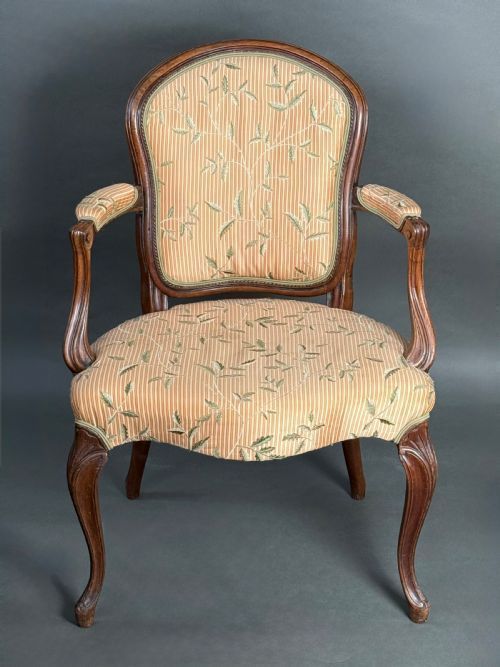
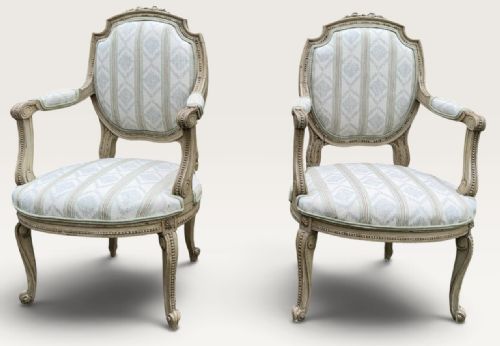
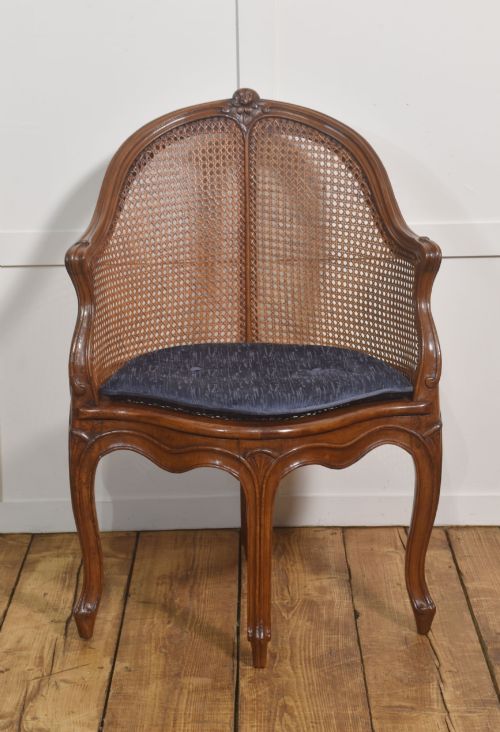
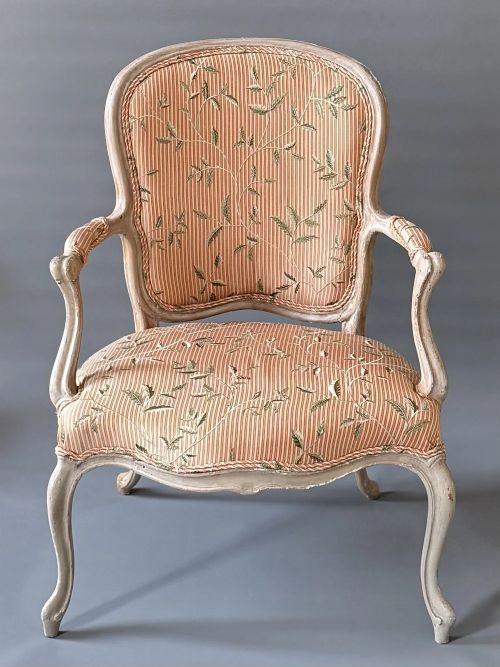
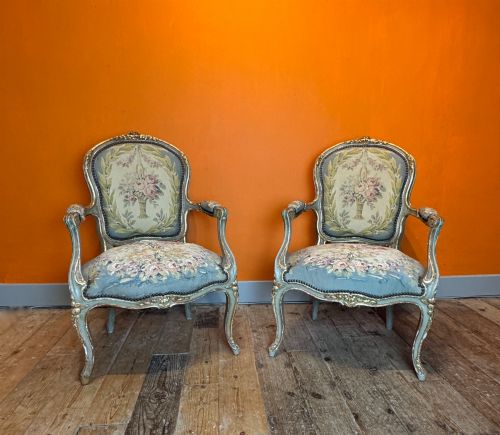
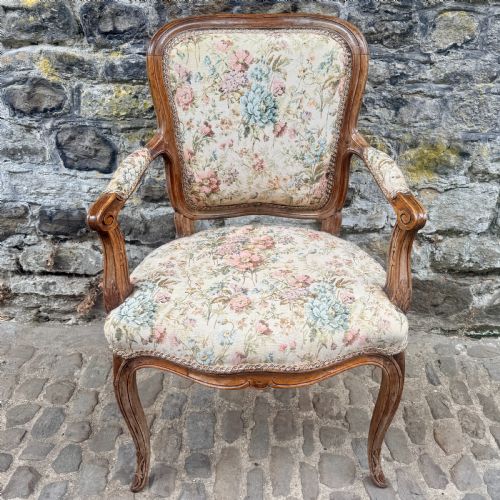
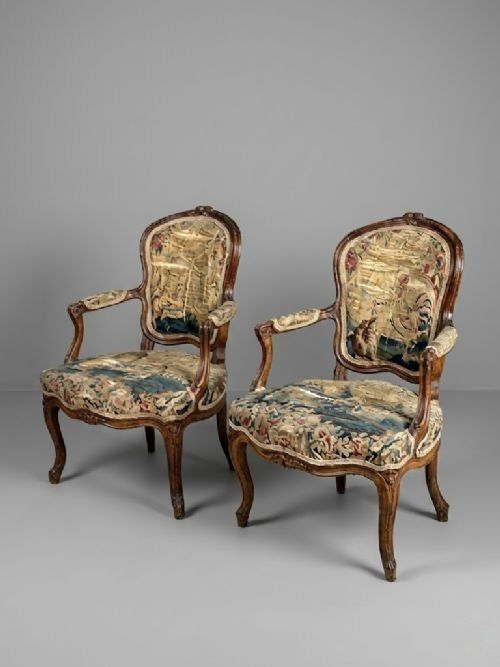
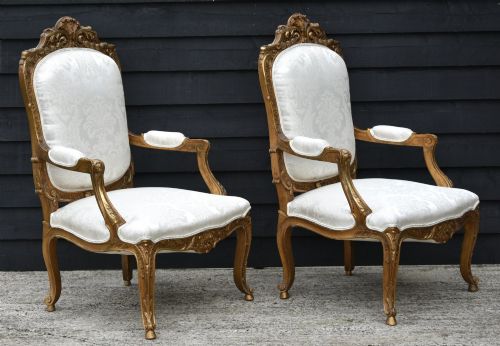
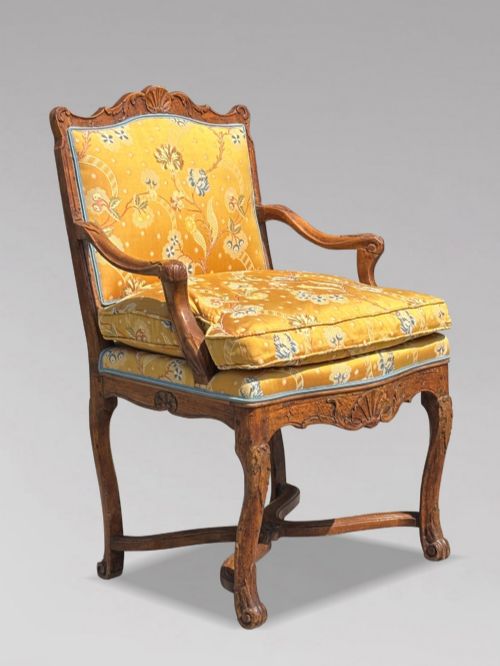
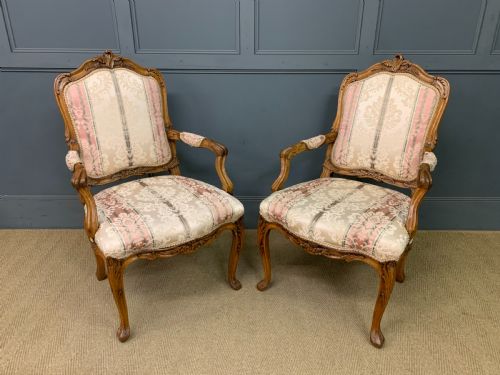
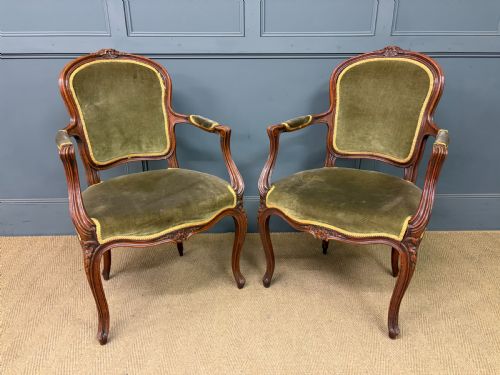
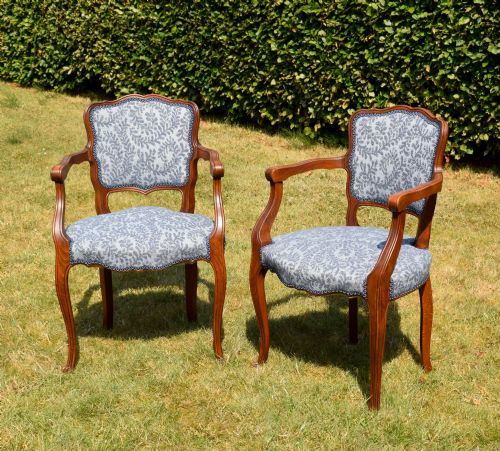
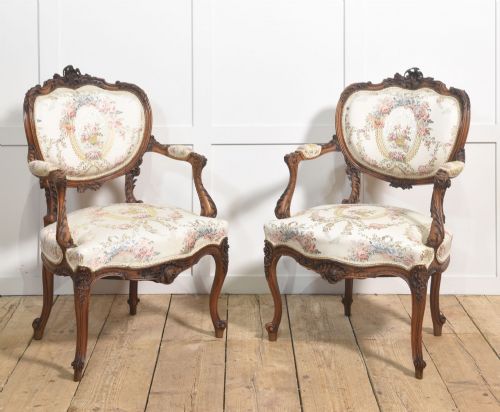
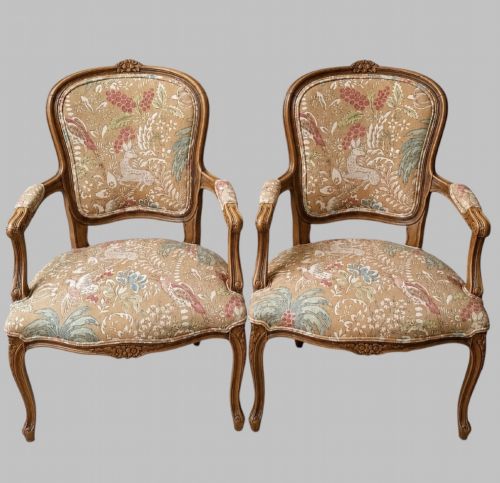
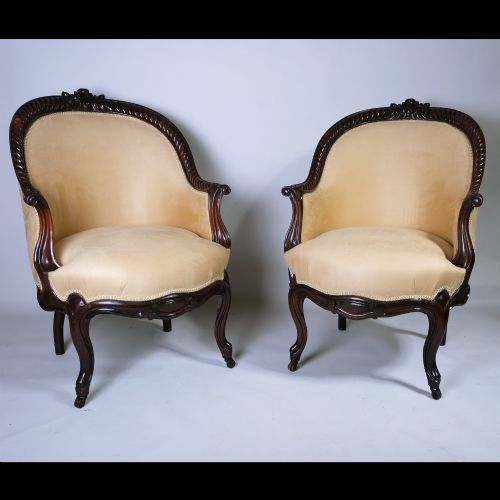
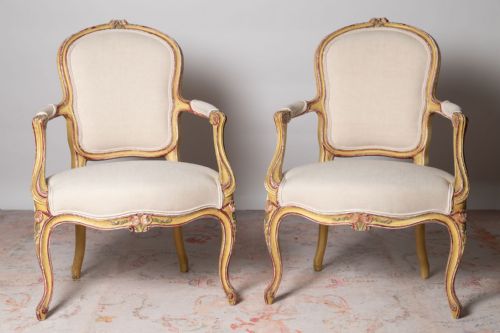
You meet walnut, beech and giltwood frames shaped with characteristic cabriole legs and serpentine rails. Many examples wear period textiles, silk, velvet or needlework that complement the exposed timber or painted surfaces.
The selection ranges from singular provincial armchairs to matched pairs and larger salon suites. Eighteenth-century originals sit alongside later nineteenth-century interpretations sharing the same sculptural silhouette.
Materials and construction
Carpenters shaped structural frames from hardwoods including walnut, beech, oak and mahogany. These timbers allowed deep relief carving along the crest rails, arms and apron without compromising the stability of the open structure.
Surface finishes involved traditional paint, parcel gilt or polished wood. Upholstery techniques secured textiles, silk, velvet, needlework or tapestry over padded seats and backs held by iron tacks or decorative brass head nails.
Several chairs arrive ready for conversation in coral velvet, proving that historic frames enjoy a bold modern palette.
Judging quality
Depth and crispness of the hand carving distinguish finer frames from simpler production. Superior examples display fluent, asymmetric scrollwork carved directly into the solid wood rather than applied ornament.
Proportion and joinery integrity dictate overall merit. High-grade pieces maintain tight joints at the arm-supports and rails, ensuring the open frame remains rigid under weight.
Blaise Maucuy
The Louis XV Carved Fauteuils Glossary
- Fauteuil
- An open-armed upholstered armchair with exposed wooden framing originating in France. This seating type balances decorative woodwork with padded comfort.
- Cabriole leg
- A furniture leg that curves outward in a convex arc and tapers inward in a concave arc to a foot. The design echoes animal limbs and defines period seating silhouettes.
- Giltwood
- Timber coated with gold leaf or metal leaf applied over a prepared gesso ground. This finish provides a luminous decorative surface on formal salon chairs.
- Provincial
- A term describing furniture made in regional areas outside major capital cities. These regional pieces often exhibit simpler timbers and less ornate carving than court furniture.
Louis XV Carved Fauteuils: Frequently Asked Questions
How do I date a carved armchair?
Dating relies on inspecting timber species, tool marks and the style of the carving. Eighteenth-century examples display hand-cut joinery and period wear, while revival pieces from the nineteenth century often utilise machine assistance.
Upholstery materials also offer clues, though many chairs have undergone re-covering over their lifespan.
Where should I place these chairs?
These open armchairs suit living rooms, reading corners and bedrooms as occasional seating. Their compact footprint allows them to sit comfortably alongside modern upholstery without dominating a room.
Pairs work particularly well flanking a fireplace or positioned beneath a mirror.
Are eighteenth and nineteenth century chairs different?
Eighteenth-century originals show period construction methods and patinated timber surfaces accrued over centuries of use. Nineteenth-century revival pieces emulate these forms but frequently employ denser walnut or distinct finishing techniques.
Both periods share the quintessential fluid lines characteristic of the design.