




Rococo Style Open Armchairs
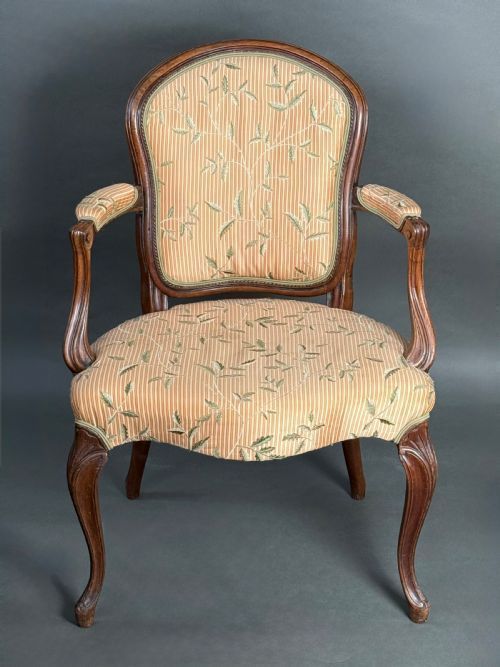
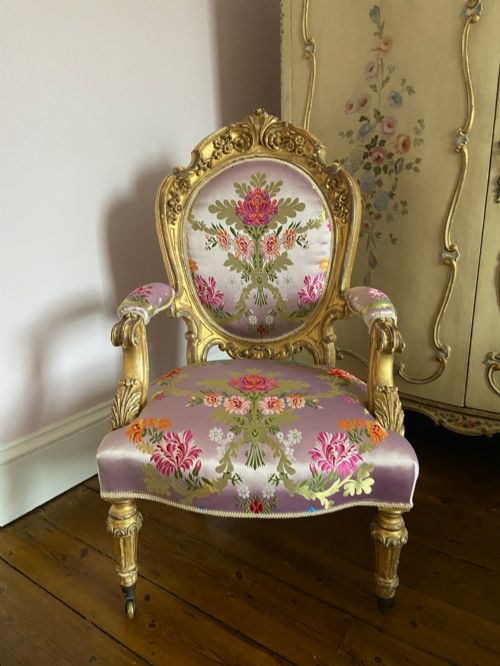
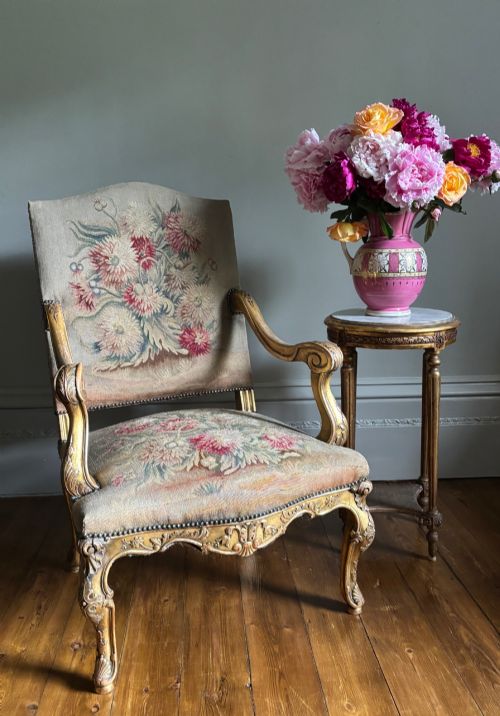
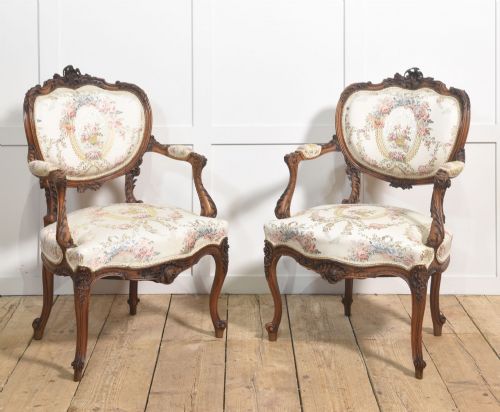
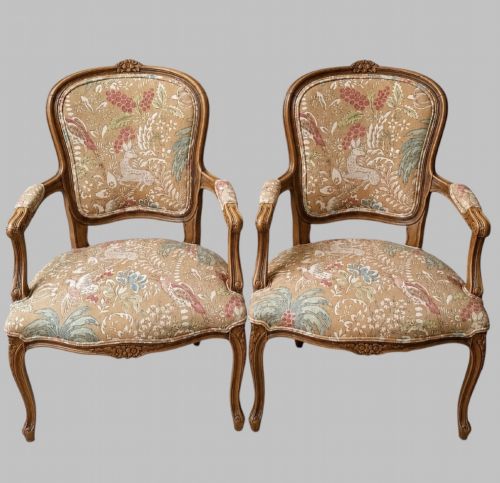
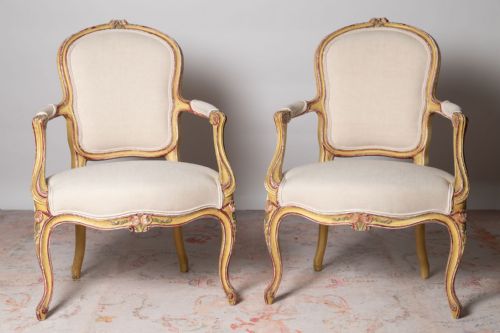
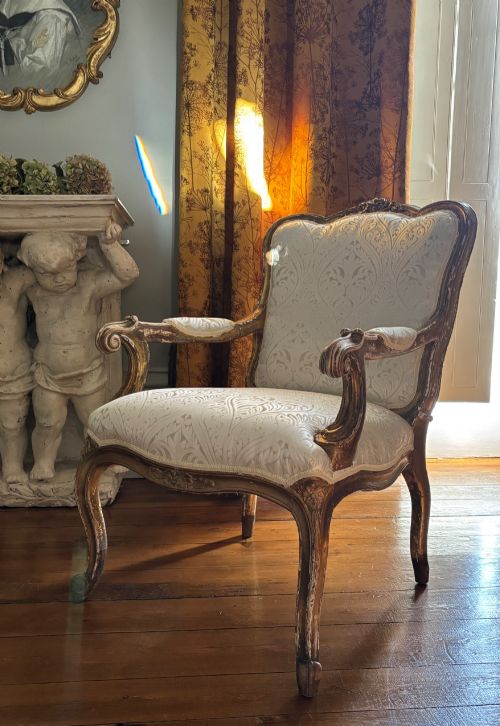
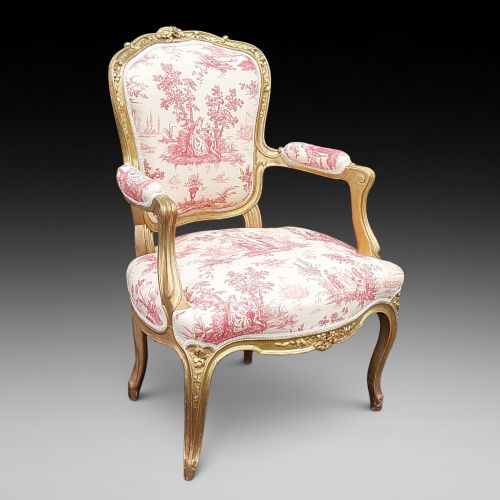
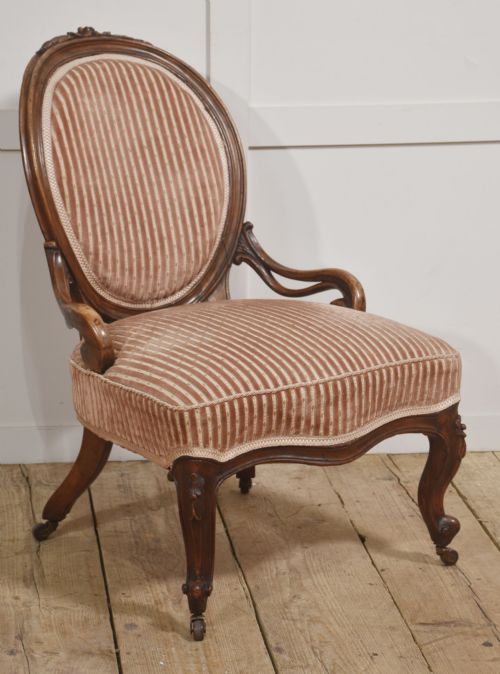
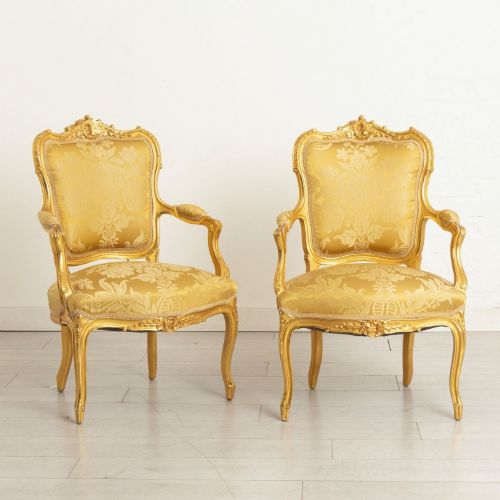
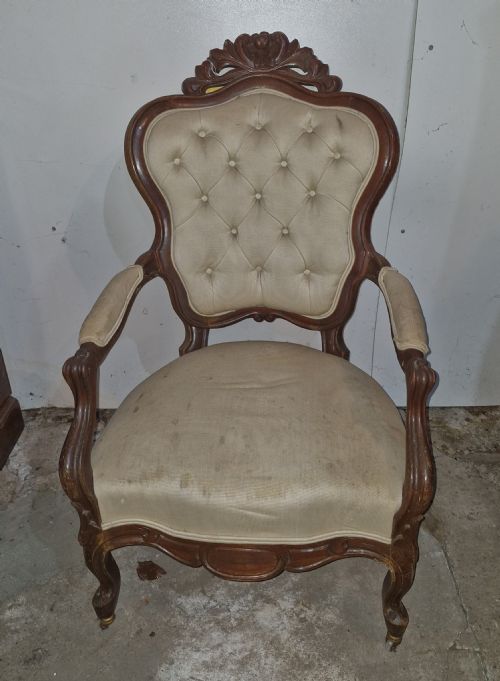
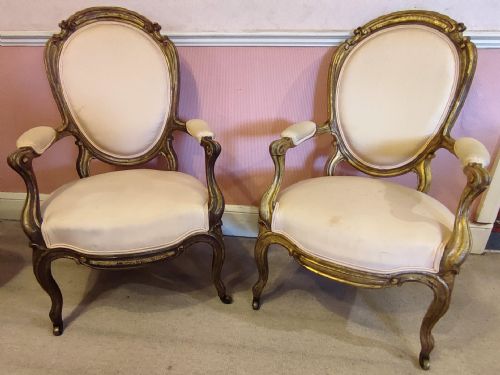
These rococo style open armchairs bring exuberant carved curves and formal presence into a room.
Rococo Style Open Armchairs
When searching for rococo style open armchairs, buyers encounter seating rooted in mid-eighteenth-century design principles and later revival periods. The inventory on this page largely spans the nineteenth century through to the nineteen-thirties, reflecting sustained enthusiasm for French tastes.
Most examples take the form of French fauteuils or salon chairs featuring exposed wooden frames and upholstered components. These pieces frequently demonstrate revival styles such as Louis XV, Neo-Rococo, and Victorian Rococo Revival.
The selection ranges from single library chairs to pairs and larger sets suitable for formal reception spaces. Walnut, mahogany, and giltwood provide the primary structural frameworks for these decorative seats.
How they were made
Carvers shaped structural timber such as walnut, mahogany, and giltwood to create the characteristic flowing lines of the style. Artisans utilised hand-carving techniques to render intricate foliate motifs and asymmetrical cartouches along the crest rails and cabriole legs.
Upholstery completed the seating, with frames fitted using silk fabric, velvet, and various textile coverings. Silk from makers such as Colefax and Fowler appears on selected pieces, whilst other items feature newly applied silk fabric.
The listings on this page span the nineteenth century through to nineteen-thirty, uniting walnut, mahogany, and giltwood materials.
What varies in quality
The crispness of the wood carving determines much of the visual distinction across these chairs. Finer examples display deeply undercut foliage and confident asymmetry executed by skilled hands, whereas simpler items show shallower, more mechanical tool marks.
The choice of primary wood and gilding application also separates standard production from superior pieces. Original giltwood surfaces and select French walnut frames command greater appreciation than later painted finishes applied to standard timbers.
Blaise Maucuy·Colefax and Fowler
The Rococo Style Open Armchairs Glossary
- Fauteuil
- An open-framed armchair with upholstered back and armrests, originating in France during the eighteenth century. These chairs typically feature exposed carved wooden frames.
- Giltwood
- Timber treated with a thin layer of gold leaf applied over a prepared gesso surface. This finish provides a bright decorative sheen characteristic of formal revival seating.
- Cabriole leg
- A furniture leg that curves outward and then tapers inward, finishing in a pad, scroll, or hoof foot. This form mimics animal limbs and defines rococo framing.
- Cartouche
- An ornamental tablet or panel resembling a rolled-up scroll, often centred on the crest rail of a chair. It serves as a focal point for carved decoration.
Rococo Style Open Armchairs: Frequently Asked Questions
How do I identify a revival piece?
Revival pieces are identified by secondary wood usage, machine-assisted joinery alongside hand carving, and nineteenth or twentieth-century construction methods. Stylistic cues often combine elements from multiple reigns.
Examining the underside and frame construction helps clarify the true production period of the armchair.
Are these chairs comfortable for daily use?
These open armchairs were designed for formal sitting rather than deep lounging. Their upright backs and open arm structures suit drawing rooms and conversational groupings.
Modern comfort depends on the internal webbing and padding condition beneath the upholstery fabric.
Where should I place these in a home?
These armchairs function effectively as statement pieces in living rooms, bedrooms, or reading corners. Pairs work well flanking a fireplace or positioned beneath a mirror.
The decorative carved frames benefit from placement where natural light catches the giltwood or polished walnut.
How do I care for giltwood frames?
Giltwood requires gentle dusting with a soft, dry cloth to protect the delicate gold leaf application. Moisture and chemical cleaners damage the metallic surface.
Keep these chairs away from direct sunlight and temperature extremes to prevent timber movement and cracking.