



Traditional Tapestry Elbow Chairs
Traditional tapestry elbow chairs combine solid timber frames with needlepoint or woven upholstery, offering sturdy seating with historic character.
Traditional Tapestry Elbow Chairs
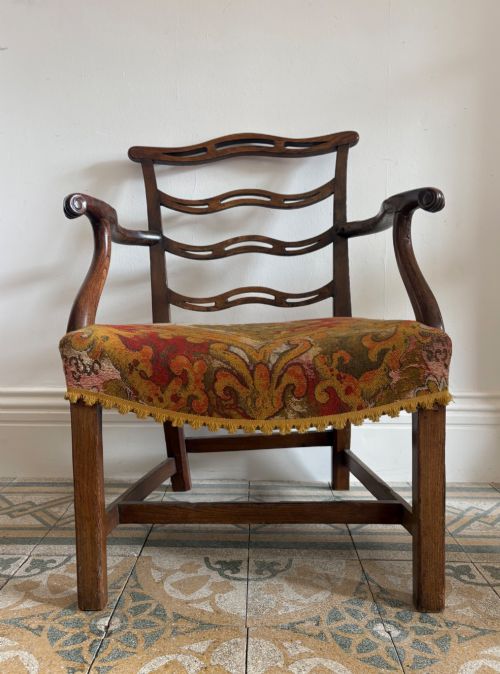
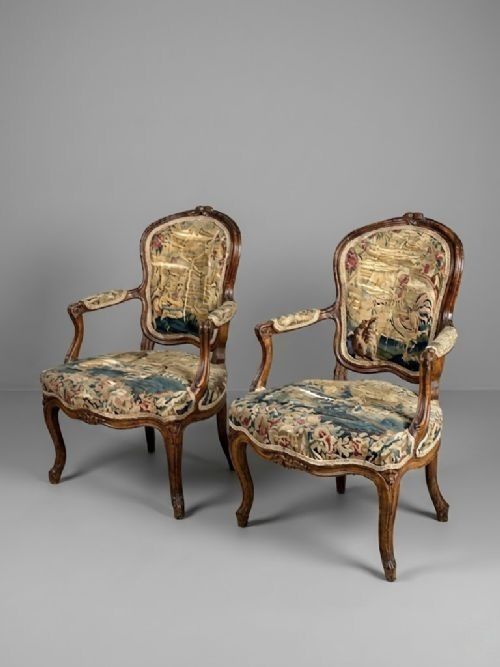
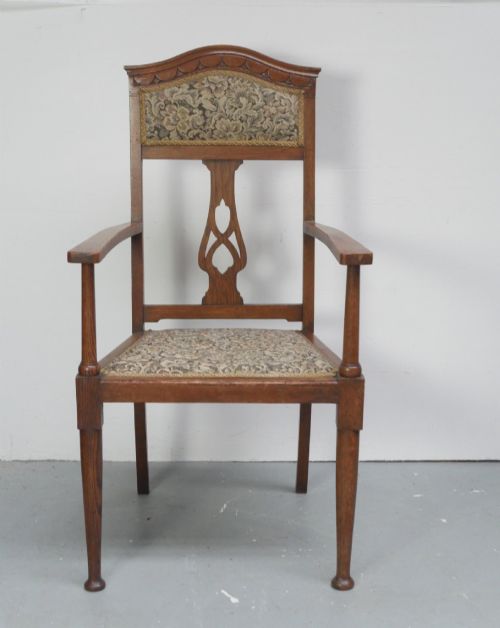
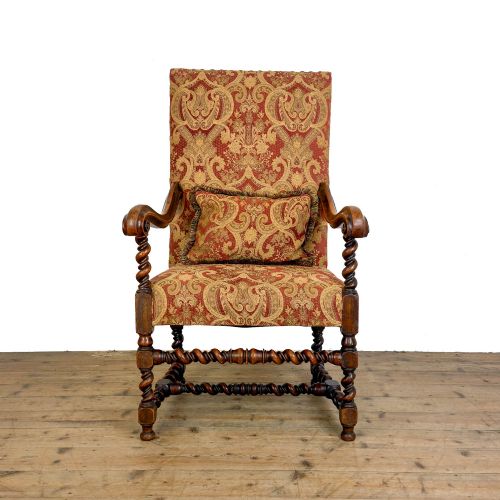
Traditional tapestry elbow chairs encompass open armchairs, carvers, and desk armchairs designed with upholstered seats or backs. These seating forms appear across various historic periods, ranging from late eighteenth-century country examples to nineteenth-century revival pieces.
Buyers encountering traditional tapestry elbow chairs on this page will find styles stretching from Regency and George III to Louis XV style and Arts and Crafts. Such seating serves as both functional furniture and decorative historic focal points.
How traditional tapestry elbow chairs were made
Frames are constructed from dense hardwoods such as mahogany, walnut, oak, and elm, shaped through turning, carving, and joinery techniques. Wood selection dictates the weight and visual texture of each chair.
Upholstery relies on wool tapestry, needlepoint, and textile covers applied over drop-in seats or fixed frames. Stitching and weaving methods vary from fine petit point needlework to broader tapestry weaves.
Traditional Tapestry Elbow Chairs Retail Price Guide 2026
Typical asking prices for traditional tapestry elbow chairs among the pieces listed under this phrase on Sellingantiques today, from the lower quarter to the upper quarter. They describe what is for sale here now, not the wider market.
Listings feature frames in mahogany, walnut, oak, and elm, paired with wool tapestry, needlepoint, and fabric upholstery.
What varies in quality in traditional tapestry elbow chairs
Quality diverges in the precision of timber carving and the structural integrity of the frame joints. Crisp hand-carved details on mahogany or walnut demonstrate higher craftsmanship than plain or later machine-cut mouldings.
The fineness of the tapestry or needlepoint upholstery significantly influences the character of the piece. Dense, finely worked wool tapestry represents a higher standard of textile execution than simpler printed fabrics.
The Traditional Tapestry Elbow Chairs Glossary
- Elbow chair
- An armchair featuring supports for the arms, often designed for use at a desk, dining table, or as a fireside seat.
- Tapestry upholstery
- Woven or needleworked textile covering applied to the seat or back, frequently depicting floral or figurative scenes.
- Drop-in seat
- A removable upholstered seat frame that drops into a rebate within the chair rails.
- Ladderback
- A chair back constructed with horizontal slats resembling the rungs of a ladder.
- Carver chair
- A sturdy wooden armchair, traditionally used at the head of a dining table.
Traditional Tapestry Elbow Chairs: Frequently Asked Questions
What are traditional tapestry elbow chairs?
Traditional tapestry elbow chairs are historical armchairs featuring timber frames and textile upholstery.
They combine supportive armrests with decorative woven or needlepoint seats and backs.
How were these elbow chairs used?
These chairs served as functional seating in studies, dining rooms, and parlours.
Elbow chairs provided extra comfort compared to side chairs, making them suitable for prolonged seating at desks or tables.
What woods were used for frames?
Frames were built using durable hardwoods native or imported to Britain and Europe.
Mahogany, walnut, oak, and elm appear frequently across the available pieces.
How do I care for antique tapestry?
Care involves keeping textile upholstery away from direct sunlight and gentle cleaning.
Protecting the wool and needlepoint fibres preserves the integrity of the historic fabric.