

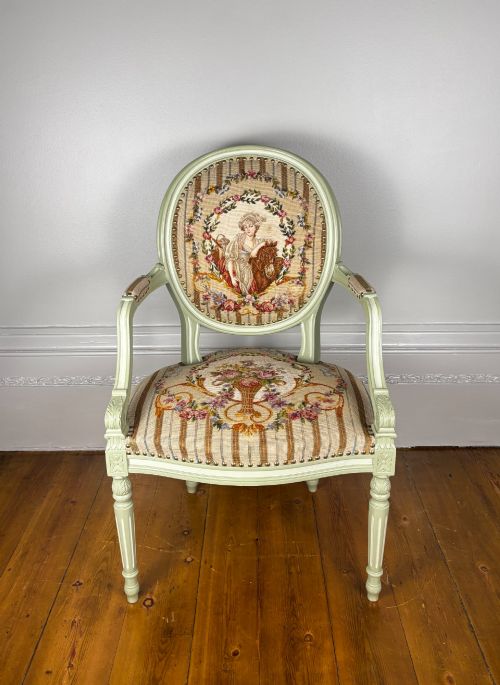
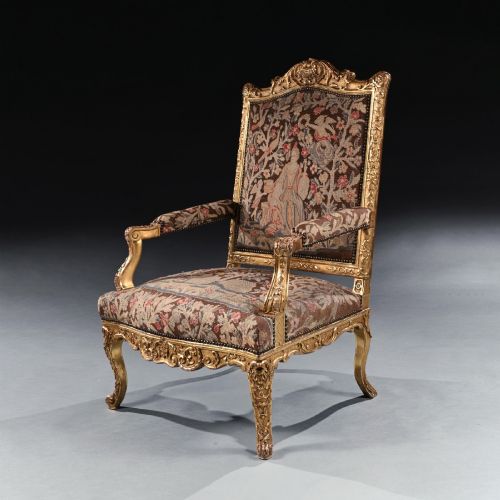
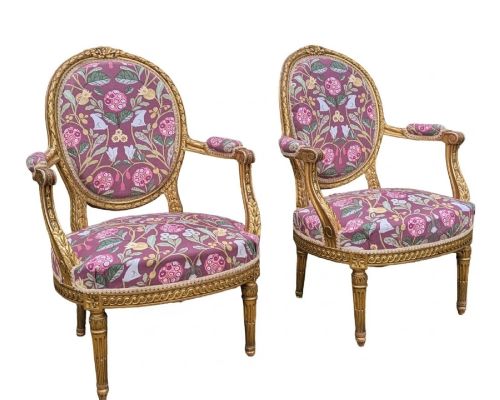
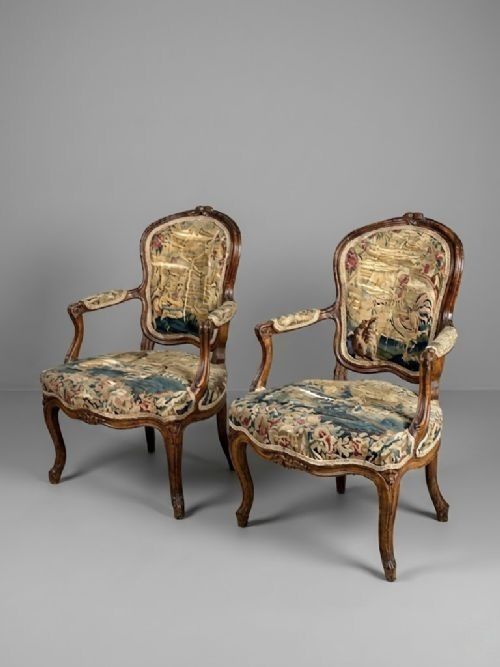

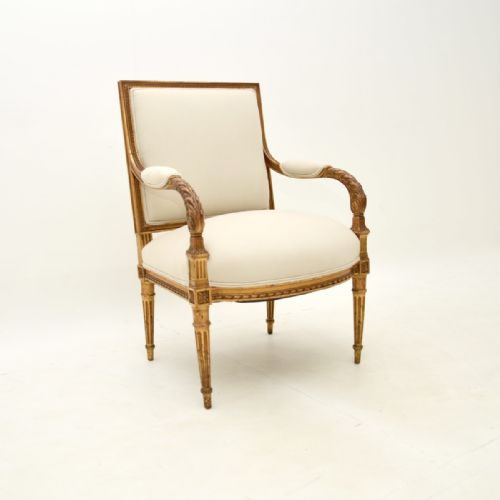


French Period Open Armchair
A french period open armchair brings classical seating to a room, offering carved wooden frames and upholstered comfort from centuries past.
French Period Open Armchair
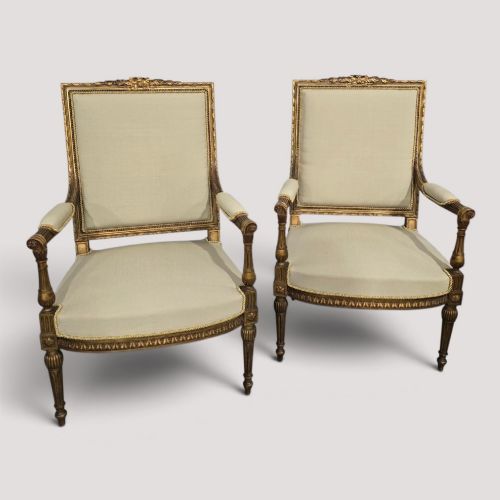
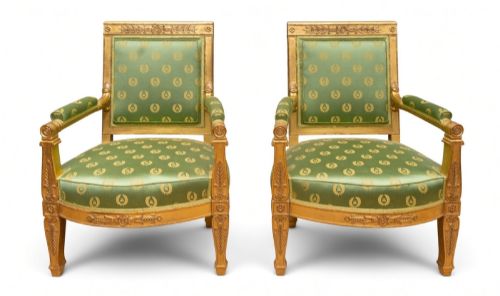
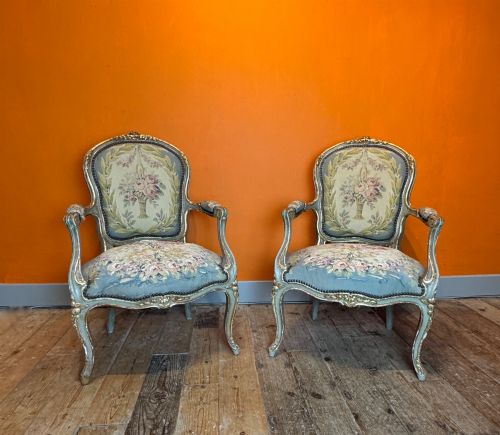
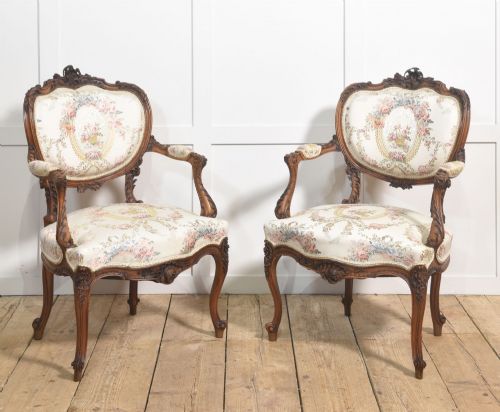
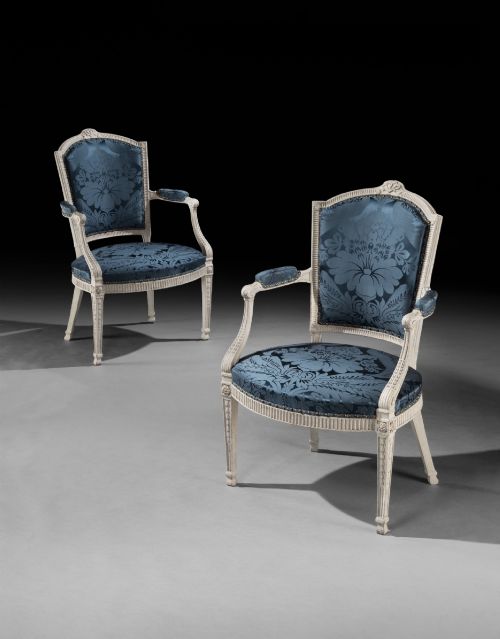
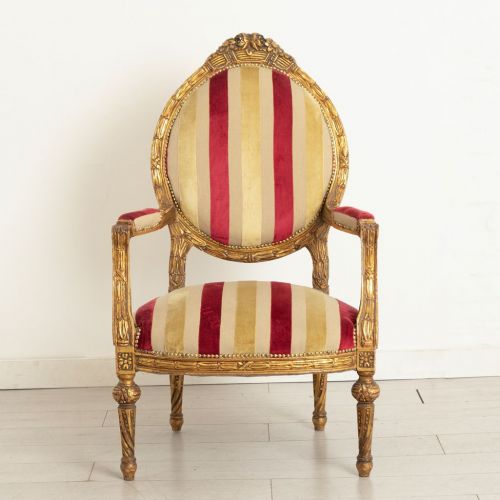
The selection on this page relies heavily on nineteenth-century adaptations alongside eighteenth-century originals, spanning Louis XVI, Regence, and Restauration aesthetics. These chairs frequently emerge in pairs or sets, shaped from walnut, giltwood, and painted timber.
Materials and Construction
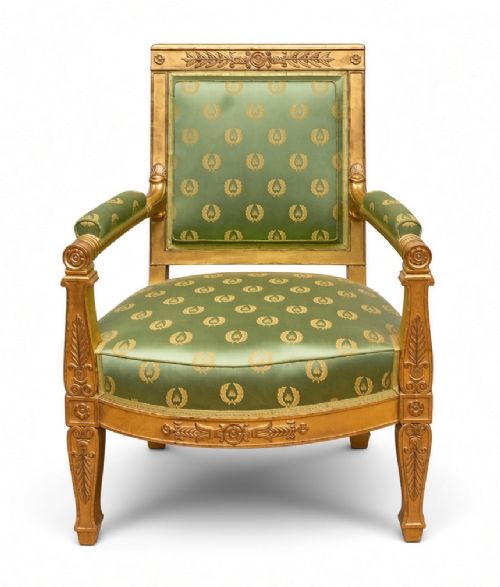
Carpenters shaped these frames from dense hardwoods such as walnut, beech, and rosewood, alongside softer timbers designated for subsequent painting or gilding. Giltwood surfaces received thin layers of gold leaf applied over preparation grounds on carved wood.
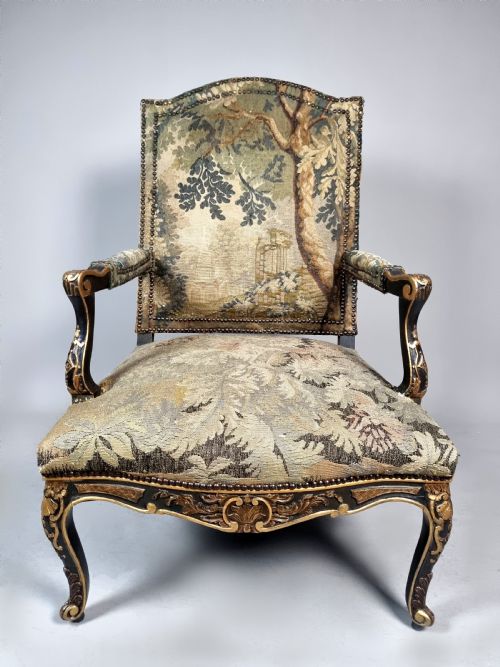
Upholstery completed the framework, utilising traditional textiles including tapestry, damask fabric, and needlepoint secured directly to the seat and back rails. Brass tacks frequently edge the fabric borders, fixing the textile securely to the wooden structure.
French Period Open Armchair Retail Price Guide 2026
Typical asking prices for french period open armchair among the pieces listed under this phrase on Sellingantiques today, from the lower quarter to the upper quarter. They describe what is for sale here now, not the wider market.
Listings feature eighteenth-century pieces alongside nineteenth-century interpretations, utilising walnut, giltwood, and beech frames.
Assessing Quality and Execution
Quality rests upon the crispness of the hand-carved ornamentation and the integrity of the underlying wooden joins. Finer examples display deeply undercut foliage and crisply defined mouldings rather than soft, cast composition ornaments.
The choice of primary timber and the original state of the gilding or paint finish dictate the standing of a piece. Original tapestry or period needlepoint upholstery elevates an armchair above later replacement coverings.
Jacob Desmalter
The French Period Open Armchair Glossary
- Fauteuil
- An open-arm armchair with upholstered back and armrests, originating in France during the seventeenth century. These chairs feature exposed wooden framework around the padded sections.
- Bergère
- An enclosed upholstered armchair featuring padded sides integrated into the backrest. This form offers a deeper and more enclosed seat than standard open armchairs.
- Giltwood
- Timber coated with gold leaf or powder over a prepared gesso base. This finish created brilliant reflective surfaces for formal eighteenth- and nineteenth-century interiors.
- Regence
- A transitional style bridging the Louis XIV and Louis XV periods, characterised by curved lines and restrained ornamentation. It marks the departure from heavier symmetrical designs.
- Tapestry
- Hand-woven textile featuring pictorial scenes or repeating patterns used for heavy upholstery. Period examples add significant historical context to seating.
French Period Open Armchair: Frequently Asked Questions
What is a fauteuil?
A fauteuil is a traditional French open armchair characterised by wooden arms that remain partially uncovered by upholstery. These seats were designed for formal reception rooms.
The wooden frames are frequently carved and gilded or painted, housing padded backrests and seats intended for refined daily use.
How do I spot a reproduction?
Distinguishing period pieces involves examining the tool marks left by woodworkers on hidden structural parts. Hand-cut joinery differs distinctly from modern machine production.
Surface patination on the wood and the wear patterns on gilt or painted finishes accumulate through decades of handling, which modern reproductions struggle to replicate authentically.
Where should I place these chairs?
These open armchairs function effectively as occasional seating in drawing rooms, studies, or spacious bedrooms. Their decorative carved backs contribute visual weight to room corners.
Pairing matching armchairs near a fireplace or beneath a mirror creates a balanced arrangement derived from historical interior layouts.
How are different periods distinguished?
Stylistic markers on the wooden frames separate periods, such as the straight tapered legs of Louis XVI designs versus the flowing cabriole legs of earlier Regence pieces. Carving motifs evolve from heavy baroque symmetry to lighter neoclassical ribbons and husks.
Reference materials and construction methods help narrow the date of manufacture between eighteenth-century originals and later nineteenth-century revivals.