




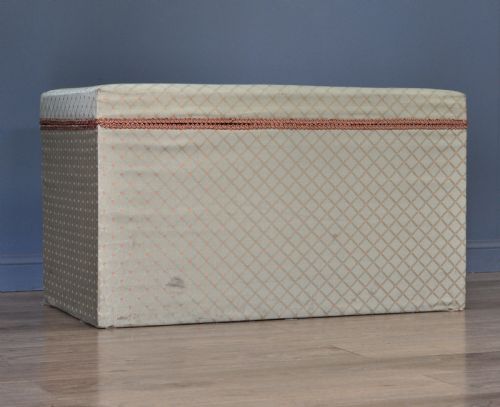

Patterned Fabric Ottoman
These patterned fabric ottomans combine practical storage with traditional seating, offering a versatile focal point for any period interior.
Patterned Fabric Ottoman
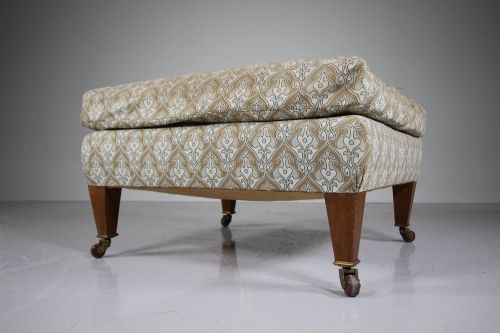
A patterned fabric ottoman serves as both a low seat and a concealed container, appearing across nineteenth century and early twentieth century periods. These pieces take various forms including footstools, storage chests, and blanket boxes with upholstered tops.
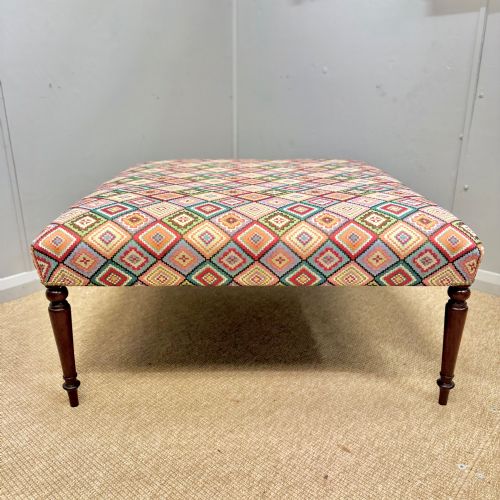
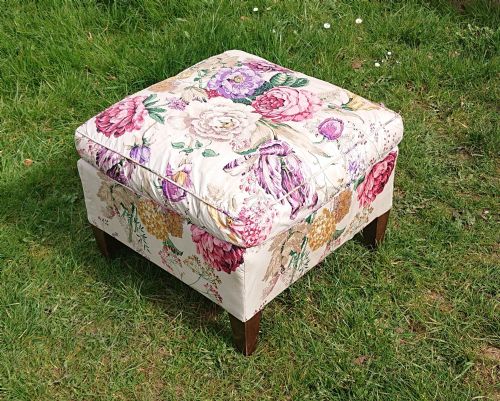
The versions most commonly met on this page range from Victorian and Edwardian examples to Georgian pieces and William IV designs. Makers constructed these items in timber such as mahogany, pine, and oak, covering them in diverse textiles including kilim and Liberty fabric.
How they were made
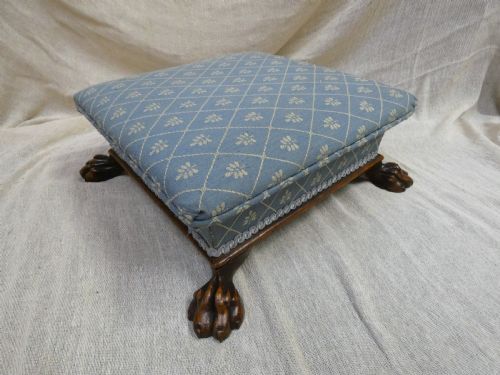
Carpenters built the foundational frames using solid woods like mahogany, pine, oak, and rosewood, often incorporating carved details on the legs and base. Storage variants like blanket boxes and work boxes featured hinged lids designed to support padded upholstery.
Craftspeople applied various textiles to the cushion tops, ranging from standard upholstery fabric and cotton to woven kilim and distinctive Liberty patterns. Brass hardware frequently appeared on chests and storage trunks for hinges and corner reinforcement.
The listings span the Georgian, Regency, Victorian, and Edwardian periods, utilising materials like mahogany, pine, brass, and woven cotton.
What varies in quality
The choice of primary timber sets the baseline for construction quality, distinguishing sturdy mahogany and rosewood frames from simpler pine and general timber builds. Carved elements on the wooden framework demonstrate superior joinery and decorative ambition compared to plain structural edges.
The distinction between standard coverings and specialist textiles like kilim or Liberty fabric elevates the visual merit of the piece. Upholstery depth and the structural integrity of internal storage compartments further divide utilitarian boxes from finer parlour seating.
The Patterned Fabric Ottoman Glossary
- Kilim
- A flatwoven textile originating from the Middle East or Eastern Europe, frequently utilised as durable upholstery on nineteenth century footstools. This material adds geometric patterns and robust texture to the surface.
- Work Box
- A small container designed for holding sewing implements, sometimes integrated into the top of an ottoman or stool. These compartments often feature internal partitions for threads and needles.
- Kist
- A traditional Scottish and Northern English term for a large wooden storage chest or trunk. These robust boxes served to store household linens and blankets before being adapted with padded tops.
- William IV
- A British architectural and decorative style spanning the 1830s, bridging the Regency era and early Victorian periods. Pieces from this time often display heavy mahogany construction and classical revival motifs.
Patterned Fabric Ottoman: Frequently Asked Questions
What is an ottoman?
An ottoman is a low piece of upholstered seating designed without a back or arms, often functioning as a footstool or a resting place for the legs.
Many antique variants also incorporate a hinged lid, allowing the upholstered top to lift and reveal an internal storage space for blankets or linens.
How do I identify a Victorian ottoman?
Victorian pieces typically display dense timber frames, such as mahogany, walnut, or pine, paired with heavy buttoned or patterned upholstery. Stylistic influences ranging from early revival designs to later Art Nouveau details often mark the period.
Examining the construction methods underneath the fabric, including hand-cut screws and traditional joinery, helps confirm the nineteenth-century origin.
Where were ottomans used?
These pieces traditionally sat in drawing rooms, parlours, and large country house bedrooms as movable seating or auxiliary furniture near larger sofas and chairs.
Storage variants additionally served in hallways and dressing rooms to keep blankets, toys, and sewing materials out of sight.
Are these ottomans comfortable?
Antique ottomans generally feature firm padding constructed with traditional horsehair, wool, or spring stuffing beneath the outer fabric. This dense layering provides sturdy support whether the piece functions as a seat or a footrest.
Modern comfort preferences sometimes require professional reupholstery to adjust the firmness while retaining the original wooden frame.