




Regency Upholstered Footrest
These regency upholstered footrest pieces are solid timber frames covered in textile, velvet, or leather, offering low-level support that brings period elegance to a room.
Regency Upholstered Footrest
When you search for a regency upholstered footrest, you encounter low seating forms such as footstools, ottomans, and window seats from the Regency, William IV, and Early Victorian eras. These items serve to support the feet or provide low occasional seating, often matching the formal proportions of nineteenth-century parlours.
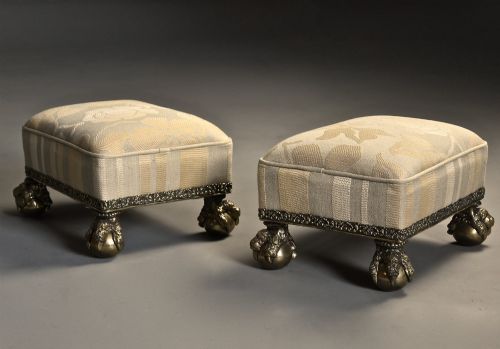
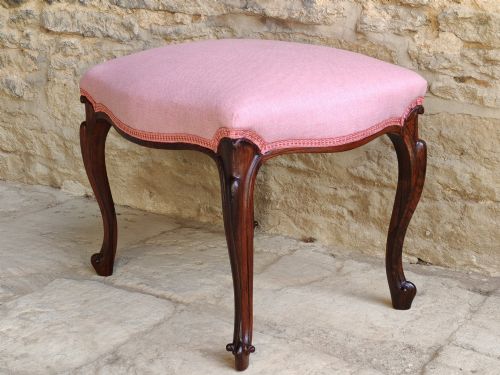
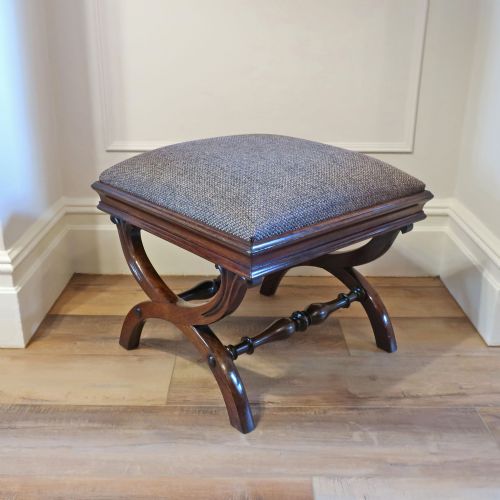
The pieces listed here appear in woods like mahogany and rosewood, frequently incorporating textile, velvet, fabric, or hand-dyed buttoned leather upholstery. Makers built them as single stools, pairs, and X-framed curule designs with brass decoration and lions paw feet.
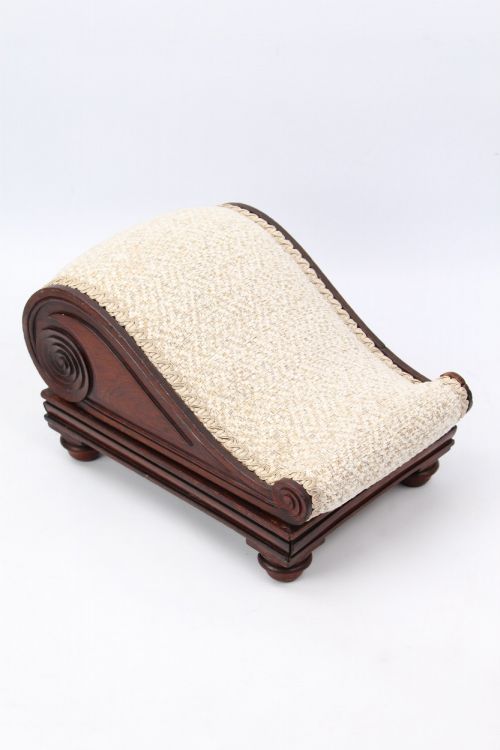
The most common forms on this page include mahogany footstools and rosewood X-framed variants dating from around 1800 to the mid-nineteenth century. They range from simple turned wooden frames to elaborate scroll-top designs associated with specific nineteenth-century design books and workshops.
How they were made
Carpenters constructed the structural frames from dense hardwoods such as mahogany and rosewood, shaping them with curves, scrolls, and X-frame geometries. These timbers provided the tensile strength needed for low load-bearing stools and ottomans.
Upholsterers applied textile, velvet, fabric, or leather over stuffing, securing the coverings with traditional buttoning techniques or decorative brass elements. Metal founders cast details like brass mounts and lions paw feet to accent the timber bases.
Regency Upholstered Footrest Retail Price Guide 2026
Typical asking prices for regency upholstered footrest among the pieces listed under this phrase on Sellingantiques today, from the lower quarter to the upper quarter. They describe what is for sale here now, not the wider market.
Some nineteenth-century feet were cast as literal lions paws, letting a quiet beast hold up the parlour.
What varies in quality
The sophistication of the timber carving and the precision of the frame joinery dictate the baseline quality of each stool. Pieces displaying crisp scrollwork, well-defined X-frame geometry, or documented maker attribution stand apart from plain domestic examples.
The choice of secondary materials and decorative hardware also marks the distinction between standard production and top-tier work. Solid rosewood or mahogany combined with cast brass feet and quality hand-dyed leather upholstery indicates a higher grade of manufacture.
Mathew Gregson·Miles & Edwards
The Regency Upholstered Footrest Glossary
- Regency
- A British design period spanning the early nineteenth century, characterised by classical revival motifs and refined proportions. It draws inspiration from ancient Greek, Roman, and French Empire styles.
- X-Frame
- A structural form where two diagonal members cross to form an X, supporting the seat above. This ancient curule shape gained renewed popularity during the nineteenth century for formal stools.
- Ottoman
- A low, upholstered seat without a back or arms, often designed for domestic relaxation. Nineteenth-century versions frequently incorporated decorative feet and rich textile coverings.
- Curule
- An ancient form of X-shaped seating adopted into nineteenth-century furniture design. It denotes a cross-frame stool of classical lineage.
- Mahogany
- A durable tropical hardwood prized for its deep reddish-brown tone and fine grain. Makers used it extensively for high-end nineteenth-century seating frames.
Regency Upholstered Footrest: Frequently Asked Questions
Where did people put footstools?
Nineteenth-century households placed these low seats in drawing rooms, parlours, and formal libraries directly in front of armchairs or sofas. They served as comfortable supports for tired feet during long evenings of reading or conversation.
In larger spaces, similar forms functioned as window seats or independent perches near the hearth, allowing occupants to move them easily around the room as needed.
How do I care for leather upholstery?
Hand-dyed leather requires gentle dusting with a dry cloth and occasional treatment with appropriate leather dressings to prevent drying out. Keeping the hide away from direct heat sources and strong sunlight preserves its natural suppleness.
Avoid using harsh chemical cleaners or excess water on nineteenth-century leather surfaces, as moisture can damage both the old finish and the underlying stuffing materials.
How do I date a footstool?
Dating relies on examining the timber species, construction joints, and decorative style relative to recorded nineteenth-century design patterns. Mahogany and rosewood were typical of Regency and early Victorian periods, while specific foot shapes like lions paw offer further chronological clues.
Cabinetmakers of the era employed distinct joinery methods that evolved from the Regency period into the Victorian age, helping experts narrow down the year of manufacture.
Can I use these stools daily?
These period pieces handle normal everyday use as footrests or occasional seats, provided they are treated with reasonable care. Their solid mahogany and rosewood frames were built to withstand regular domestic weight over generations.
Placing them on even flooring and avoiding standing on the upholstery ensures the historical frame joints and webbing remain secure and stable.