
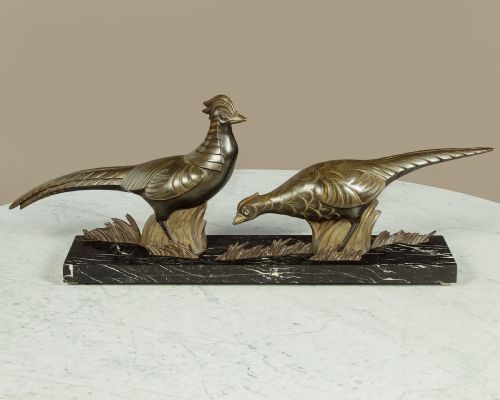



Patinated Spelter Sculpture
Patinated spelter sculpture captures the decorative metalwork of the nineteenth and twentieth centuries, offering affordable figures and animal studies for the home.
Patinated Spelter Sculpture
When you search for patinated spelter sculpture, you encounter cast metal figures and decorative objects spanning the Victorian era through the Art Deco period. These pieces frequently take the form of animals, human figures, candlesticks, and mantel clocks.
The versions most commonly met on this page originate from France, particularly dating from the nineteen-thirties with Art Deco designs of panthers, deer, and dancers, alongside earlier nineteenth-century models.
Objects range from single statues and bookends to complex lamp bases and clock garnitures, often paired with marble or onyx plinths to provide a stable base for the lighter alloy.
How they were made
Spelter, a zinc-based alloy often referred to in period pieces simply as metal or zinc alloy, was poured into moulds to create detailed figures more economically than solid bronze. Because the metal is softer than bronze, makers achieved fine surface detail during casting.
To simulate the appearance of more expensive bronze, founders applied chemical patinated finishes, ranging from dark metallic tones to green patinas and gilded or bronzed effects. These surfaces were sometimes combined with carved marble, onyx, or patinated metal components.
Medieval characters balanced precariously on stilts make an unexpected appearance among the animal bronzes and classical figures.
What varies in quality
The integrity of the underlying metal alloy and the stability of any integrated marble or onyx base also distinguish superior pieces from utilitarian production. Signed works by recognised modellers generally display more refined proportions and careful finishing.
Auguste Moreau·P. Sega·Geo Maxim·H. Bal·Chiparus·Plagnet·L. Carvin
The Patinated Spelter Sculpture Glossary
- Spelter
- A zinc alloy commonly used in the nineteenth and twentieth centuries for cast decorative figures and sculptures. It is softer and lighter than bronze.
- Patination
- The chemical or painted surface treatment applied to metal to simulate age or create specific metallic tones. It gives the alloy its characteristic dark or coloured finish.
- Art Deco
- A design style prominent around nineteen thirty, characterised by streamlined geometric forms, stylised animals, and dynamic human figures. It heavily influences the sculptures found in this category.
- Art Nouveau
- An artistic movement from the late nineteenth century featuring flowing, organic lines and natural motifs. Figures from this period often depict graceful female models.
Patinated Spelter Sculpture: Frequently Asked Questions
What is spelter metal?
Spelter is a zinc-based alloy that manufacturers utilised as an economical alternative to bronze for decorative sculptures and household objects.
Because the metal is relatively soft, it allowed founders to cast intricate details easily before applying a patinated finish.
Are these sculptures solid bronze?
These pieces are made from a zinc alloy rather than solid bronze, though many feature a bronzed patinated surface.
Spelter is noticeably lighter than bronze and requires careful handling to avoid bending or scratching the softer metal.
How can I date my sculpture?
Dating relies on stylistic clues such as the geometric lines of Art Deco pieces from around nineteen thirty or the organic forms of earlier Victorian work.
Signatures from artists and founders stamped or cast into the metal also help establish the period of production.