


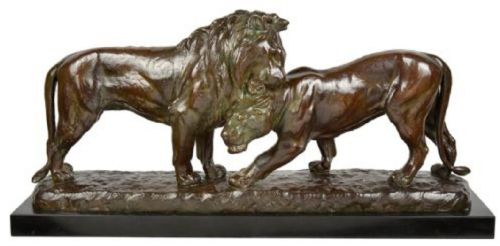


Patinated Bronze Lion Statue
A patinated bronze lion statue brings formidable presence to a room, offering the enduring weight and classical dignity of cast metal.
Patinated Bronze Lion Statue
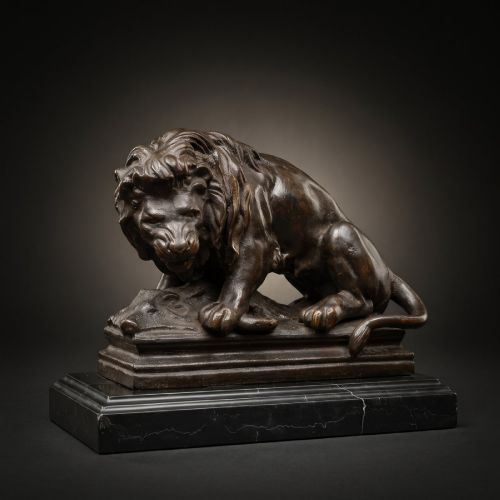
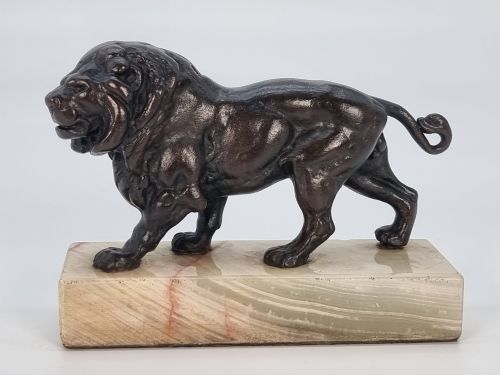
A patinated bronze lion statue captures the power of the beast in cast metal, frequently mounted upon stone or marble plinths. These sculptures range from small study pieces to grand architectural pairs.
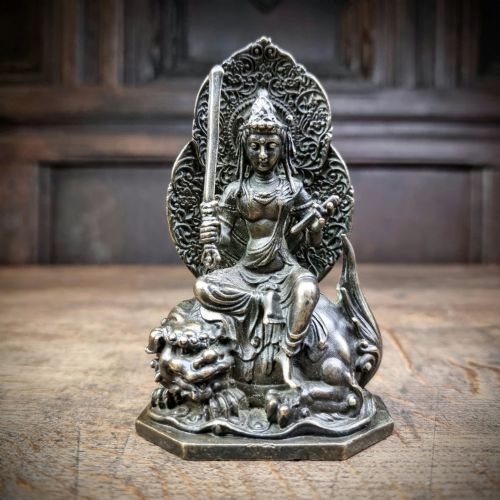
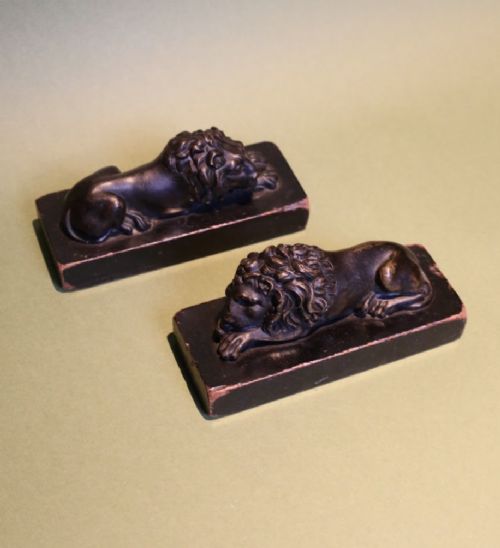
The selections encountered here span several distinct aesthetics, from French Animalier realism and Neoclassical Grand Tour souvenirs to Asian temple figures and Japanese iron work. Most pieces originate from the nineteenth century or around nineteen hundred, reflecting rigorous nineteenth century casting traditions.
Makers drew inspiration from classical antiquities such as the Medici lions and the winged lion of Saint Mark, translating ancient marble monuments into portable bronze sculptures.
How they were made
Foundries utilised the lost wax casting method to capture fine muscular detail and texture in bronze, iron, and brass. Molten metal filled intricate moulds before undergoing meticulous hand chiselling and finishing.
Sculptures were subsequently treated with chemical patination to achieve deep brown, black, or verdigris surfaces, occasionally complemented by gold inlay or mounted on bases of marble, onyx, and timber.
Patinated Bronze Lion Statue Retail Price Guide 2026
Typical asking prices for patinated bronze lion statue among the pieces listed under this phrase on Sellingantiques today, from the lower quarter to the upper quarter. They describe what is for sale here now, not the wider market.
Several lions stand eternally vigilant on stone bases, requiring no feeding and causing zero disturbance to household upholstery.
What varies in quality
The sophistication of the initial model and the crispness of the post casting chase work determine the visual success of the sculpture. Superior examples display acute anatomical observation and sensitive handling of fur and facial expression.
The integrity and depth of the patination differentiate standard commercial castings from exceptional artistic works. Furthermore, the selection of supporting mount materials, such as heavy veined marble or onyx, signals the ambition of the original commission.
Unno Shomin·G.GARDET·Louis Riche·Al Barye·Barbedienne
The Patinated Bronze Lion Statue Glossary
- Animalier
- A nineteenth century artistic movement focused on the realistic depiction of animals. Sculptors in this tradition studied live specimens closely in menageries.
- Grand Tour
- A traditional trip through Europe undertaken by upper class Europeans to collect art and antiquities. Souvenirs often included small scale bronzes of classical monuments.
- Neoclassical
- A style inspired by the art and culture of classical antiquity. It prioritises proportion, restraint, and formal dignity.
- Patination
- The ageing or chemical treatment of a metal surface that produces a distinctive colour and sheen. This process protects the metal while enhancing visual depth.
- Okimono
- A Japanese term for a decorative object designed for display on a shelf or in a tokonoma alcove. These pieces showcase immense metallurgical and carving skill.
Patinated Bronze Lion Statue: Frequently Asked Questions
What is an animalier lion sculpture?
An animalier lion sculpture is a nineteenth century artistic work that prioritises anatomical realism over classical idealism. These pieces capture the natural movement and power of the animal.
Artists observed captive lions in European menageries to understand musculature and posture accurately. This approach resulted in lifelike studies of prowling or resting beasts.
Where should I place a bronze lion?
Bronze lions suit display surfaces that can support their considerable weight, such as heavy sideboards, desks, or dedicated pedestals. Pairing them with traditional interiors enhances their architectural character.
Placement away from direct moisture protects the chemical patination of the metal over time. Stable indoor environments preserve both the bronze and any stone or marble plinths.
How do I identify a Grand Tour bronze?
Grand Tour bronzes typically replicate famous public monuments or classical antiquities encountered by travellers in Italy. They are usually smaller in scale for ease of transport.
These pieces often date from the nineteenth century and reflect a specific European interest in classical history. Their casting quality and patination mirror nineteenth century foundry techniques.
Why are some lions mounted on marble?
Mounting bronze sculptures on marble or onyx plinths provides physical stability and visual contrast to the dark metal. Heavy stone bases were standard practice for nineteenth century desktop and cabinet bronzes.
The choice of stone often complements the formality of the sculpture, elevating its status as a finished decorative object. Onyx and black marble were frequent selections for French Animalier works.