




Bronze Big Cat
These bronze big cat sculptures capture muscular predatory grace in metal, appealing to collectors of animalier art.
Bronze Big Cat
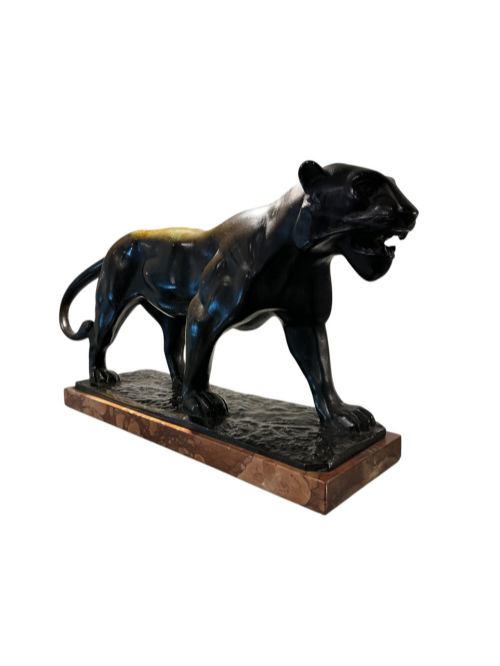
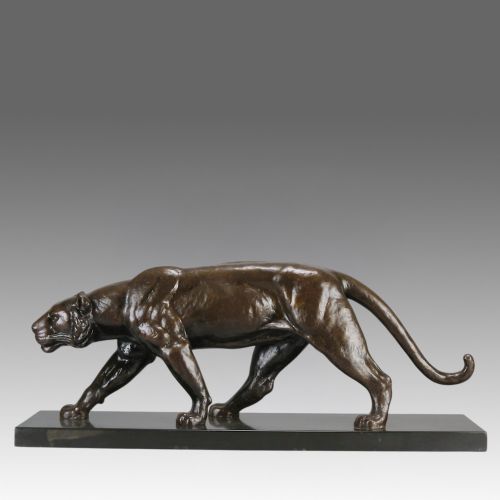
A bronze big cat sculpture portrays lions, tigers, leopards, and panthers captured in powerful predatory stances. When buyers search for a bronze big cat, they encounter works ranging from nineteenth-century French studies to sleek twentieth-century Art Deco interpretations.
The objects take the form of freestanding sculptures, often mounted on heavy marble or onyx bases. French Animalier works and Austrian cold-painted bronzes dominate the selections available in this category.
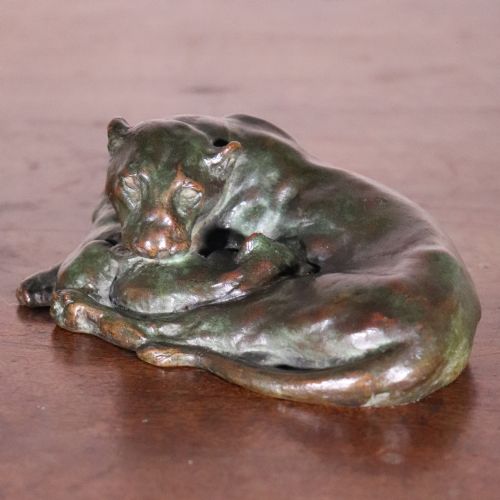
Pieces frequently depict solitary prowling felines, resting pairs, or dramatic hunting scenes involving prey. The designs reflect shifting artistic tastes across the nineteenth and twentieth centuries, moving from academic realism toward stylised geometry.
Materials and construction methods
Foundries utilised the lost-wax casting method to render musculature, fur texture, and dynamic motion in metal. Artisans applied various chemical patinas, ranging from deep brown and black tones to bright cold-painted polychrome finishes.
Sculptures are frequently mounted onto contrasting solid bases made of black or variegated marble and onyx. Alternative metal compositions such as spelter appear alongside cast bronze in specific twentieth-century editions.
Listings span the 1880s to the 1940s, featuring materials such as patinated bronze, cold-painted bronze, spelter, marble, and onyx.
Distinctions in quality and execution
Quality rests upon the precision of the cast and the sensitivity of the chasing work done after removal from the mould. Superior examples retain crisp anatomical detail in the paws, facial expressions, and musculature without soft edges.
The richness and depth of the original patination elevate an individual piece, alongside the quality of the marble base and the prominence of the foundry mark or artist signature.
Alexandre Ouline·Franz Bergman·G. Gardet·Vannetti·Anna Vaughn Hyatt Huntington·Clovis Masson·Michel Decoux·Andrey·Georges Gardet·Louis Riche·Barye·Barbedienne·E. Drouot
The Bronze Big Cat Glossary
- Animalier
- A nineteenth-century artistic movement focused on the realistic portrayal of animals. Practitioners studied subjects closely in menageries.
- Cold-painted bronze
- A technique where paint is applied to a bronze object without heat-firing. This method creates vibrant, detailed polychrome surface finishes.
- Patina
- The surface coloration and sheen developed naturally over time or applied via chemical treatments. It protects the metal and defines sculptural contours.
- Lost-wax casting
- A process where a molten metal is poured into a mould created by melting away a wax model. It allows for intricate undercuts and fine details.
- Spelter
- A zinc alloy frequently utilised as a cost-effective substitute for bronze. It appears often in decorative twentieth-century figures.
Bronze Big Cat: Frequently Asked Questions
How do I identify an original nineteenth century cast?
Examine the crispness of the chasing work and the depth of the patination across the surface. Early casts display naturalistic muscle definition without smoothing.
Look for foundry stamps and artist signatures incised directly into the metal rather than raised. The weight of the metal and the type of stone base also offer clues to the period of manufacture.
What is the difference between bronze and spelter?
Bronze is a durable copper and tin alloy capable of holding fine sculptural details and complex patinas. Spelter is a softer zinc alloy that feels lighter and shows a different texture beneath the paint.
Spelter figures often date to the Art Deco period and require gentler handling to prevent surface cracking.
Where were cold-painted bronzes produced?
The Austrian or Vienna school specialised in cold-painted bronze production during the late nineteenth and early twentieth centuries. Makers such as Bergman exported these colourful animal figures worldwide.
These pieces rely on hand-applied paint layers that require protection from direct sunlight and moisture.
Why are some big cats mounted on marble bases?
Marble and onyx bases provide structural stability for heavy metal sculptures and elevate the visual presentation. Art Deco designers utilised geometric stone plinths to complement the sleek lines of prowling panthers.
These bases also protected the underside of the sculpture and added a clean architectural contrast to the dark patinated metal.