


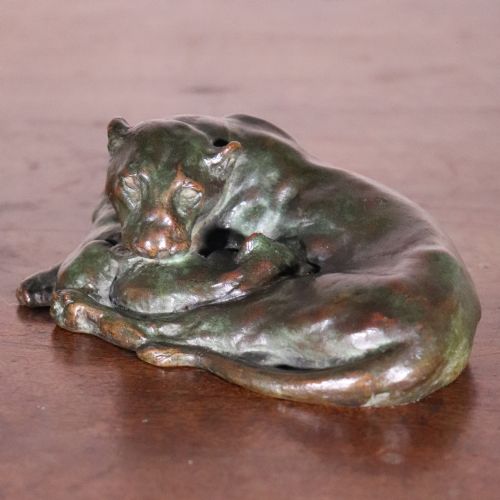


Bronze Panther Figure
A bronze panther figure captures a sudden crouch or a long stride in heavy metal, made to command a desk or sideboard.
Bronze Panther Figure
A bronze panther figure represents the big cat through nineteenth century naturalism and twentieth century stylisation. When you search for this phrase, you meet large French animalier studies, neoclassical mythological groups, and sharp Art Deco silhouettes.
The pieces on this page span from the late nineteenth century into the later twentieth century. You encounter naturalistic hunting scenes alongside stylised figures mounted on marble and onyx bases.
How they were made
Foundries cast these pieces in bronze using traditional methods, applying patinas to achieve deep black, brown, or green surfaces. Some works combine patinated or silvered metal with carved stone bases.
Alternative pieces utilise spelter, a zinc alloy, finished to imitate bronze and paired with heavy marble or onyx plinths. Signatures and foundry marks are often stamped directly into the metal during the casting process.
Panthers were so fashionable in French living rooms that even pythons had to share the plinth.
What varies in quality
The articulation of the musculature and the depth of the casting separate standard foundry output from master works. A finer sculpture shows precise tension in the limbs and a nuanced patination that reveals the texture of the coat.
The integration of the figure with its stone base matters significantly. Superior examples feature heavy, well-fitted marble or onyx plinths that complement the proportions of the metal sculpture.
Michel Decoux·Georges Gardet·Barbedienne·Siot Foundry·Albert Poncin
The Bronze Panther Figure Glossary
- Animalier
- Art focusing on the realistic portrayal of animals. Nineteenth century sculptors used this term for dynamic studies of wild beasts.
- Patina
- The surface coloration and sheen developed naturally over time or applied chemically by the foundry. It protects the metal and defines the visual depth of the fur.
- Spelter
- A zinc-based alloy commonly used as a cost-effective alternative to bronze. It takes a surface finish well but is softer and lighter than true bronze.
- Hot cast bronze
- A traditional method where molten bronze is poured into a mould. This technique preserves the fine details intended by the sculptor.
- Foundry mark
- A stamp or signature impressed by the workshop that cast the metal. It helps identify the origin and production period of the piece.
Bronze Panther Figure: Frequently Asked Questions
How do I clean a bronze panther?
Dust the surface gently with a soft, dry cloth to prevent the accumulation of grit in the crevices. Avoid chemical cleaners or water, which can strip the patination from the metal.
Apply a very light coat of microcrystalline wax occasionally if the bronze appears dry. Buff it off thoroughly with a clean cloth to maintain a stable protective barrier.
Are spelter and bronze different?
Spelter is a zinc alloy that is significantly lighter and softer than true bronze. It was frequently used during the Art Deco period as an accessible alternative.
Bronze contains copper and tin, offering greater weight and durability. You can often distinguish them by checking the underside for the heavier weight and warmer tone of bronze.
Why are some figures mounted on stone?
Marble and onyx bases provide structural stability for heavy metal sculptures. They anchor the composition and prevent the piece from tipping during display.
In Art Deco design, the contrasting textures of polished stone and patinated metal created a distinct aesthetic. The base also elevates the sculpture, framing it as a distinct object of display.
How can I tell the period?
Nineteenth century examples tend to focus on anatomical realism and classical mythology, often bearing detailed foundry marks. They reflect a nineteenth century French tradition of animal studies.
Twentieth century pieces embrace stylised lines, geometric bases, and materials typical of the Art Deco movement. Look at the posture and the base style to determine the era.