








Black Marble Bronze Statue
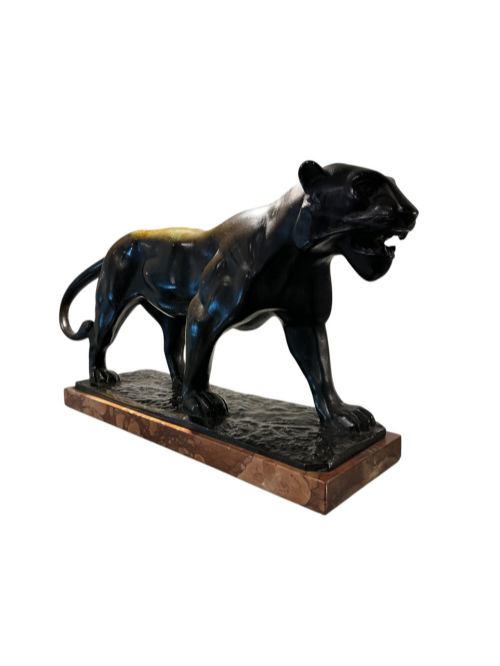
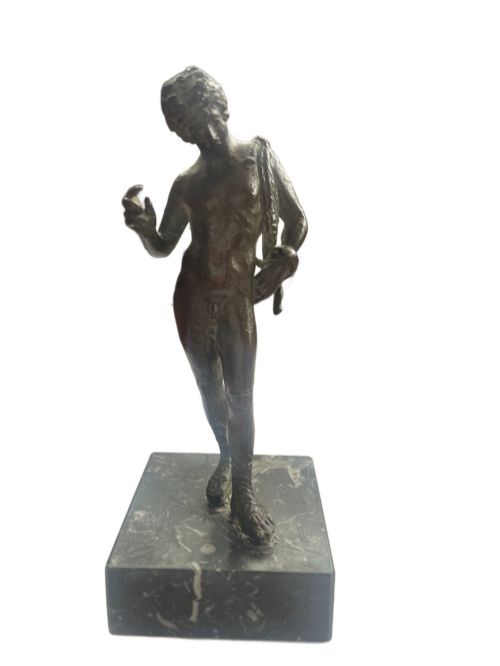
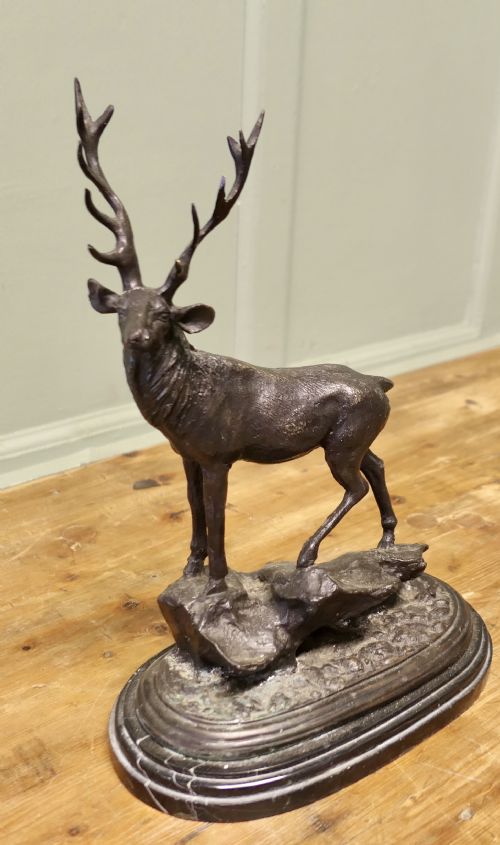
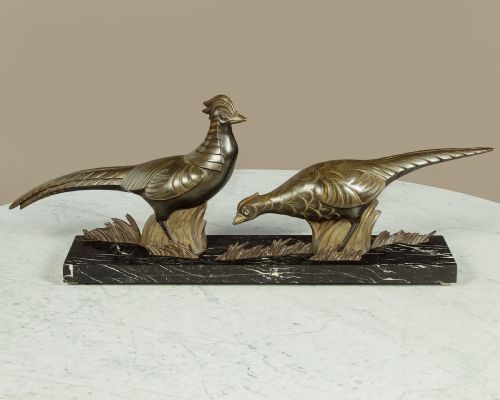
These black marble bronze statue examples combine heavy stone bases with cast metal figures, offering a striking display piece for a mantelpiece or side table.
Black Marble Bronze Statue
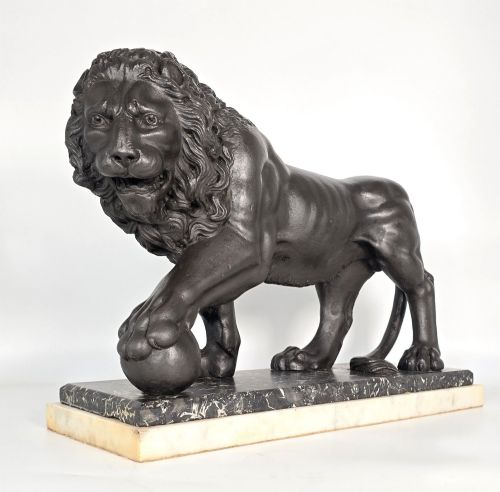
A black marble bronze statue brings together a cast metal subject and a polished dark stone plinth, appearing frequently in nineteenth-century Grand Tour items and twentieth-century Art Deco works. You will encounter classical figures, animals and dancers mounted securely on heavy bases.
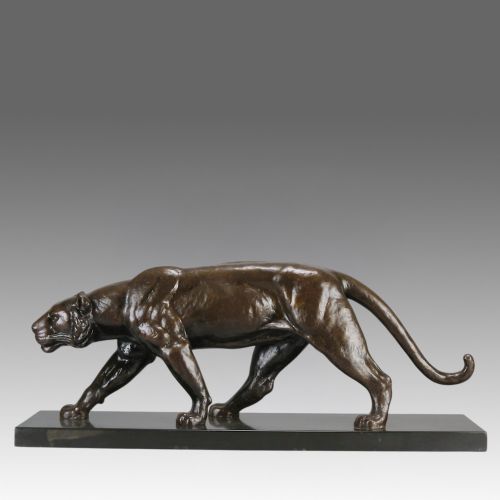
The objects range from nineteenth-century Neapolitan reductions to 1930s dancers and panthers. Formats include standalone sculptures, mantel clocks, and table lamps utilising the same contrasting materials.
Materials and construction
Foundry workers cast the figures using bronze, gilt bronze, silvered bronze, cold painted bronze, or alternative metals like spelter, brass and patinated metal. These metal components receive varied surface finishes including cold painting, gilding and chemical patination.
The metal figures are fixed onto bases fashioned from marble, fossil marble, onyx or black marble plinths. This pairing gives the sculptures stability and contrasts the dark polished stone with the textured metal subject.
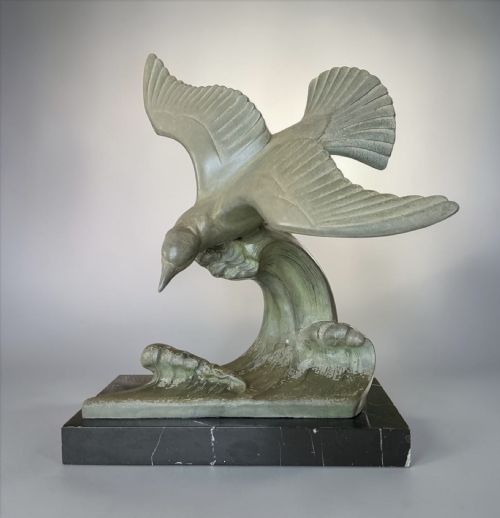
Even a brass seagull needs a solid place to stand after a long flight over the waves.
Assessing the craftsmanship
Quality rests in the crispness of the metal casting and the finesse of the chasing work done after the metal leaves the mould. Better examples preserve fine facial details, drapery folds and animal musculature without soft edges.
The selection and preparation of the marble plinth also distinguish the pieces. Superior items feature dense, well-polished stone bases that are properly fitted to the footprint of the sculpture.
Bruno Zach·Pierre le Faguays·Ferdinand Preiss·Demetre Chiparus·Alexandre Ouline·Geo Maxim
The Black Marble Bronze Statue Glossary
- Grand Tour
- Souvenirs purchased by nineteenth-century travellers visiting classical sites in Italy and Egypt. These replicas often depict ancient sculptures or architectural models.
- Spelter
- A zinc alloy commonly utilised as a substitute for bronze in twentieth-century figures. It is frequently patinated to resemble heavier metal.
- Patinated bronze
- Metal treated with chemical solutions to produce a specific surface colour and tone. This process highlights the details of the cast figure.
- Cold painted bronze
- Metal sculpture decorated with paint applied after casting and without high-heat firing. This technique creates colourful finishes on garments and plumage.
- Onyx
- A banded variety of chalcedony employed for decorative plinths and lamp bases. Its natural translucency provides a contrast to solid metal figures.
Black Marble Bronze Statue: Frequently Asked Questions
What periods do these sculptures cover?
The listings span from the nineteenth century through the Art Deco era of the 1920s, 1930s and 1940s. Styles range from Regency and Victorian classical subjects to sleek modernist animal and dancer studies.
Earlier pieces often reflect Grand Tour influences and ancient Egyptian revival themes. Later works showcase the streamlined geometries characteristic of the interwar period.
How do I distinguish bronze from spelter?
Bronze is a heavier copper alloy that yields a clear ring when struck gently and takes a durable, warm patination. Spelter is a softer, lighter zinc-based metal that can show a brittle texture underneath worn paint or patination.
Many twentieth-century decorative figures utilised spelter as an economical alternative to bronze while retaining similar artistic styles.
Where should I place a marble and bronze piece?
These statues suit sturdy surfaces like sideboards, desks, mantels and entrance tables where their weight is fully supported. Keep them away from direct heat sources and moisture to protect the stone and the metal finish.
Because many examples feature delicate patinated or cold painted surfaces, position them out of direct sunlight to prevent colour fading.
How do I clean the marble and metal?
Dust the sculpture regularly with a soft, dry lint-free cloth to prevent particle buildup on the metal patination and stone. Avoid using chemical cleaners, polishes or abrasive cloths that can strip cold paint or scratch the polished stone.
If the marble requires deeper cleaning, a slightly damp cloth followed immediately by a dry one is usually sufficient.