


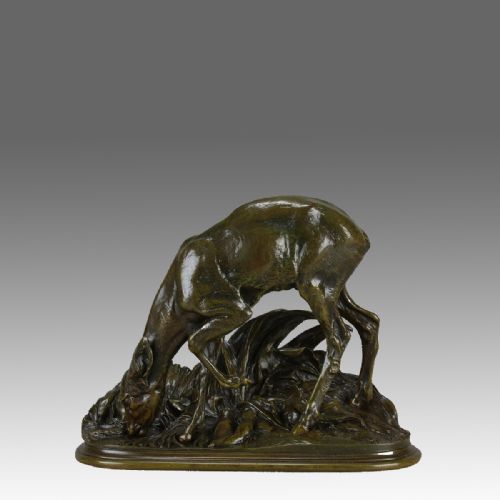
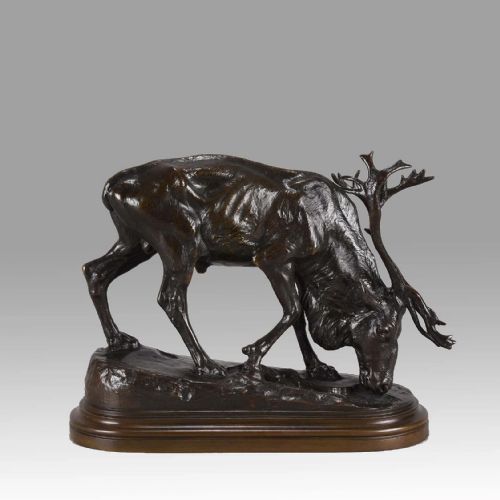


Antique Bronze Deer
Antique bronze deer are characterful metal sculptures and decorative objects that bring the vigour of the natural world indoors.
Antique Bronze Deer
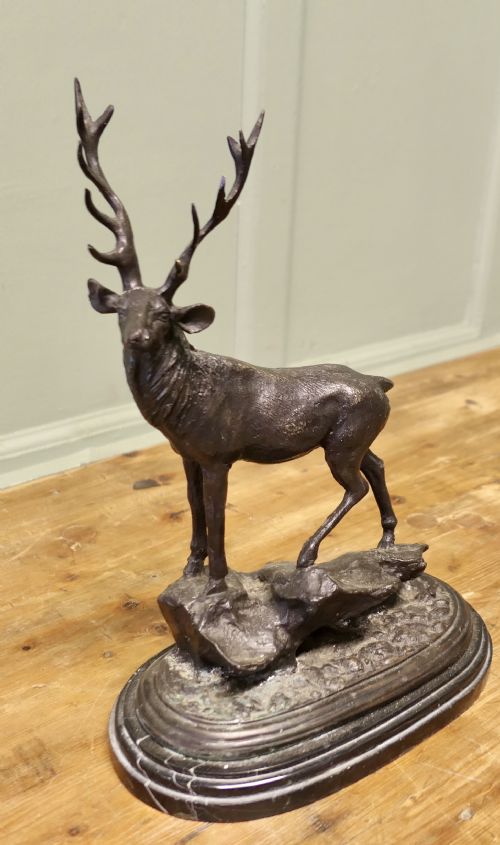
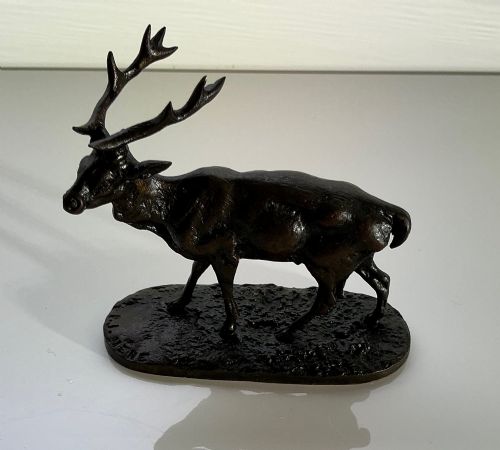
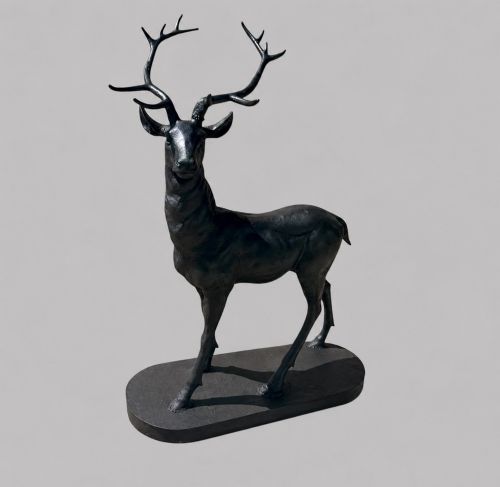
When you search for antique bronze deer, you are looking at figurative metal castings capturing stags, does, fawns, and reindeers in various postures. These pieces range from naturalistic nineteenth-century animal studies to stylised twentieth-century groups.
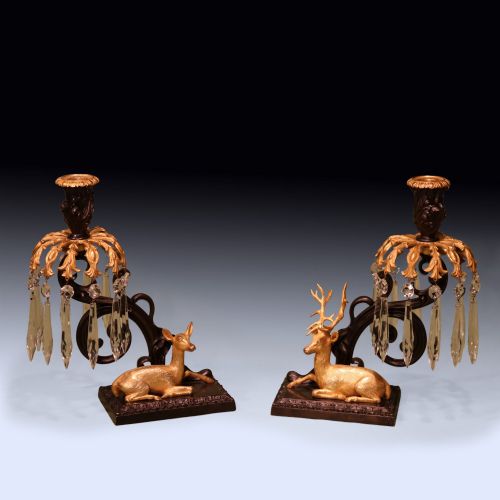
The versions you are most likely to meet on this page include nineteenth-century animalier sculptures of standing or reclining stags and does, alongside twentieth-century art deco groups set on marble and onyx bases. Functional items such as candlesticks, inkwells, and bookends also appear among the sculptures.
Originating predominantly from French and English workshops, these figures utilise both solid bronze and alternative metal alloys like spelter, frequently mounted on heavy stone plinths. Their forms span classical revival interpretations through to sleek modernist animalier designs.
How they were made
The creation of these figures relies principally on metal casting, using either traditional bronze or alternative metal alloys such as spelter. Molten metal is poured into moulds to capture fine anatomical details, ranging from muscular flanks to delicate antlers.
Finishing techniques involve hand-chasing the metal surface and applying various patinas, from dark oxidation to gilded bronze and ormolu highlights. Many sculptures are subsequently mounted onto shaped bases of marble, onyx, or cut glass.
What varies in quality
Quality in these figures rests primarily upon the crispness of the casting and the sensitivity of the anatomical modelling. Superior examples display sharply rendered muscle structure, realistic fur texture, and clean definition in extremities like hooves and antlers.
The sophistication of the patina and the quality of the supporting base material also distinguish the better pieces. Heavier stones, integrated signatures, and well-fitted mounts indicate higher standards of period craftsmanship.
PJ Mene·A L Barye·Pierre Jules Mene·Isidore Bonheur·I Rochard·Jules Moigniez·Prosper LeCourtier
The Antique Bronze Deer Glossary
- Animalier
- A nineteenth-century artistic movement dedicated to the realistic depiction of animals. Sculptors in this tradition focused closely on anatomical accuracy and dynamic movement.
- Spelter
- A zinc-based alloy commonly used as an economical alternative to bronze. It frequently accepts patination well and appears often in twentieth-century figural groups.
- Ormolu
- Gilded bronze produced by applying a mercury and gold amalgam to the metal surface. This technique imparts a rich, decorative golden finish.
- Patina
- The surface coloration and sheen developed naturally over time or applied chemically by the maker. It protects the underlying metal and adds visual depth.
Antique Bronze Deer: Frequently Asked Questions
How do I clean an antique bronze deer?
Dust the surface gently with a soft, dry brush to remove accumulated particles without disturbing the original patina. Avoid using commercial metal polishes or harsh chemical cleaners, which can strip the surface finish entirely.
For stubborn grime, a light wipe with a damp cloth followed immediately by thorough drying is sufficient. Preserving the natural ageing of the metal maintains both the character and the integrity of the piece.
How do I tell bronze from spelter?
Bronze is heavier, denser, and generally cooler to the touch than spelter. It also rings with a distinct, resonant sound when lightly tapped, whereas spelter produces a duller thud.
Examining the underside or areas of wear can reveal the underlying greyish metal of spelter beneath the patination. Bronze maintains a consistent metallic hue throughout its composition.
Where should I display my sculpture?
Place the piece on a stable, level surface away from direct sunlight and excessive moisture fluctuations. Heavy marble or onyx bases require sturdy furniture capable of supporting the combined weight of the metal and stone.
Keep the sculpture out of high-traffic zones where antlers or delicate extremities might suffer accidental impacts. Proper placement ensures the figure remains secure while catching adequate ambient light.
Were all antique deer sculptures signed?
Many works by prominent animalier sculptors carry cast signatures or foundry marks directly on the base or the body of the animal. However, numerous period pieces remain unsigned, having been produced by anonymous workshops or commercial foundries.
An absence of a signature does not automatically diminish the age or material quality of the sculpture. Style, casting technique, and overall execution serve as primary indicators of authenticity.