
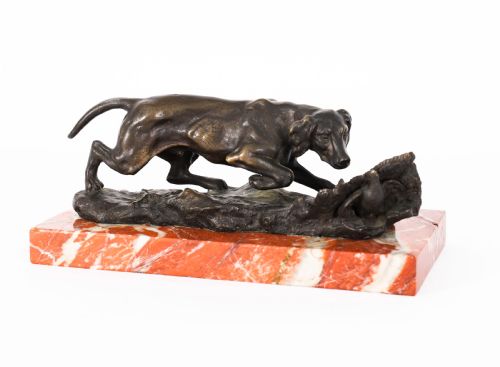
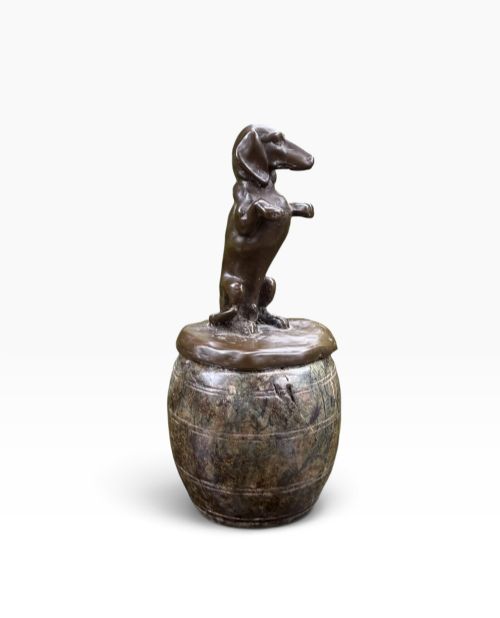
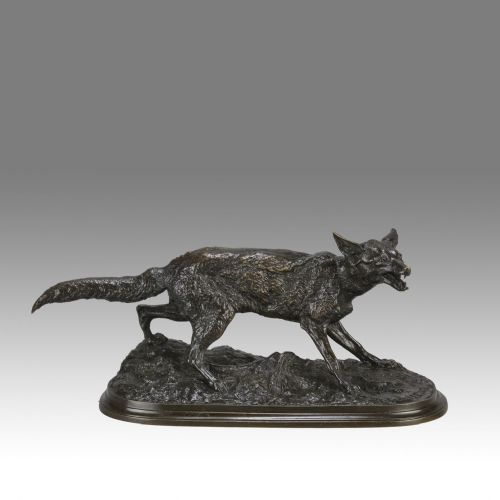
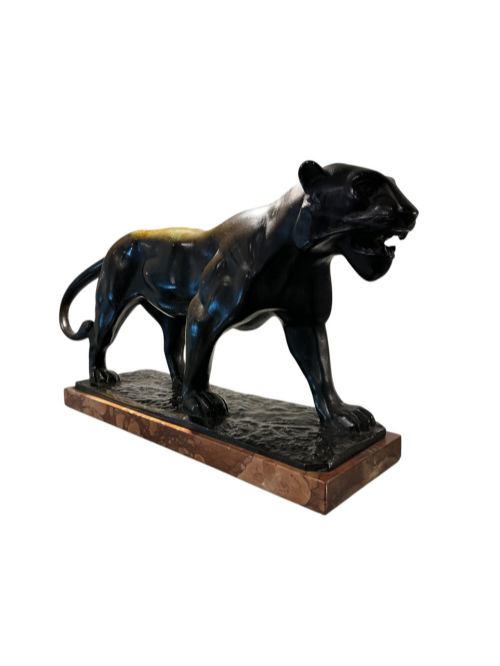
Vintage Bronze Animalier Sculpture
Vintage bronze animalier sculpture captures the muscular energy of hounds, horses, and wild cats through spirited nineteenth and twentieth century casting.
Vintage Bronze Animalier Sculpture
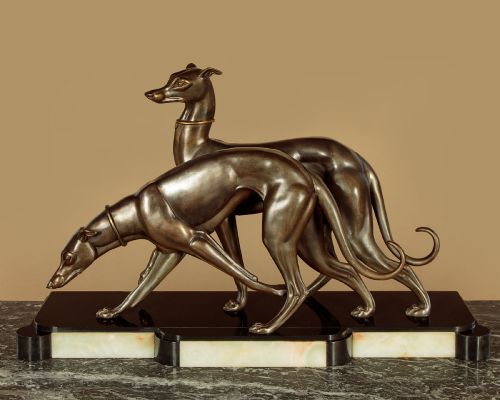
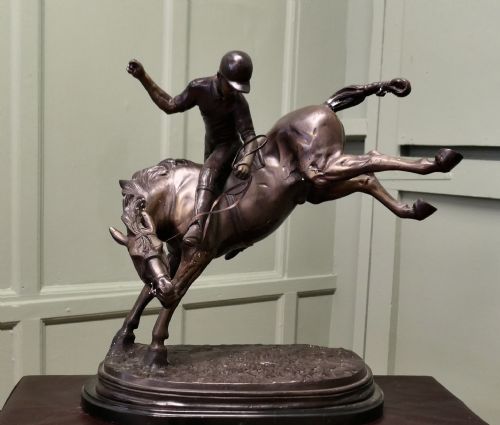
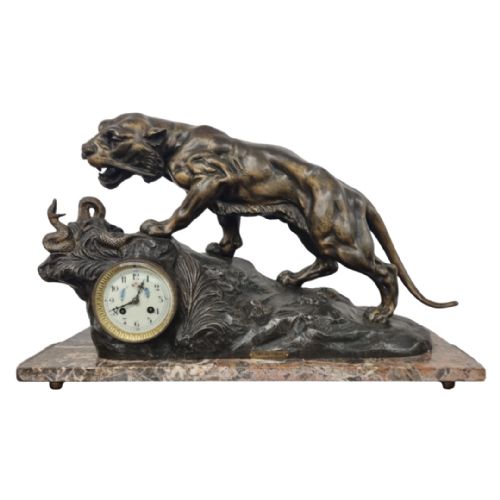
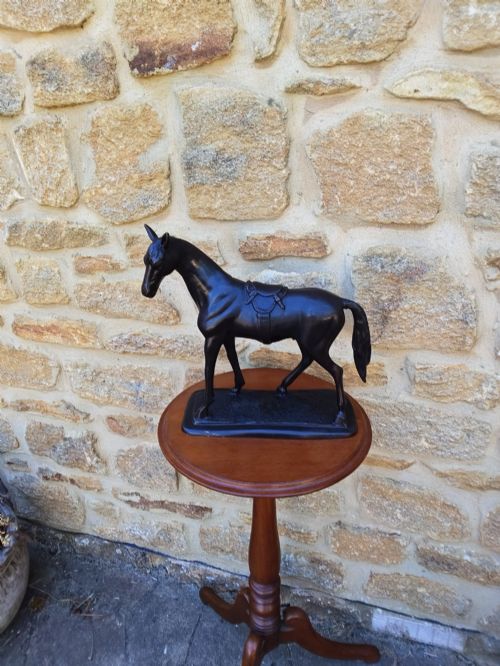
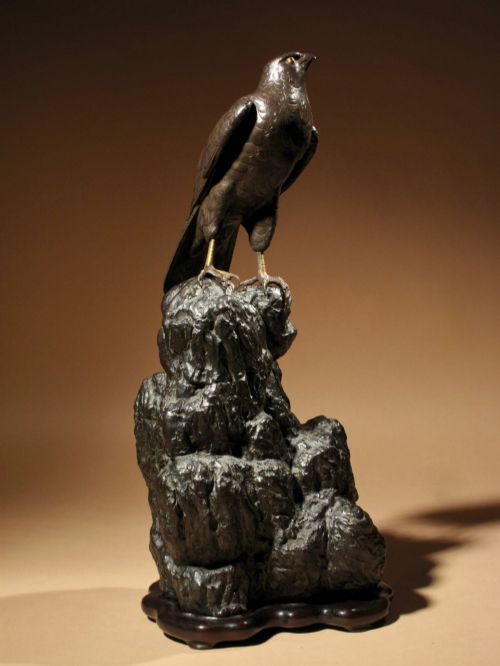
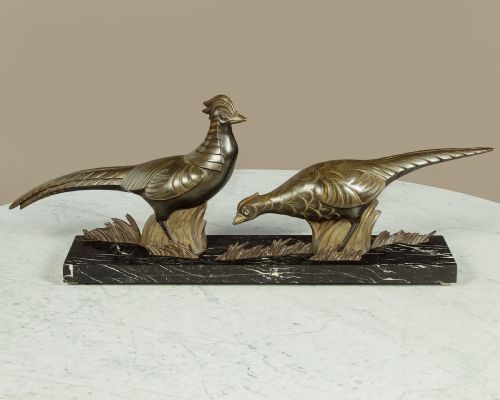
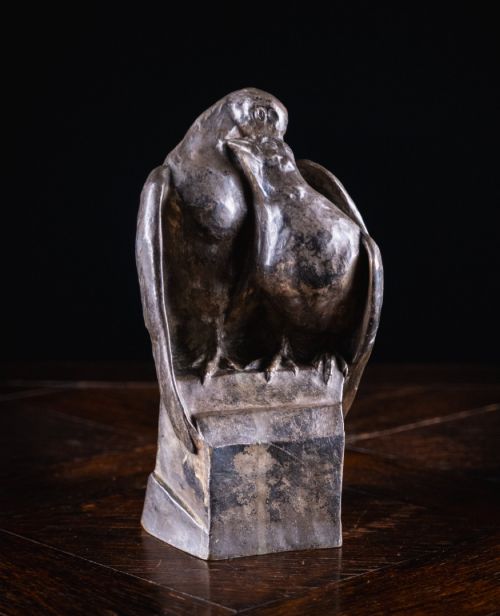
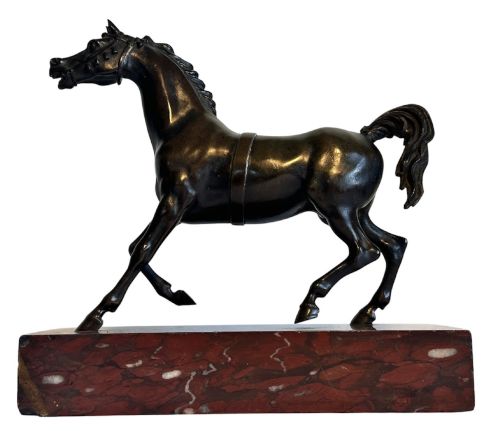
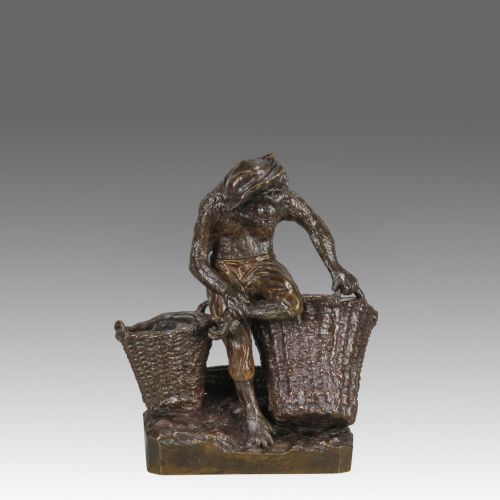
A vintage bronze animalier sculpture depicts animals in realistic action or repose, ranging from hunting dogs and pacing lions to racing horses and resting birds. These figures appear as standalone mantel ornaments, functional bookends, or central elements on large mantel clocks.
Most examples originate from French workshops and the broader European tradition spanning the nineteenth century into the art deco period of the 1930s. The subjects include domestic pets and exotic wildlife rendered with careful attention to natural anatomy.
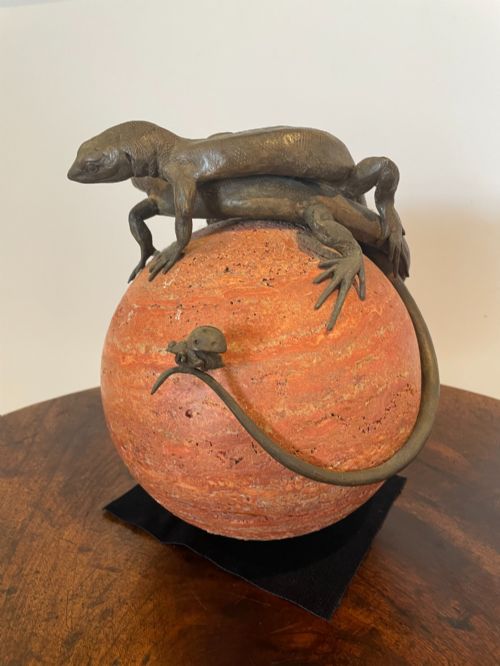
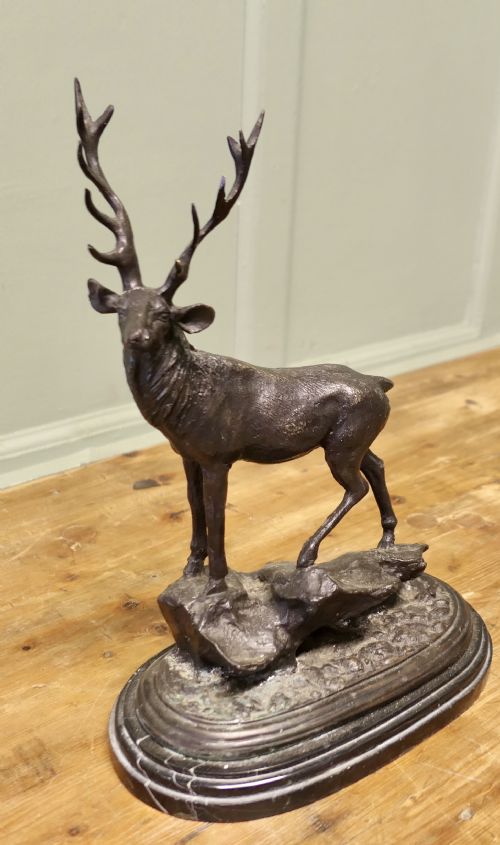
Collectors encounter pieces set upon heavy bases of marble, onyx, or rock, which provide stability and contrast to the dark metal. The physical presence shifts from diminutive desk figures to substantial floor and mantel statuary.
Materials and casting methods
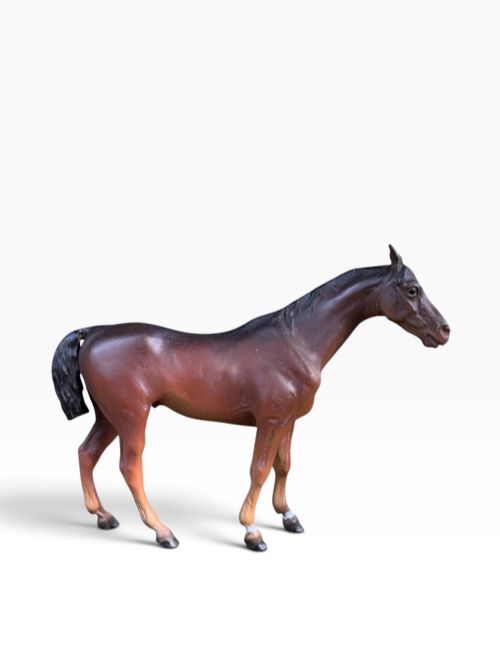
Foundries utilised traditional bronze casting methods, shaping molten metal into complex animal forms that were subsequently hand-chased to define fur, muscle, and feather detail. Certain workshops applied cold-painted enamels directly onto the bronze surface to introduce vibrant colour.
Selected works combine patinated bronze with contrasting elements of silvered bronze or brass, mounted firmly onto polished marble or onyx plinths. The surface patination ranges from deep brown tones to bright metallic finishes depending on the period.
Listings feature nineteenth and twentieth century works, spanning Victorian animal studies through to modernist art deco animalier bronzes.
Distinctions in execution and finish
The integration between the bronze figure and its stone base influences overall merit, as does the subtlety of the chemical patination. Older casts often demonstrate greater depth in surface colour and hand-finished detailing.
Carl Kauba·P J Mêne·R Varnier·Frederique Cederlund-Ozanne·Christophe Fratin·Alexandre Ouline·Jules Bonheur·Antoine Louis Barye·Kunio Itô·Dora Heber·Franz Bergman·Isidore Jules Bonheur·Luigi Secchi·Prosper Lecourtier·Pierre Lenordez·Victor Peter·C Omin
The Vintage Bronze Animalier Sculpture Glossary
- Animalier
- A nineteenth century artistic movement focused on the realistic representation of animals. Practitioners studied live subjects in menageries to achieve anatomical accuracy.
- Patina
- The surface coloration and sheen developed naturally over time or applied chemically by the foundry. This finish protects the metal and defines the sculptural contours.
- Cold-painted
- A technique where polychrome paint is applied to cold bronze without subsequent firing. This method is particularly associated with Austrian animal figures.
- Chasing
- The manual refinement of a raw bronze casting using chisels and punches. Skilled metalworkers use this process to sharpen fur, texture, and fine lines.
- Spelter
- A zinc alloy frequently utilised as a less expensive alternative to bronze. It often mimics true bronze through applied surface patination.
Vintage Bronze Animalier Sculpture: Frequently Asked Questions
How do I clean a bronze animal sculpture?
Dust the surface regularly with a soft, dry cloth to prevent particulate accumulation. Avoid chemical polishes that strip away historical patination.
Apply a microcrystalline wax sparingly if the metal requires protection against moisture. Buff gently with a clean cloth to restore a soft, protective sheen.
Are these sculptures solid bronze?
Many animalier figures are cast using the lost-wax method and may be either solid or hollow depending on their scale. Hollow casting reduces weight while retaining structural integrity.
Heavier pieces often incorporate solid bronze components mounted securely onto dense marble or onyx bases. Examining the underside or base aperture frequently reveals the casting wall thickness.
How can I distinguish spelter from bronze?
Spelter is a softer zinc alloy that feels noticeably lighter than bronze of equivalent dimensions. Scratches on spelter reveal a silvery grey metal underneath rather than the warm yellowish tone of bronze.
Bronze exhibits greater tensile strength, allowing for finer, sharper details in limbs and tails without risk of snapping. Older bronze pieces also develop a stable, deep oxidation layer over decades.
What is cold-painted bronze?
Cold-painted bronze refers to metal figures decorated with oil or enamel paints applied without high-temperature firing. This technique gained immense popularity in Austrian foundries during the late nineteenth and early twentieth centuries.
Collectors look for remaining traces of original polychrome pigment on bird and dog models. Natural wear on the paint surface often confirms genuine age rather than recent reproduction.