
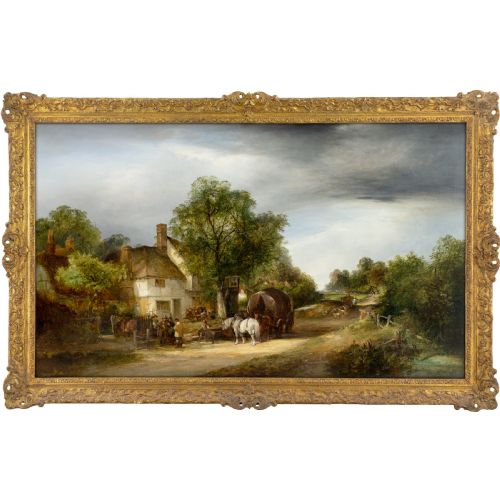
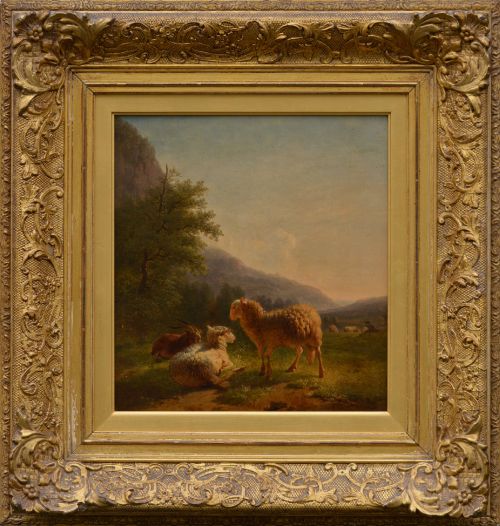


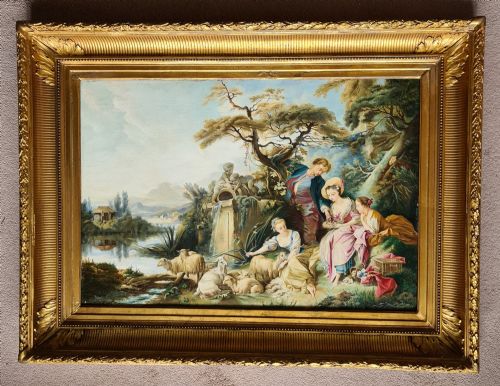
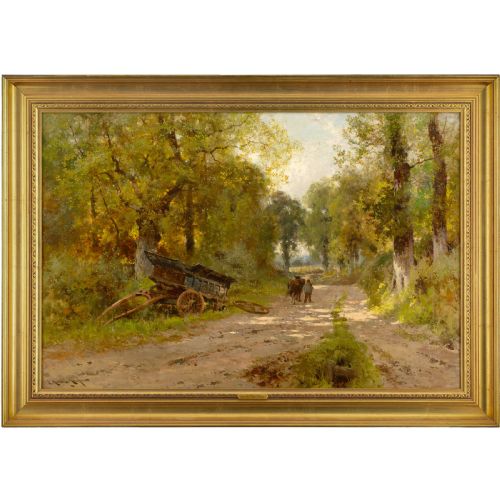
Pastoral Scene Canvas Painting
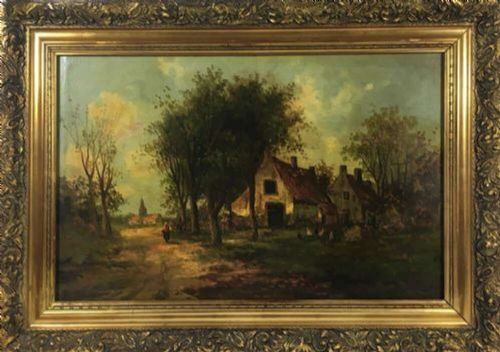
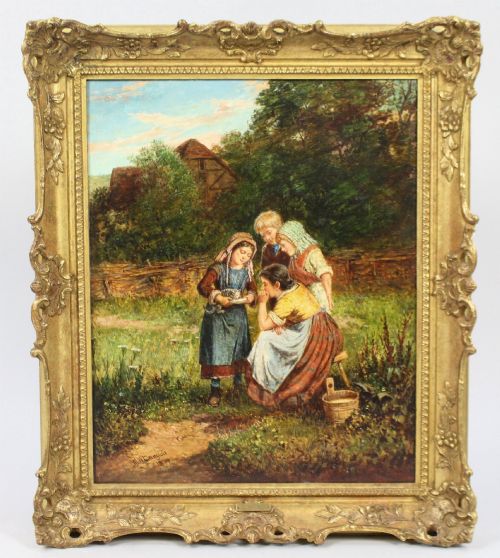
When you search for pastoral scene canvas painting, you uncover romantic country landscapes depicting rural life, shepherds, and livestock.
Pastoral Scene Canvas Painting
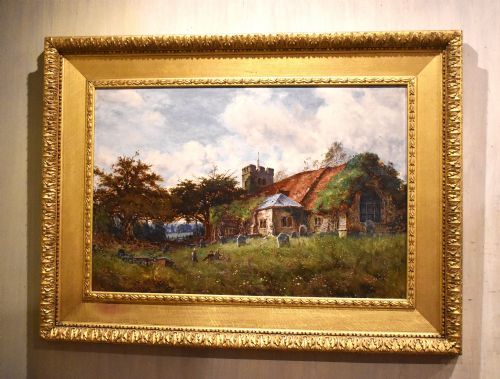
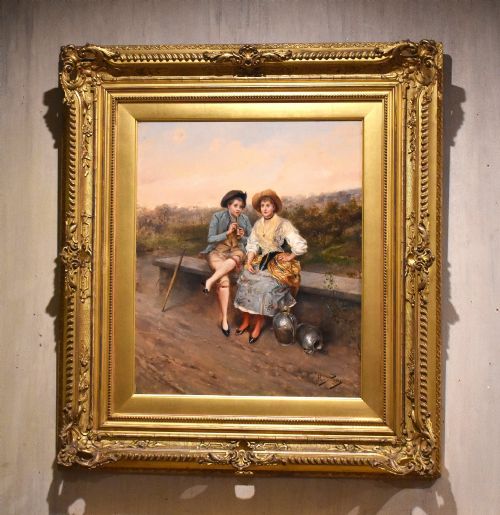
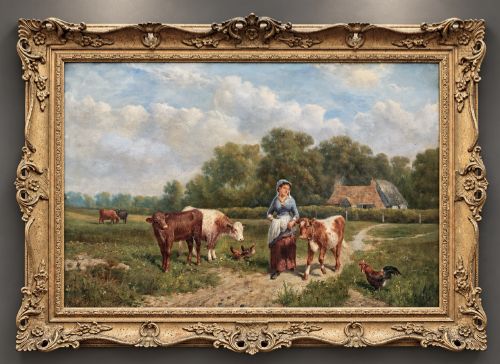
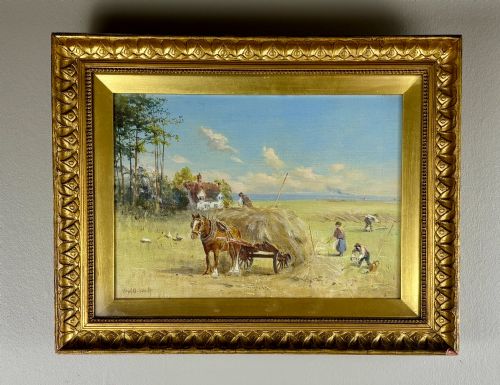
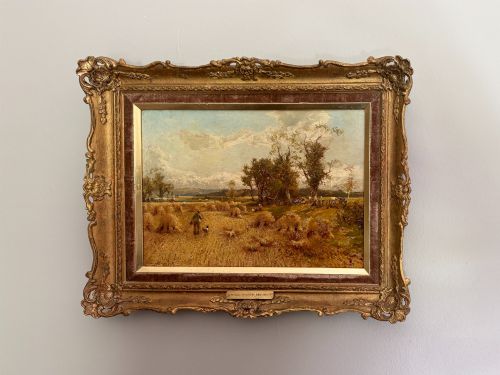
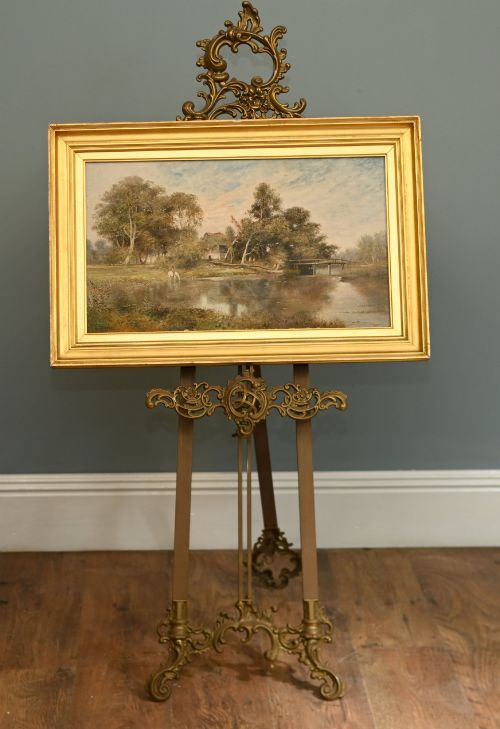
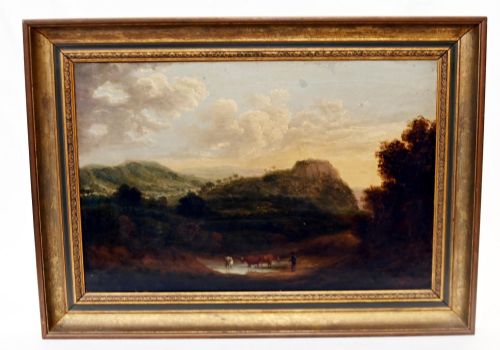
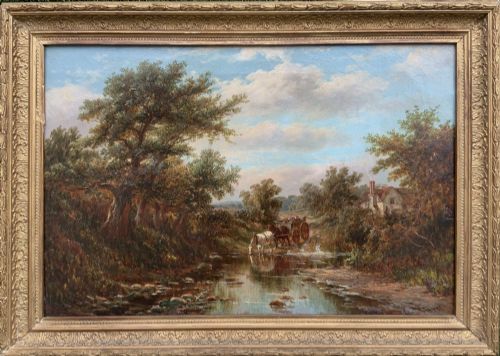
A pastoral scene canvas painting portrays idealised rural subjects, featuring figures by rivers, farmyards, cottages, and animals such as sheep, cattle, and goats. These works capture the nineteenth-century and early twentieth-century fascination with countryside tranquility, drawing upon British and continental European artistic traditions.
The most common examples on this page date from the nineteenth century into the Edwardian period, often reflecting Victorian realism, British impressionism, or French romanticism. They range from intimate canvas portraits to large framed landscapes executed by named artists and regional schools.
Materials and construction
These artworks utilise oil paint applied to woven canvas stretched across wooden support frames, often secured within ornate giltwood or gesso frames. Painters employed varied brushwork, building texture with oil pigments to render atmospheric effects in natural light.
The supporting structures typically combine timber stretchers with decorative mouldings finished in gold leaf or gilt composition, reflecting the framing fashions of the Victorian and Edwardian eras.
Materials documented across the inventory include oil paint, canvas, gesso, wood, and giltwood frames.
Elements of artistic merit
Quality rests upon the artist's command of light, composition, and anatomical accuracy when rendering figures and livestock within a landscape. Works by established painters exhibit more sophisticated handling of tone and perspective than unsigned regional output.
The preservation of the pigment layer, the original tension of the canvas, and the integrity of the period gilt frame significantly influence the visual impact of each piece.
Eugène Verboeckhoven·William H Myers·GEORGE GRAHAM·Francois Boucher·John Horace Hooper·Mark William Langlois·David Bates·Thomas Sidney Cooper·William Watson Jnr·Douglas Cameron·Johann Friedrich Voltz·Henry H Parker·Henry Schouten·Charles Zacharie Landelle·Ernest Higgins Rigg·John Sanderson Wells·Owen Bowen·Jean-baptiste Joseph Pater·Samuel Joseph Clark·Claude Lorrain·Henry John Boddington·Andre de Moller·ROBERT JOHN HAMMOND·Frederick James Knowles·Willem Anton Alexander Knip
The Pastoral Scene Canvas Painting Glossary
- Oil on Canvas
- A traditional painting medium where pigments suspended in drying oils are applied to a prepared fabric support. This combination allows for rich colour blending and textural depth.
- Giltwood
- Timber carved and coated with a thin layer of gold leaf or metallic powder. It provides a reflective border that enhances the illumination within a framed painting.
- Gesso
- A paint mixture consisting of a binder mixed with chalk, gypsum, or pigment used to prepare wood or canvas surfaces. It creates a smooth base for subsequent layers of oil paint.
- Barbizon School
- A nineteenth-century French art movement dedicated to realism in landscape painting. Painters of this circle focused on direct observation of nature and rural farmyards.
- Grisaille
- A painting executed entirely in shades of grey or neutral monochrome. This technique often serves as a preparatory layer or an independent decorative scheme.
Pastoral Scene Canvas Painting: Frequently Asked Questions
What subjects appear in pastoral painting?
These compositions focus on rural life, featuring shepherds with flocks, milkmaids, cattle grazing by rivers, and thatched cottages in wooded settings.
Artists drew inspiration from the English countryside, Scottish highlands, and continental European farmyards to evoke a sense of quiet rustic harmony.
How do I identify the period of a canvas?
Dating relies on stylistic clues, framing materials, and the signatures or documentation associated with the artist. Nineteenth-century works often favour romantic realism, while Edwardian pieces lean towards impressionist brushwork.
The construction of the wooden stretcher frame and the composition of the gesso base also offer clues to the age of the object.
Where were these landscape paintings displayed?
Historical owners hung these framed works in nineteenth-century drawing rooms, country houses, and domestic parlours to bring views of nature indoors.
They served as decorative focal points above mantelpieces or along reception room walls.
How should I care for an oil painting?
Keep the artwork away from direct sunlight, high humidity, and rapid temperature fluctuations to protect the canvas and the oil pigments.
Dust the surface gently with a soft, dry brush and avoid using liquid cleaners on either the paint layer or the gilt frame.