


Antique Harvest Landscape Painting
An antique harvest landscape painting captures the golden toil of Britain's fields in oil and watercolour, bringing quiet rural warmth into a modern room.
Antique Harvest Landscape Painting
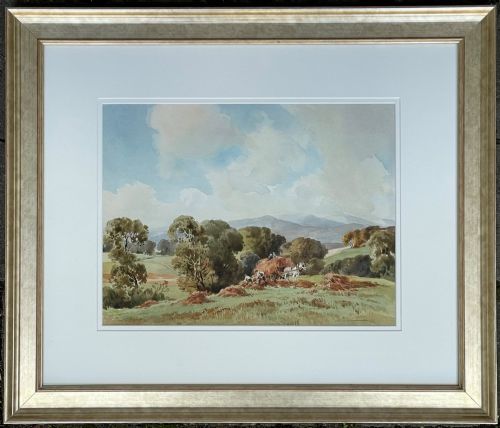
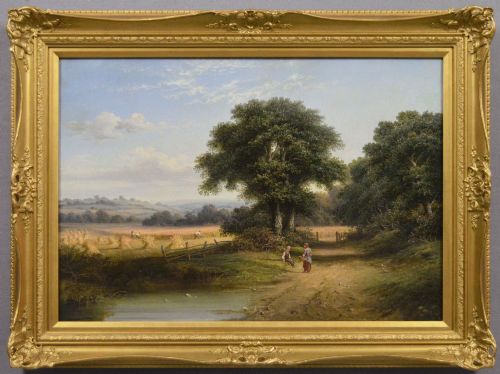
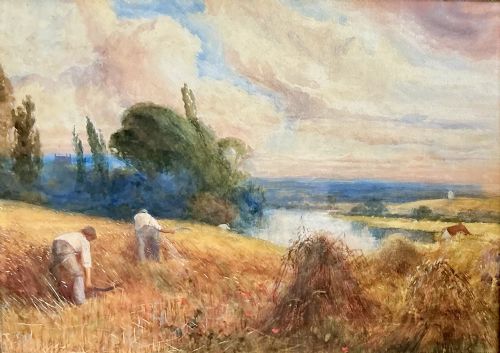
When searching for an antique harvest landscape painting, buyers encounter pastoral views created between the mid-nineteenth century and the mid-twentieth century. These works typically depict figures gathering wheat, stacking hay or working near rivers under nineteenth and early twentieth-century British art movements.
The selections span delicate watercolours on paper and rich oil paintings on canvas or wood panels, framed often in giltwood. Subjects range from quiet Hampshire meadows and Yorkshire valleys to coastal fields and sunset agricultural scenes.
Canvas, paint and paper
Artists built these scenes using oil paint applied to stretched canvas, wooden panels or thick board, alongside transparent watercolours worked onto paper. Pigments were brushed with careful realism, capturing natural light across cornfields and haystacks through traditional studio and plein air methods.
Finished pictures found their homes within protective glass and mountings for works on paper, or heavy giltwood frames designed to complement the warm tones of rural oils.
The listings combine delicate watercolours on paper with substantial oil paintings on canvas and wood panels.
Brushwork and atmosphere
Quality rests in the handling of light and the depth of the rural atmosphere achieved by the artist. Finer works display confident, expressive brushwork in the rendering of figures, horses and skies rather than stiff or formulaic replication.
The integrity of the original canvas, the preservation of the pigment without extensive overpainting, and the harmony of a period giltwood frame elevate a piece above standard decorative examples.
Percy Lancaster·Walter Heath Williams·Frederick Hines·James William Booth·Henry John Boddington·John Atkinson·William Grant Murray·Henry H Parker·Herbert Royle·Arthur Walker Redgate·Rowland Henry Hill·Frederick J Knowles·Joseph Paulman·Henry John Kinnaird·Frederick William Jackson·Walter Duncan·George Hamilton Constantine·George Cole·William Greaves·William Savage Cooper·Joseph Thors·Alfred Augustus Glendening Snr·David Heward·William Kay Blacklock·Wilmot Pilsbury
The Antique Harvest Landscape Painting Glossary
- Oil on canvas
- Pigments bound in drying oil applied to a woven fabric stretched across a wooden frame. This primary support allowed artists to build rich textures and deep tones.
- Watercolour
- A painting method where fine pigment powders are mixed with a water-soluble binder and applied to paper. It creates luminous, transparent washes of colour.
- Wood panel
- A flat wooden board utilised as a rigid painting surface before the widespread adoption of stretched canvas. Panels offer a smooth ground for detailed brushwork.
- Pastoral
- A style of art that romanticises rural life and agricultural labour. These compositions focus on harmonious relationships between people, animals and the countryside.
Antique Harvest Landscape Painting: Frequently Asked Questions
How do I care for an antique oil painting?
Keep the canvas away from direct sunlight and damp conditions to prevent paint cracking and mould growth. Dust the surface gently with a dry, soft brush without applying pressure.
Avoid using modern cleaning sprays or water on the paint layer. Consult a professional conservator if the canvas requires deeper cleaning or structural repair.
Were these works painted outdoors?
Many artists sketched preliminary watercolours and oil studies directly in the fields during harvest time. Final compositions were frequently completed inside studios using those field observations.
This blend of plein air observation and studio work ensured both lively natural light and balanced composition.
How do I date a harvest painting?
Signatures, artist exhibition records and stylistic movements provide the clearest chronological markers. Victorian pastoral works lean towards tight realism, while later Edwardian and impressionist examples feature looser brushwork.
Framing materials and backing papers also offer supporting clues regarding the decade of creation.
What subjects appear besides harvesters?
Artists frequently included farm horses, hay carts, grazing geese and distant hop-kilns within the rural scenery. Coastal fields and riverbanks like the Kennet also served as popular backdrops for agricultural labour.
Skies often transition from bright afternoon sun to dusk or approaching storms.