





Edwardian Pastoral Landscape Art
Edwardian pastoral landscape art captures rural life through watercolours and oil paintings depicting cattle, sheep, and countryside scenes.
Edwardian Pastoral Landscape Art
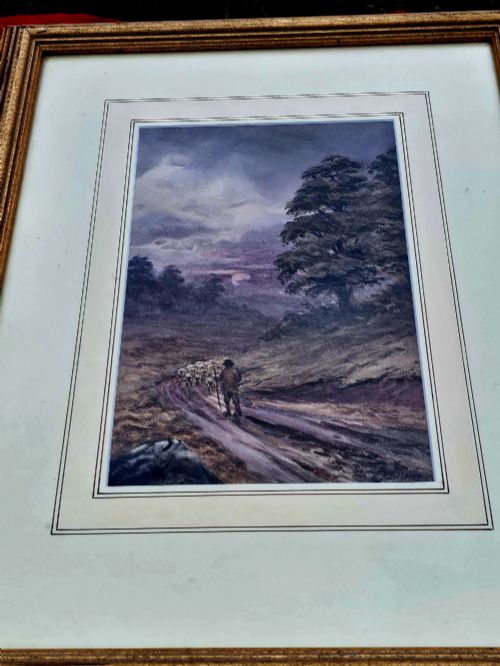
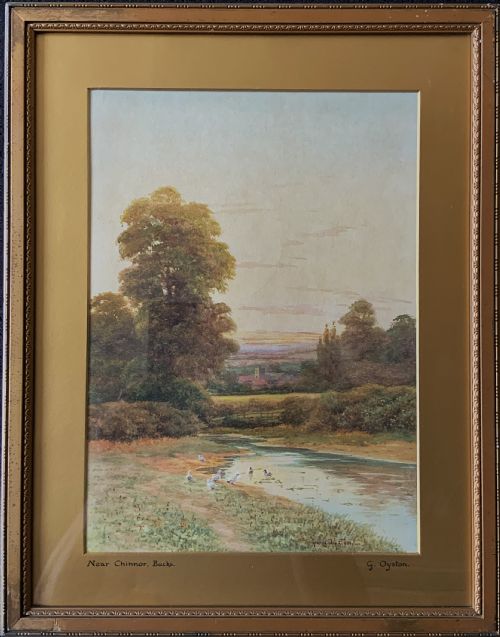
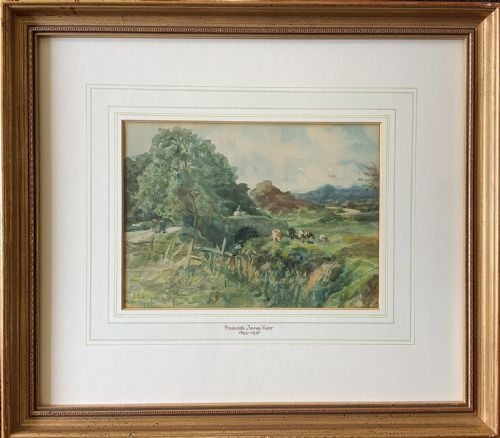
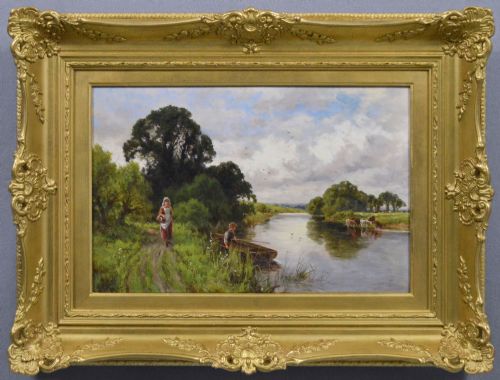
Edwardian pastoral landscape art focuses on traditional rural life, capturing agricultural scenes, rivers, and woodlands across the British countryside. These works frequently depict figures working the land alongside livestock such as cattle, sheep, and horses in quiet rural settings.
The pieces you encounter span watercolours and oil paintings on canvas or paper, originating predominantly from the late nineteenth century into the early decades of the twentieth century. Traditional British fine art styles dominate this category, reflecting a widespread cultural appreciation for idyllic countryside views.
Materials and Techniques
Artists of this period utilised oil paint on stretched canvas and watercolour pigment applied to paper, often paired with traditional wood framing. The handling of these mediums ranges from the loose brushwork associated with British Impressionism to the detailed precision of traditional fine art techniques.
Support materials such as canvas and heavy watercolour paper provide the foundation for these rural compositions, preserved alongside original wooden frames from the period.
Edwardian Pastoral Landscape Art Retail Price Guide 2026
Typical asking prices for edwardian pastoral landscape art among the pieces listed under this phrase on Sellingantiques today, from the lower quarter to the upper quarter. They describe what is for sale here now, not the wider market.
Geese, ducks, and ploughing bulls frequently share the canvas with hardworking farmhands across these rural landscapes.
Evaluating Quality in Pastoral Art
Quality in these rural paintings rests upon the artist's ability to render light, atmosphere, and natural movement convincingly within the composition. Stronger works demonstrate confident brushwork or watercolour handling that brings vitality to the figures, animals, and landscape elements.
The sensitivity of the colour palette and the compositional balance between the landscape and its human or animal subjects distinguish finer examples from standard decorative works of the era.
William H Myers·George Oyston·Frederick James Kerr·Henry H Parker·John Emms·Owen Bowen·Philip Richard Morris·Oswald Garside·Henry Charles Fox·John Sanderson Wells·James William Booth·Frederick Septimus Lewis·Ernest Pile Bucknall·William Sydney Cooper·Frederick James Knowles·Frederick W Jackson·John Atkinson·Walter J Watson·Ernest Higgins Rigg·George Soper·Harold Lawes·Lorenzo Headley·William Greaves·Arthur Winter Shaw·Harry Sylvester Stannard
The Edwardian Pastoral Landscape Art Glossary
- Pastoral
- A genre of art depicting rural life, shepherds, and agricultural scenes in an idealized or traditional countryside setting.
- Watercolour
- A painting method where water-soluble pigments are suspended in a water-based solution, typically applied to heavy paper.
- British Impressionism
- An artistic approach focusing on light and spontaneous brushwork, adopted by various British painters during the late nineteenth and early twentieth centuries.
- Provenance
- The documented history and ownership lineage of an artwork, helping establish its authenticity and origin.
Edwardian Pastoral Landscape Art: Frequently Asked Questions
What subjects appear in pastoral art?
These works primarily feature rural British countryside views, including rivers, thatched cottages, and agricultural fields. Farm animals such as cattle, sheep, and horses frequently populate the foreground alongside working figures.
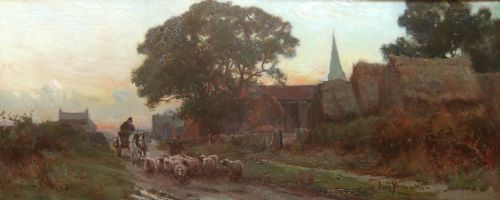
Scenes often capture specific times of day, such as evening or morning light, emphasising the quiet atmosphere of traditional farming life before mechanisation.
How do I distinguish watercolours from oils?
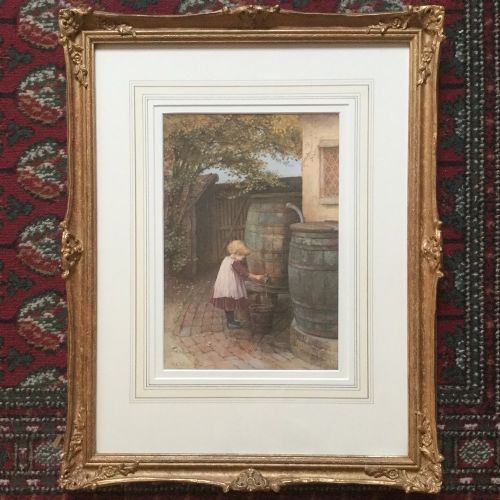
Watercolours are painted on paper and typically displayed behind glass within a frame to protect the delicate pigment. They often showcase a luminous, translucent quality where the white of the paper shines through the lighter washes of colour.
Oil paintings utilise thicker paint applied to canvas or wood panels, possessing visible texture and depth. Oils do not require glass protection, allowing the direct surface of the paint to remain exposed.
How should I frame these artworks?
Many surviving pieces retain their original period wood frames, which complement the traditional aesthetic of the artwork. Preserving these historic frames maintains the integrity of the piece as a complete historical object.
If framing an unmounted work, select a wooden moulding appropriate to the Edwardian era without modern embellishments that might clash with the historical style of the painting.
Where were these pastoral scenes painted?
Artists travelled across various British counties, capturing specific rural locales such as Dorset, Kent, North Wales, and Warwickshire. Inscriptions on the reverse or within the titles often record the exact geographic location of the landscape.
These depictions served to document vanishing rural traditions and local agricultural practices during a period of rapid industrial change.