
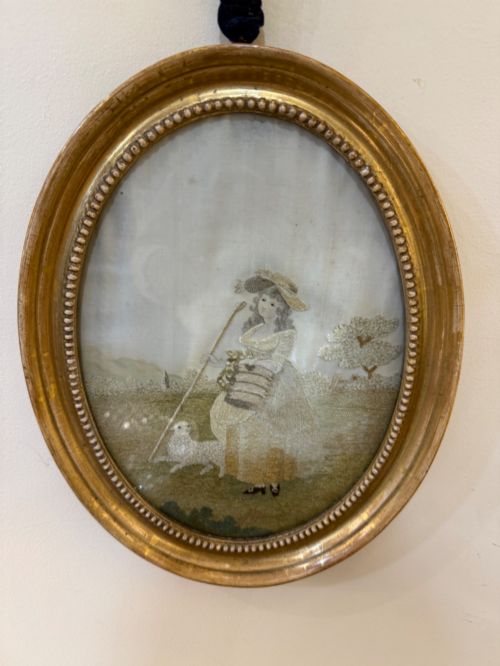


Pastoral Needlework Panel
A pastoral needlework panel brings the quiet charm of the countryside indoors through enduring textile art.
Pastoral Needlework Panel
A pastoral needlework panel represents historical textile art depicting rural and farming scenes, often framed as wall art or incorporated into functional furnishings like fire screens. When exploring a pastoral needlework panel, buyers encounter pieces originating from the eighteenth and nineteenth centuries, spanning Georgian and Victorian periods.
The assortment on this page includes English, French, continental, and early Italian examples. These works take the form of embroidered silk and wool pictures, crewel work, tapestry panels, and needlepoint compositions.
The most frequently encountered versions on this page are eighteenth-century George III embroidered pictures and nineteenth-century framed needlework. Such pieces reflect both British and continental traditions of needlecraft and rural depiction.
Materials and construction
These panels rely on natural textiles such as silk, wool, and linen as the primary ground and stitching media. Artisans combined silk and wool threads to achieve varied textures and tonal depth within the pastoral scenes.
Framing materials include wood, giltwood, and mahogany, often pairing with glass to protect the delicate embroidery. Structural forms range from simple wooden frames to sophisticated George III Sheraton pole or fire screen mounts.
Listings span the eighteenth and nineteenth centuries, incorporating Georgian, Victorian, and Baroque design influences.
Assessing quality and execution
Quality in these textiles rests upon the precision of the embroidery and the complexity of the silk and wool work. Finer examples display meticulous stitch control and sophisticated rendering of rural subjects.
The supporting frame contributes significantly to the overall character, with carved giltwood or mahogany housings elevating the textile. Original frames and well-preserved glass protection distinguish superior survivals from later adaptations.
The Pastoral Needlework Panel Glossary
- Needlework picture
- A pictorial composition created with thread upon a fabric ground. These works function primarily as wall art.
- Crewel work
- Embroidery executed using wool yarn on a linen or cotton twill foundation. It allows for textured, heavy stitching.
- Giltwood
- Wood that has been coated with gold leaf or a metallic substitute. It is frequently seen on period picture frames.
- Pole screen
- A freestanding fireplace screen featuring an adjustable vertical panel mounted on a pole. They often utilise embroidered textiles to deflect radiant heat.
Pastoral Needlework Panel: Frequently Asked Questions
What is a pastoral needlework panel?
A pastoral needlework panel is a historical piece of textile art depicting rural scenes, farming life, or idyllic countryside settings. These works were stitched using silk, wool, and linen.
They date from periods such as the eighteenth and nineteenth centuries, reflecting Georgian and Victorian aesthetics. Many survive framed as wall art or integrated into fire screens.
How were these panels used historically?
Historically, these embroidered panels served as decorative wall art within domestic interiors. They brought vibrant colour and texture to wood-panelled or plastered rooms.
Some examples were built into functional furniture, such as pole screens designed to shield occupants from fireplace heat. Others simply hung in parlours and drawing rooms as displays of needlework skill.
How do I care for antique needlework?
Protect antique textile art by keeping it away from direct sunlight, which fades delicate silk and wool threads. Maintain stable indoor humidity to prevent the degradation of natural fibres.
Ensure glazed frames remain sealed to guard against dust and atmospheric pollutants. Avoid placing panels near heat sources or damp environments.
How can I tell eighteenth-century from nineteenth-century work?
Eighteenth-century examples often feature fine silk and wool pastoral farming pictures executed under Georgian or French Rococo influences. The stitching techniques and subject matter align with eighteenth-century visual arts.
Nineteenth-century pieces frequently display Victorian or Victorian Rococo Revival characteristics. Crewel work and heavier tapestry panels also become more prominent in later periods.