


Georgian Pastoral Needlework
Georgian pastoral needlework pieces are framed silk, wool and crewel embroideries capturing rural scenes, prized for period character and fine handwork.
Georgian Pastoral Needlework
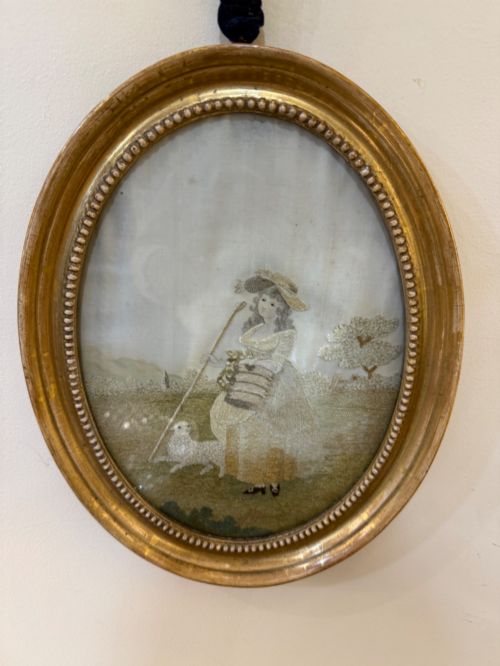
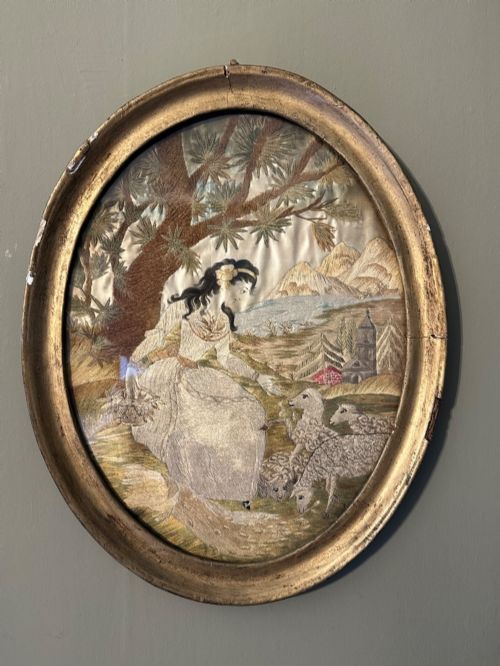
When buyers search for georgian pastoral needlework, they encounter textile art, needlework pictures and framed wall art from the eighteenth and nineteenth centuries. These works depict pastoral farming themes, garden scenes and rural subjects stitched by hand.
The versions most commonly met on this page span the Georgian, Regency and George III periods, alongside early nineteenth century examples. Surviving pieces frequently take the form of framed silk or wool embroideries housed in original giltwood or verre églomisé frames.
Specialised functional items also appear within this category, including George III Sheraton pole or fire screens featuring embroidered panels. Collectors find pairs of silk embroideries alongside single oval woolwork pictures depicting figures in landscape settings.
How they were made
Maker execution relies upon fine silk, wool and crewel work threads stitched onto linen grounds to form detailed pictorial scenes. Needlework pictures combine varied stitch techniques to render figures, foliage and agricultural landscapes with textural depth.
Presentation framing utilises wood, gilt and gold leaf, frequently incorporating verre églomisé or mezzotint black glass borders. Makers housed delicate silk embroideries behind glass within giltwood frames to protect the textiles from atmospheric damage.
Materials recorded across current inventory include silk, wool, glass, giltwood, wood, gilt, linen, and gold leaf.
What varies in quality
Quality separates through the finesse of the needlework and the preservation of the silk and wool threads. Superior examples demonstrate intricate stitch control, balanced pictorial composition and minimal fading across the pastoral subject matter.
The housing contributes significantly to the overall merit, with original giltwood frames and specialised verre églomisé glass panels elevating the piece. Matched pairs maintain greater distinction than single works due to the survival of the complete ensemble.
The Georgian Pastoral Needlework Glossary
- Verre églomisé
- A process of applying gold or silver leaf to glass combined with engraving and painting. This technique creates decorative mirrored borders surrounding framed needlework.
- Crewel work
- Embroidery executed with fine wool yarn on a linen ground. It produces robust, textured surfaces suited to foliage and rustic motifs.
- Mezzotint glass
- Darkened or black glass incorporated into picture frames during the Regency period. It provides high contrast framing for silk embroideries.
- Pole screen
- A standing fireplace screen featuring an adjustable vertical shaft and a framed panel. The panel often displays needlework or embroidery designed to deflect hearth heat.
- George III
- The period of British history spanning from seventeen sixty to eighteen twenty. Furniture and decorative arts from this era display refined neoclassical and Sheraton influences.
Georgian Pastoral Needlework: Frequently Asked Questions
How are these pieces framed?
Many works retain their original giltwood frames, often accompanied by verre églomisé or mezzotint black glass surrounds. These specialised glass borders feature painted or gilded details that frame the textile.
The combination of original glass and gilded wood protects the delicate silk and wool embroidery underneath while enhancing the visual depth of the picture.
Where were fire screens used?
Pole screens stood in principal reception rooms near fireplaces to protect occupants from excessive radiant heat. The adjustable framed panel allowed the embroidered screen to be raised or lowered.
These functional pieces combined cabinet making with decorative textile art, housing needlework panels that matched the broader decorative scheme of a parlour.
How do I care for silk embroidery?
Silk and wool textiles require protection from direct sunlight to prevent the natural fibres and dyes from fading. Maintaining stable indoor humidity prevents degradation of the linen ground and threads.
Displaying pieces away from damp environments and heat sources ensures the preservation of the original stitching and the surrounding wooden frames.
How do I identify a Georgian piece?
Georgian and Regency needlework is identified through material composition, framing techniques, and stylistic conventions of the eighteenth and early nineteenth centuries. Hand-spun silk and crewel wools exhibit distinct characteristics absent in later reproductions.
The presence of period framing, such as giltwood with verre églomisé panels, provides further indication of eighteenth or nineteenth century origin.